Mediation should be the first resort for conflict resolution

In 2017, Ireland boldly stepped into the new frontier of 21st century dispute resolution with the enactment of the Mediation Act 2017, leading the way on the world stage with a statutory framework for the service of mediation. File picture
We are in a time of global disruption. Every day it seems there is something new to worry about; whether it is the harrowing possibility of a new world war, disruption to fuel supplies, AI changing forever the way we work or another story in the media of man’s inhumanity to man.
In speaking of the fading of the rules-based international order in his address at Davos in January this year, Canadian prime minister Mark Carney spoke of a harsh new reality, stating: “We are in the midst of a rupture, not a transition.”
Read More
We are not powerless in the face of conflict. The global uncertainties at a macro level are feeding down to the micro level, leaking like a slow poison into our homes, our workplaces, our relationships and our dealings with others.
Anxiety and stress levels are rising, fanning the embers of tensions, with the inevitable flare-up of conflict. Conflict is human, but we are not powerless in the face of it.
We have the capacity to find a new way forward, to adapt and transition out of the stressful space we stand in, on to a new path with solutions that are workable and fair. This is where mediators can help us.
Yes our world is changing, but with change comes adaptation and the opportunity for both pragmatic and creative problem-solving.
Ireland boldly stepped into the new frontier of 21st century dispute resolution with the enactment of the Mediation Act 2017, leading the way on the world stage with a statutory framework for the service of mediation.
This progressive act promotes the early use of mediation to resolve all civil disputes, and even where litigation has already started the act enables the parties to step away from the courts to try mediation, right up until a final determination is made by a judge.
Having had an awful and prolonged experience of the courts for a divorce, I engaged in doctoral research to find a better way. I looked at innovations in Canada, New Zealand and America.
I learned that the greatest jumps forward in the use of mediation for family law disputes were judge-led; innovators like Judge Thomas Trent Lewis (Ret.) in the Superior Courts of Los Angeles, and Former Principal Family Law Judge Peter Boshier in New Zealand.
In the course of my research observing 1,200 family law cases in the Circuit Court 2009-2013 and 360 cases in the District Court 2017-2019, I observed Irish judges advocating for the use of mediation.
However, it is the higher courts that have the power to truly change how we view mediation.
The tipping point came in the July 2025 High Court case of V Media Doo & Anor v Techads Media Limited [2025] IEHC 430 where Justice Michael Twomey said the aim of the Oireachtas under section 14 of the Mediation Act 2017, is “…to ensure that litigation is the last resort, rather than a first resort, in order to save prospective litigants tens/hundreds of thousands of euros in legal costs and the many years of lost time and effort”.
This case sets an important benchmark for any court hearing any civil dispute, (including separations or divorce), that a hearing should only commence where the judge is satisfied the plaintiffs have been comprehensively advised on mediating rather than litigating their dispute.
The judge noted the importance the act places on plaintiffs being advised on the benefits of mediation, “…before the client ends up on what might be termed the merry-go-round of litigation — one that is all too easy to get on, but can be difficult to get off.”
A common misconception is that you have to be in the same room or Zoom meeting as the person/s with whom you are in dispute. In fact, you can choose to work with the mediator and communicate your proposals through them.
Another misconception is that parties will be forced to make concessions when they do not want to, but the Mediation Act 2017 clearly sets out that each party decides when they are satisfied with an agreement.
Mediated agreements can be legally binding, if this is what the parties want (section 11 of the Act). Legal separation is possible in mediation.
With the assistance of the mediator you can agree terms that will be set out in a legally binding separation agreement.
Terms for divorce can also be agreed in mediation, that agreement being the basis for the divorce application.
With the assistance of a mediator, a workplan can be agreed to resolve a workplace dispute.
Where there is no will, or there is a dispute over a will, the mediator can work with all beneficiaries to find mutually agreed solutions so that probate can be completed.
Mediators can assist farm families to agree succession plans or assist with farm partnership disputes; or assist with shareholder disputes or contract disputes.
Mediation can resolve the majority of civil disputes faster, at less cost, confidentially, and often the agreement can be more creative than the courts can order.
The Mediation Act 2017 has been in place for eight years — we are finally ready for this cultural shift, where mediation becomes the very first resort in dispute resolution.
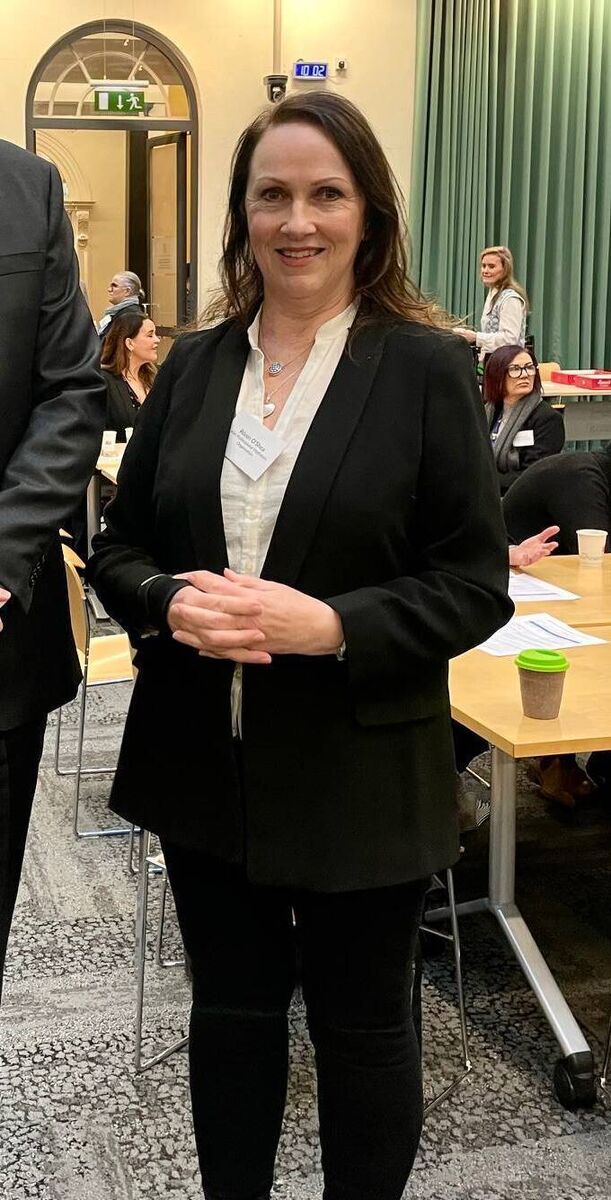
- Róisín O’Shea PhD is the chair of the Irish Professional Mediators Organisation whose annual conference, The 'First Resort' Paradigm Mediation First: Shifting the Culture of Dispute Resolution’ is on today, April 16, at the Dublin Dispute Resolution Centre.

CONNECT WITH US TODAY



Be the first to know the latest news and updates