Conscription is being reintroduced all over Europe — where is the debate?
Germany has introduced laws assessing young men for military service and preventing them travelling for extended periods without military consent, writes Samuel Rogers
Conscription is being reintroduced all over Europe — where is the debate?

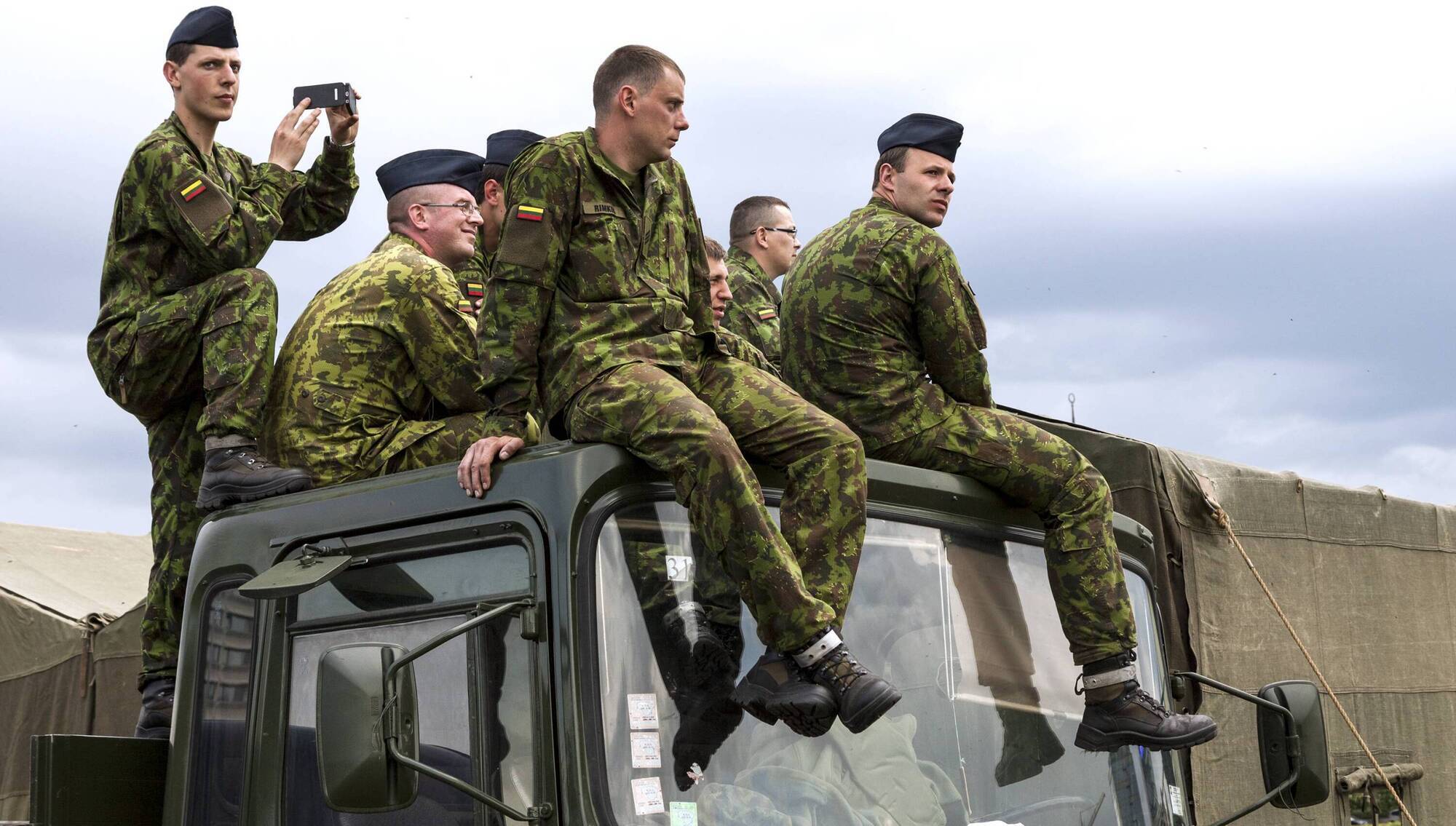
Lithuanian army soldiers at Public and Military Day Festival in Vilnius, Lithuania, in 2014. Since 2014, countries including Sweden, Latvia, and Lithuania have reinstated compulsory military service. File picture

"War is a present reality," and across Europe mandatory military service is no longer a hypothetical question. Headlines are trumpeting the coming end of the all-volunteer force for militaries across the continent.

Since 2014, countries including Sweden, Latvia, and Lithuania have reinstated compulsory military service. However, in recent months this process seems to be accelerating. 

Last month, Croatia inducted its first batch of conscripts since it legislated the return of mandatory service. In Germany, new laws require young men to fill out questionnaires and submit to medical exams assessing their suitability for military service. 

Strikingly, recent headlines revealed new limitations on German men’s ability to leave the country for extended periods without military consent. According to a statement by Germany’s defence minister this “precautionary measure” will be suspended for the time being, but may be reactivated in case of future need.

We are told that the reintroduction of compulsory military service with its attendant restrictions naturally proceeds from new geopolitical threats. However, in this rush to rearm Europe, we are treating the return of conscription in Europe as an uncontroversial administrative measure, rather than what it is: A profound infringement on personal liberty that deserves serious public debate.

For a conscript, compulsory military service demands an immense sacrifice of individual autonomy. It means that the State decides what to do with your body and makes important decisions on your behalf, including where you will live, where you can go, what you will wear, what you can say, and what your labour and skills will be used for.

It means submitting to curtailments of almost every personal freedom we think of as central to our democracies. Ultimately, it demands unquestioning obedience to State authority, empowering a government to place you in situations where you may be ordered to kill another human being or be killed yourself.

What is surprising is not that European governments are reacting to the evident dangers posed by Russian aggression. Those dangers are real. 

Instead, the problem lies in conversations where the consequences of forced military service for the individual are largely overlooked. Public discussion seems to be dominated by speculation about troop numbers, timelines, defence spending goals, and changing conditions of international security.

However, behind technocratic discourse about military preparedness and risk assessment lies a fact we seem to be curiously unwilling to name: forced military service takes freedom of choice away from citizens of otherwise democratic countries. Additionally, in a world hopefully moving towards gender equality, there is a striking lack of questions about most countries’ male-only conscription policies.

Conscription and human rights

Conscription is one of the most extreme expressions of State power, based on a policy bargain between governments and their populations. The bargain made is that the rights citizens enjoy are worth their governments imposing certain obligations in return. 

However, the logic underlying compulsory military service is ultimately starkly utilitarian. It reflects a collective judgment that the safety and liberty of the many merits taking the freedoms, and even the lives, of some. Throughout history, those collectively deemed most suitable for this curtailment of freedoms and mortal risk have largely been young and male.

Compulsory military service occupies a unique space in international law. The UN’s Universal Declaration of Human Rights, explicitly prohibits forced labour and guarantees other freedoms including movement, freedom of employment, and security of person. 

However, later treaties quietly carved out legal exceptions that place State conscription measures largely outside the reach of international courts. In agreements such as the International Covenant on Civil and Political Rights, military service is explicitly given an exception to provisions prohibiting forced labour. 

Service “of a military character” is calmly listed alongside “normal civil obligations” in not being classified compulsory labour. Thus, its impact on individual citizens lies beyond the reach of modern human rights provisions.

Despite its accepted status under international law, compulsory military service has always represented an immense array of human tragedies that demand our attention. A reading of European military recruitment throughout history reveals devastating descriptions of young men being dragged out of their homes, out of school, out of religious services — even from the midst of wedding celebrations — to feed the continent’s endless wars. 

European implementation of compulsory military service has always been defined by fear and by force. It has always represented futures cut short and familial separation. 

It is also important to point out that conscripts historically have been subject to an array of training excesses resulting in injury and death, as well as high rates of physical, psychological, and sexual violence within their own militaries. Millions of conscripts have died at the behest of their governments.

Conscription and democracy

European democracies are supposedly defined by the respect for individual liberty and freedoms. The revival of conscription brings us face-to-face with the reality of violating the very freedoms we aim to defend.

It ultimately involves forcing the young of our populations to kill and be killed on our behalf. At this current critical intersection for the future of global security, there can be no shying away from the tensions between individual liberty and collective security posed by conscription.

For all of us reading the recent headlines, the reintroduction of compulsory military service in Europe cannot pass without comment. If we are truly committed to our democratic values, its human consequences cannot be left out of our current conversations, nor can its central ethical tensions. 

We cannot subsume young people’s rights to make their own choices in language of national necessity or military preparedness. If we do, what remains is a chilling pragmatism defining our path forward, fundamentally at odds with our democratic principles. 

Not asking the right questions about conscription assumes our quiet acceptance that young lives are a resource the State can control and spend at will.

  • Samuel Rogers is a PhD researcher in international peace studies at Trinity College Dublin.

More in this section

Revoiced

Newsletter

Sign up to the best reads of the week from irishexaminer.com selected just for you.

Cookie Policy Privacy Policy Brand Safety FAQ Help Contact Us Terms and Conditions

© Examiner Echo Group Limited