Teacher pay and school funding on agenda of conferences

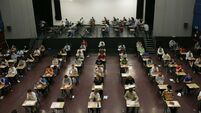
Key topics at the INTO annual meeting include school funding, special education, teacher supply, and the primary school curriculum. Picture: iStock
Pay, industrial relations, and the funding and resourcing of education will dominate the agenda this week as 85,000 teachers gather at their annual congresses across the country.
The Irish National Teachers’ Organisation (INTO) annual congress gets under way in Killarney today, Monday, while the annual conferences of the Association of Secondary Teachers’ Ireland (ASTI) and the Teachers’ Union of Ireland (TUI) both open tomorrow, Tuesday.
At the INTO, key topics will include school funding, special education, teacher supply, and the primary school curriculum. Carmel Dillon is principal of St Mary’s Junior National School in Blessington, County Wicklow.
She believes schools are still “fantastic places to work”.
Ms Dillon says: “You’re surrounded by very committed people. We’ve very supportive parents, and we have wonderful children.”
But she is concerned about a “growing disconnect” between the Department of Education and what’s happening on the ground.
“I think they don’t realise the frustration people are experiencing; they don’t realise that the successes in schools are because of the hard work and dedication to the children, despite all the challenges.
There was a glimpse of this chasm between wider policy and the reality in the classroom earlier in the year, when the handling of special needs assistant (SNA) allocations led to public and political backlash.
“I think that was the one that got the most traction in the media, because of the impact it would have on children who are very vulnerable,” Ms Dillon says.
“The reality is you can’t define vulnerability anymore in terms of a diagnosis. There are children without diagnoses who are also very vulnerable in the education system, who are also supported by SNAs, who are absolutely amazing at their job.”
With the falling pupil numbers in schools, the department did have an opportunity to address the teacher ratio, but didn’t, she says.
“As a result, in our school, for example, we’re losing one mainstream post. We’re also losing 10 special education hours. You’re expected to cluster with other schools in your locality, but all of the schools I have tried to contact are in a deficit themselves and trying to hold onto posts.
“It would have been a fantastic opportunity for the department to have a bit of vision, hold onto all the teachers and balance the system. Instead, we’re also being penalised for doing well in our standardised testing. Because we’ve done well in our standardised testing, we’re deemed not to need as much school support.”
Ms Dillon worries about resources, finances, and initiative rollouts.
“Some schools can afford to buy sets of laptops for their students,” she says. “Our school, I don’t know if we’ll ever be in that position, because we’re so financially underfunded.
“We manage on a shoestring, but we get by, just about, with a lot of stress, because of the flexibility of our staff, the generosity of parents, and because they understand and support us.
“It would be lovely to say, ‘We’ll use that bit of fundraising to buy a set of iPads’, but when you have a gas bill, and an electricity bill, and all sorts of other bills mounting up, you have to prioritise keeping the school open.”
Another example of the disconnect is the €80 provided per pupil under the free schoolbook grant.
In the first years of its introduction, St Mary’s didn’t have enough with the grant to cover all the books required by students.
This year, following a “cull”, the school broke even for the first time.
“We’ve had to eliminate some textbooks,” Ms Dillon says. “It was very difficult to do it, but this year was the first we’ve managed to break even, and only because our numbers have gone down.
“We’ve cancelled the direct debits, and we just pay a certain amount every month. In the summer months, we go in to the black; coming in to winter, we go in to the red.
“They contact me and say, ‘Carmel, you owe money on the bill, you’re going to be on the list to be disconnected’.”
“I say: ‘Put me on the list, and if you disconnect me, you can contact the Department of Education about it.’ We just can’t afford to pay the bills in full.”
Orla Casby, a member of the Association of Secondary Teachers Ireland (ASTI), is a chemistry teacher in Galway.
Its annual congress is expected to debate teachers’ concerns about changes to the Leaving Cert, including the introduction of additional assessment components (AACs) to be worth 40% of a student’s overall grade in a subject.
Ms Casby’s concern, like many of her fellow members, is around fairness. She says:
“Some private schools have wonderful, cutting-edge facilities, but all of that is expensive. Other labs have mercury thermometers, and some have no thermometers. Others are using data loggers.
“I think there should be a practical element in science,” she says. “I do think science should be hands-on. You can’t do that if you don’t have the equipment.
“We need investment and for everyone to be brought up to the same level. It’s not like for like at the moment. It’s so varied what schools have and haven’t got access to.”
Nessa O’Meara, a member of the Teachers' Union of Ireland (TUI), is based in Carlow.
She is an established teacher now, but her path to a full-hours contract wasn’t straightforward. This is despite her teaching English, a core subject, and history, which is a core subject at Junior Cycle.
She qualified in 2014, but received her first permanent, full-hours contract in 2020.
After three years of subbing, she secured a fixed-term contract offering her six teaching hours per week. Ms O’Meara says:
Her experience is common to many teachers, and she knows of others who have since left the profession.
“They just couldn’t sustain the six hours there, or the 11 hours here,” she says.
The TUI has called for contracts of full hours to be issued to new entrants from their initial appointment, which the union says will allow them to have a sustainable career.
- Jess Casey, Education Correspondent
CONNECT WITH US TODAY



Be the first to know the latest news and updates