Marion McKeone: JD Vance needs all his Machiavellian instincts to avoid becoming Trump's whipping boy
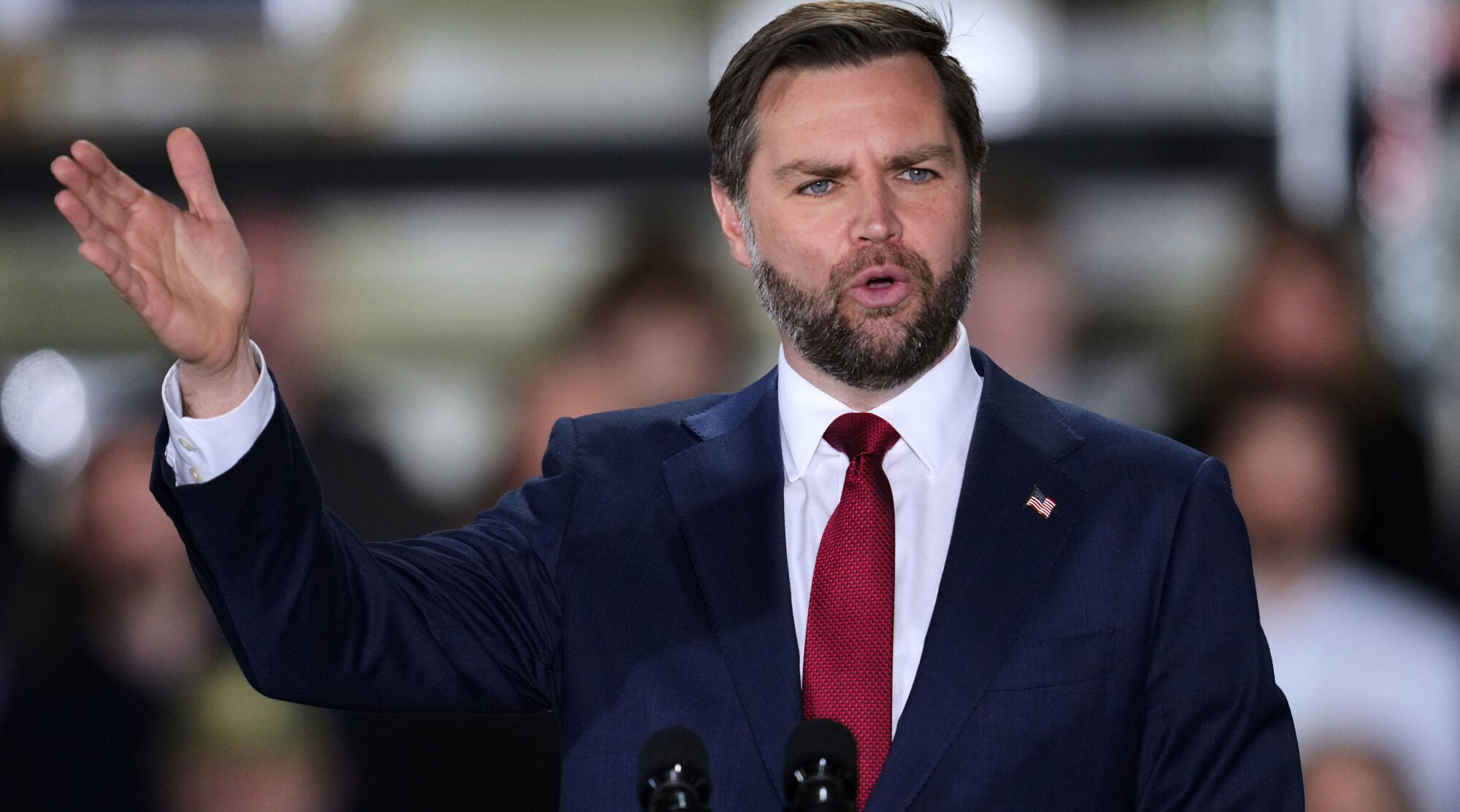
JD Vance has a lot of ground to make up in the popularity stakes. Photo: AP/Paul Sancya
US vice president JD Vance has spent most of the past month studiously avoiding the cameras.
The notorious self-promoter was poised to start a ‘likeability tour’ this summer, part of a calculated strategy to improve the public’s perception of him ahead of the 2028 primary season. If this seems like a long runway — the 2028 primaries don’t kick off until next summer — Vance has a lot of ground to make up in the popularity stakes.
As part of the push to improve the public’s perception of Vance as a condescending scold, he had planned the release of a second biography in June with a promotional tour scheduled to follow the birth of his fourth child.
A new father touting his relatively new conversion to Catholicism may seem like a winning formula for conservative audiences. But the best laid plans of presidential candidates, even those as calculating and assiduously self-promoting as Vance, rarely survive contact with the battlefield.
, Vance’s 2016 tale of triumph over his hardscrabble childhood blighted by drug addiction, alcoholism and violence was a runaway bestseller that launched his career; first as an earnest talking head trying to explain how rural white working-class folk had been duped by Trump, then as a rightwing senator bankrolled by Peter Thiel, the springboard from which he landed the role of Trump’s 2024 running mate.
He made the transition from Never Trumper to his most eager disciple, avidly fanning the flames of the culture wars that threaten to consume the US.
Even in Washington DC, a city notorious for its embrace of political expediency over principle, he’s known as a shapeshifter, a political pretzel who can contort himself into any position that will serve his own advancement. Except one, it seemed.
Since he entered the political arena, Vance, who enlisted in the Marines in 2003 and served in a non-combat role in Iraq for six months, has been an avowed isolationist, justifying his U-turn on Trump by claiming it was his pledge to keep the US out of foreign wars that was instrumental to his conversion to the MAGA fold.
It’s a position the MAGA base wholeheartedly endorsed. And it’s the reason that Vance, an assiduous self-promoter, has been avoiding the spotlight of late.
For Vance, standing as far back as possible from the blast radius of Epic Fury had seemed like the most strategically savvy position for a nakedly ambitious politician who has his eye on the 2028 nomination.
The war is not going to plan. The goalposts keep moving, the deadlines keep expanding and the price of oil keeps rising.
Trump’s widely panned speech on Wednesday — intended to boost his poll numbers, MAGA morale and Wall Street while bringing down the price of oil — achieved none of his objectives. It was less a peremptory declaration of victory than an inchoate admission of defeat.
Meanwhile a slew of polls conducted across the US suggest that two thirds of Americans oppose the war. Trump’s approval ratings have dipped to 36%, while 61% of registered voters disapprove of his presidency.
But Trump, whose survival skills are well documented, is determined to evade blame for a war of choice that threatens to tank the US economy and which has failed to topple the Iranian regime or end its nuclear ambitions.
Aware and reportedly angered by Vance’s leaking about his misgivings to prominent US media outlets, he has pushed his vice president into the fray, appointing him as lead negotiator. Whether Vance likes it or not, he is now poised to play a prominent role in whatever happens in the months ahead.
Trump’s decision to make Vance his point man in negotiations may be part retribution and part eagerness to extract himself from the situation.
In appointing Vance, he accommodated Iran’s refusal to negotiate with Jared Kushner and Steve Witkoff. For all his bluster, the losing side doesn’t usually get to dictate who sits at the winner’s table.
Vance is not a natural diplomat. By nature, he is peevish and supercilious. He radiates the pre-emptive bellicosity of someone who expects to be disliked.
During the 2024 presidential campaign, he had the worst approval ratings of any running mate in US polling history. He has no experience as a negotiator, and his previous forays into diplomacy have been, to paraphrase Hobbes, nasty, brutish and short.
His 2025 Munich Security Conference address was a masterclass in alienating allies. His Oval Office ambush of Ukrainian President Volodymyr Zelensky stunned the US’s NATO allies, who Vance has likewise hectored and scorned.
Unlike Rubio, Vance has no organic constituency; his obsequiousness towards the tech titans tarnished his carefully honed populist credentials.
It’s difficult to cater to both the AI overlords who have bankrolled his political career thus far and the working-class constituents he claims to represent when the tech titans are promising to consign millions of blue-collar jobs to the scrap heap.
Read More
And his penchant for fanning the flames of culture wars and his refusal to disavow the growing number of anti-Semites and extremists has alarmed the remaining moderates on Capitol Hill who regard Marco Rubio as a preferable option.
“His people skills absolutely suck,” a campaign staffer confided despairingly after a long day on the campaign trial back in 2024. What he lacks in people skills, he makes up for with highly developed Machiavellian instincts that have served him well thus far.
Vance is no stranger to the fine art of seeding self-serving quotes in the media, leaking rumours of his misgivings in the media even before the launch of Operation Epic Fury on February 28. Sources claimed he had urged caution and questioned whether regime change could be achieved.
Shortly after the Israeli strike that killed Ayatollah Ali Khameni and most of the leadership, reports in the indicated that Vance had in fact advised Trump that if he was going to attack Iran he should ‘go big’.
Attempts by Vance’s media surrogates to play both sides of the fence irked Trump and infuriated Vance’s former anti-interventionist allies. “I want to know where the hell is JD Vance, where is he?” former Georgia Congresswoman Marjorie Taylor Greene demanded.
With his stock falling inside and outside the White House, Vance is embarking on a mission that veteran diplomats regard as doomed from the outset. From Vance’s perspective, this may be an opportunity to reboot and raise his profile.
Whether his attempts to broker a peace deal succeed or fail, they can be cast as a continuum of his opposition to foreign adventures when it comes to the battle for the 2028 nomination.
Trump, meanwhile, is desperate for an off-ramp; delegating its delivery to Vance means he can shift the blame should the talks, as is widely expected, fail to deliver peace.
At best, Vance may have to parlay an outcome that will almost certainly fall short of Trump’s demands. He’ll be further hampered by Trump’s mercurial temperament, unrealistic goals and lack of strategy.
It’s unclear what would constitute a victory for Trump and altogether less clear that the Israelis would abide by any agreement that was hammered out between the US and Iran.
Initial talks will focus on the immediate re-opening of the Strait of Hormuz. The US stock market closed on a fifth consecutive losing week. But even if Iran does meet Trump’s April 6 deadline, there remains the thorny issue of future control.
Now that its ability to wreak havoc on the global economy has been demonstrated, Iran is unlikely to surrender its only form of leverage.
“To state the obvious, talks about peace or peace talks is a far cry from peace itself,” says Richard Haass, a veteran diplomat and Middle East expert who served as US Envoy to Northern Ireland during the George W Bush administration.
But he says the flurry of chatter about talks coming from Trump, Rubio and Vance reflects the US interest in ending the war. "The reality of diminishing returns is setting in.”
It’s not just the eminence grise of US diplomacy who believe that regime change is no longer on the cards. Retired General Stanley McChrystal, widely regarded as the most effective military strategist of his generation, has excoriated the Trump administration’s decision to go to war and shares Haass's view that regime change is not on the cards.
Trump is looking for an off-ramp. But he’s also looking for a whipping boy. If Vance doesn’t provide the former, he will certainly be conscripted for the latter.

CONNECT WITH US TODAY



Be the first to know the latest news and updates