The climate change warnings are getting louder — are we just refusing to listen?
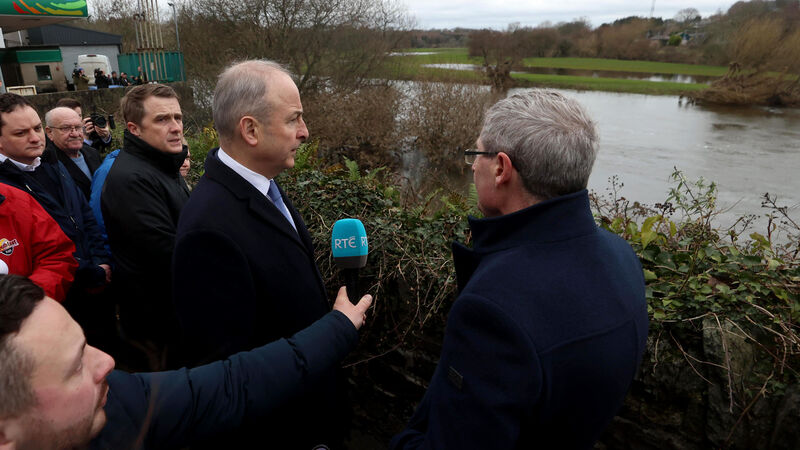
Taoiseach Micheal Martin looks out over the River Slaney in Enniscorthy in County Wexford. A flood relief scheme for the town was first put in motion in 2014. File picture: PA
Regardless of any individual worldview, the latest publication from the Climate Change Advisory Council (CCAC) makes for stark reading.
A certain alarm-fatigue among the population may be inevitable, even understandable, given the sheer number of negative reports issued on a regular basis from climate monitoring think tanks around the globe, including Ireland's independent council that advises the Government.
But looking more closely at the CCAC’s latest report – titled – shows such alarm is entirely justified. It is not climate experts’ fault that governments and populations across the planet are not heeding the warnings – their role is to ring the bell marked ‘danger’ as often as they can, in the perhaps vain hope that someone will finally listen.
But back to the report. In a way, what’s written can be summarised as a tale of two Januarys.
Both the first months of 2025 and 2026 had one thing in common – an extreme weather event which brought Ireland to a standstill and inflicted misery on certain parts of the country.
In 2025, it was Storm Eowyn, which battered Ireland with record-breaking winds, leading it to becoming the weather event with the highest levels of insurance claims in the nation’s history, worth €301m.
Just two months ago, it was the turn of Storm Chandra, which brought with it a week’s worth of record rainfall, bursting rivers across the country, with the southeast and Enniscorthy in Co Wexford particularly badly affected, while transport services – in particular rail services – ground to a halt in the Dublin area.
The two days of torrential rainfall at the apex of Chandra were not the sum-total of the problem, the report explains, but rather the fact that heavy rain both preceded the storm and followed in its aftermath, giving the country’s waterways no respite and floodwaters no chance to recede.
All told, six extreme-weather storms have made landfall in Ireland over the past 14 months.
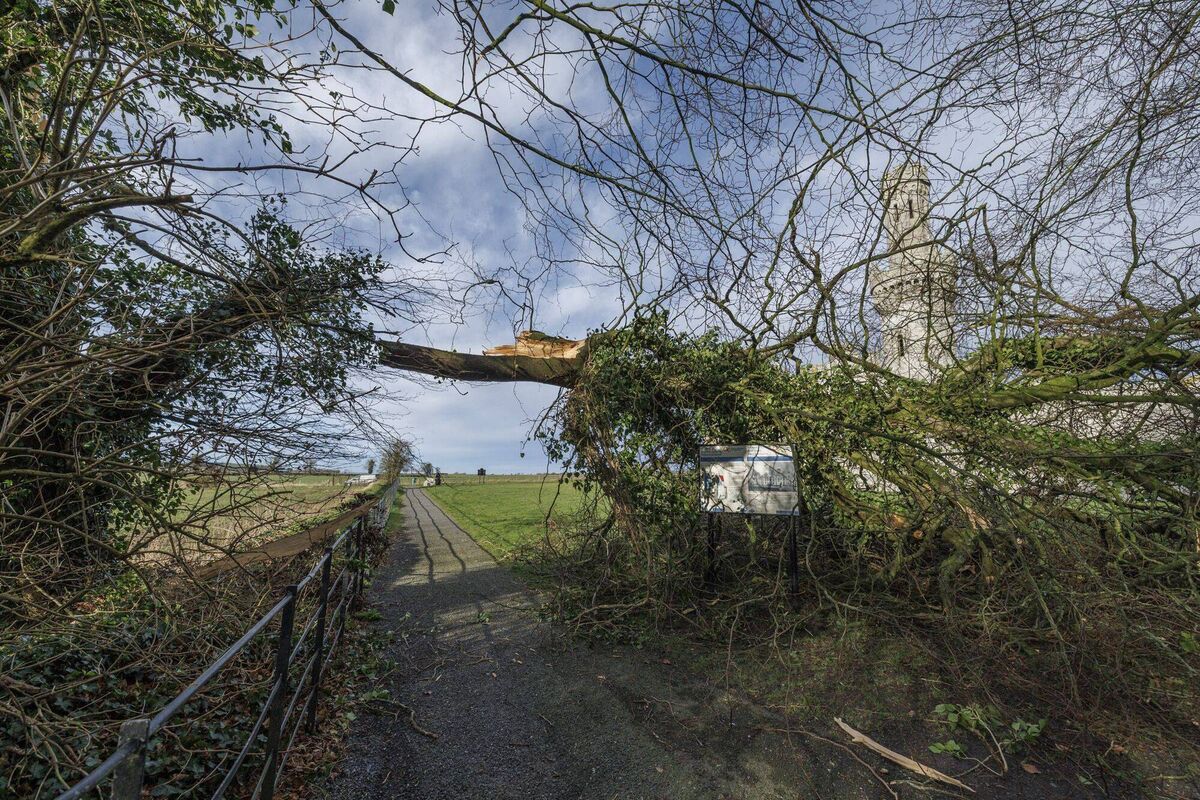
And extreme is the watchword here. Extremes of weather are really what climate change implies, despite the protestations of sceptics like the current President of the United States, who has on more than one occasion suggested that extreme cold in the American Midwest during winter debunks the possibility of global warming.
In Ireland, over the past year alone, we have experienced everything from extreme wind to extreme drought to extreme rain, and you don’t have to go too far into the past to find instances of extreme cold.
In January 2025, the country saw record winds. The following month, Cork Airport experienced more than twice its average level of rainfall compared with the 30 years from 1991. In March, parts of County Meath experienced their driest levels for that month on record. In May and August, absolute droughts were recorded in different parts of the country. In October, Finner in Co Donegal experienced 25 wet days out of 31. Johnstown Castle in Wexford then experienced its highest rainfall for any November on record, and its second-highest for December.
The problem is country-wide and unrelenting.
There were some oddities in 2025. Last year saw the warmest spring and summer on record. However, the summer achieved that distinction via a rise in the average minimum temperatures seen – courtesy of a record number of warm nights, with less sunshine and fewer hot days compared with the two other warmest years on record in 1995 and 1976.
These constant fluctuations in weather extremes are starting to have verifiable effects on Ireland’s ecosystem. From trees coming to bud early in Mayo, to daffodils blooming earlier and earlier in the year, the norms of our natural year are changing.
Pest species like the ant are coming out of hibernation earlier in the year than ever before. Invasive species foreign to our climate are finding that the elevated temperatures Ireland must now consider the norm are something they can adapt to, though Ireland’s ability to adapt to them in return is far more questionable.
2025 saw the continued prevalence of the hurley-industry-threatening ash dieback disease, which spreads on the wind and was only discovered in Ireland for the first time in 2012.
The report notes that milder winters and warmer summers will make Ireland a safe haven for outbreaks of diseases previously foreign to the country – such as the five instances of avian influenza confirmed within Irish poultry stocks in 2025 – occurrences which saw Fota Wildlife Park in Cork closed for three months from October.
Having established that climate change is now indisputably an Irish phenomenon, the council’s report’s observations on the international situation are no less sobering.
2025 was one of the three warmest years on record. The past 11 years have been the 11 warmest such period since records began 176 years ago. Greenhouse gases are at their highest levels in history. Ocean temperatures were amongst the highest ever noted in 2025.
So, is it cognitive dissonance which allows us to wring our hands at the weather events which Ireland and the world are now enduring on a regular basis, yet not insist that collectively we as a nation should prepare better to withstand them? Or does that ambivalence result from the extreme becoming the norm so slowly that the urgency to do something about it only manifests within those who are brought to their knees by such an event?
“I wish we didn’t have to have an Enniscorthy for people to sit up and take action,” says Prof Peter Thorne, chair of the CCAC’s adaptation committee and someone who has been shouting from the rooftops about climate change for decades.
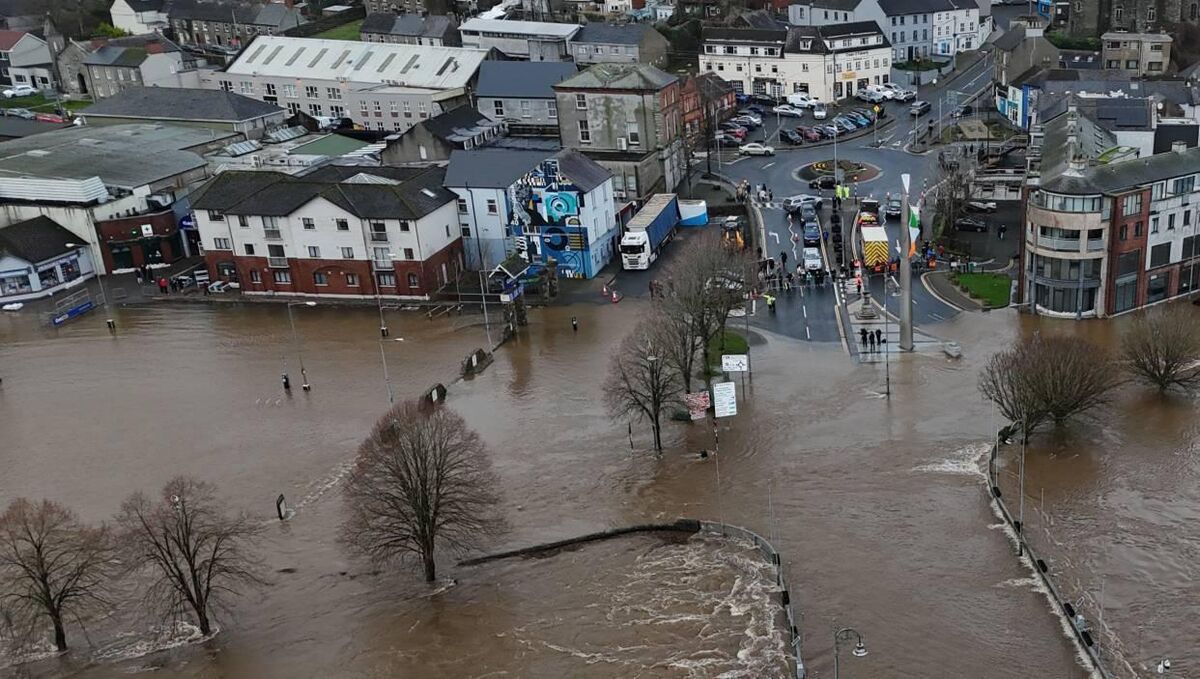
He's referring to the recent extreme flooding in the Wexford town, which saw waters rise up to five feet in places and for which many of those affected were unable to obtain insurance given previous instances of similarly catastrophic flooding in the town.
A flood relief scheme for the town was first put in motion in 2014. However, the scheme – which would provide protection for over 300 homes and businesses – has yet to begin construction on foot of planning delays.
The resolution of planning issues in terms of constructing such schemes and renewable concerns like solar and wind farms is one of three things Mr Thorne says he would do tomorrow in an ideal world to mitigate the climate-related hazards facing Ireland, the other two being the installation of solar panels and storage batteries in every household and the enactment of a functional coastal management plan.
"We live on an island with a huge number of properties within a few metres vertically and horizontally of our coastline, in an era where we’ve woken the sleeping giants of the ice sheets,” Prof Thorne says.
A consistent critic of the lack of seriousness with which Ireland treats climate change, he says that we “need to get very serious about long-term planning here, because we’re gifting this problem to future generations”.
“So many planning decisions have put new buildings in danger of flooding. Look at the pictures, these buildings are not old. We’ve known what was coming, we’ve been screaming about it. It’s not hidden. And yet decisions have been made which put huge numbers of people in harm’s way,” he says.
He holds similar scorn for the fact that Ireland is so badly affected by geopolitical fossil fuel crises like that currently being seen in the Middle East, yet has never future-proofed itself to mitigate such an event as other countries, like Spain and Denmark, have.
But he doesn’t put the blame squarely on politicians.
"It is a question of financial priorities, but it’s also a question of capacity and skills. But the Government can not do it all. It should lead and enable, but this needs communities, businesses and individuals to take part on this journey,” Mr Thorne says.
“We are still in the reactive phase of ‘we’ve got to do something’. We need instead to be thinking ‘this could happen, let’s do something about it’, to make big bold calls which will remove people from harm.”
The latest publication from the Climate Change Advisory Council is laden with record statistics for both Ireland and the world at large – and none of them are particularly cheerful.
Starting with Ireland, where most people who have been paying attention will likely have noted that extreme weather events are happening with a regularity that was not once the case.
- 2025 was the second-warmest year on record in Ireland, while seven of the top 10 warmest years since records began have been noted over the past two decades.
- The average air temperature last year in Ireland was 11.14C in 2025, only the second time in the 126 years since records began that that metric had passed above 11C.
- Last year saw the warmest summer in Irish recorded history – fully 1.94C above the average noted between 1961 and 1990 and driven by night-time temperatures elevated to record levels.
- That record-breaking three-month period itself followed the warmest (and sunniest) spring on record.
- Those warm temperatures saw 49 public water supplies in 15 counties declared to have attained drought status, leading to water shortages and conservation orders.
- By contrast, autumn 2025 proved to be the fourth-wettest on record, while six of the top 10 wettest autumns have now occurred since 2001.
Internationally, the numbers are even more stark.
- The period between 2015 and 2025 saw the 11 warmest years in recorded history since 1850.
- The average global surface air temperature seen last year was 1.43C above pre-industrial levels stretching back to the 18 th century, making 2025 one of the three warmest years ever observed.
Meanwhile, the levels of greenhouse gases carbon dioxide, methane and nitrous oxide in the atmosphere are at their highest point on record, a fact which is “accelerating global warming and turbocharging more extreme weather events” per the CCAC.
- The continued burning of fossil fuels and the increasing proliferation of wildfires across the planet saw the average concentration of carbon dioxide in the atmosphere increase by 3.5 parts per million between 2023 and 2024, another record.
- Ocean temperatures are now amongst the highest on record, having increased rapidly over the past 20 years. This has led directly to an increase and intensification in tropical storms, and is accelerating the melting of the polar ice sheets, which in turn is triggering sea-level rises.


CLIMATE & SUSTAINABILITY HUB
CONNECT WITH US TODAY



Be the first to know the latest news and updates