Ursula von der Leyen: Why a stronger EU–Australia relationship matters
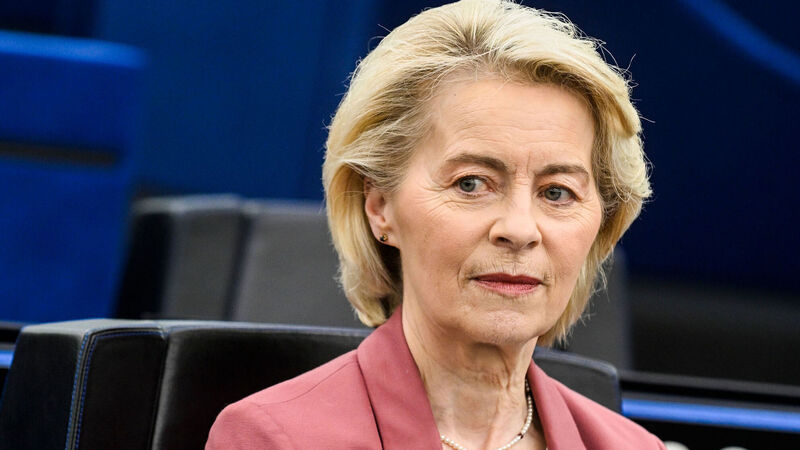
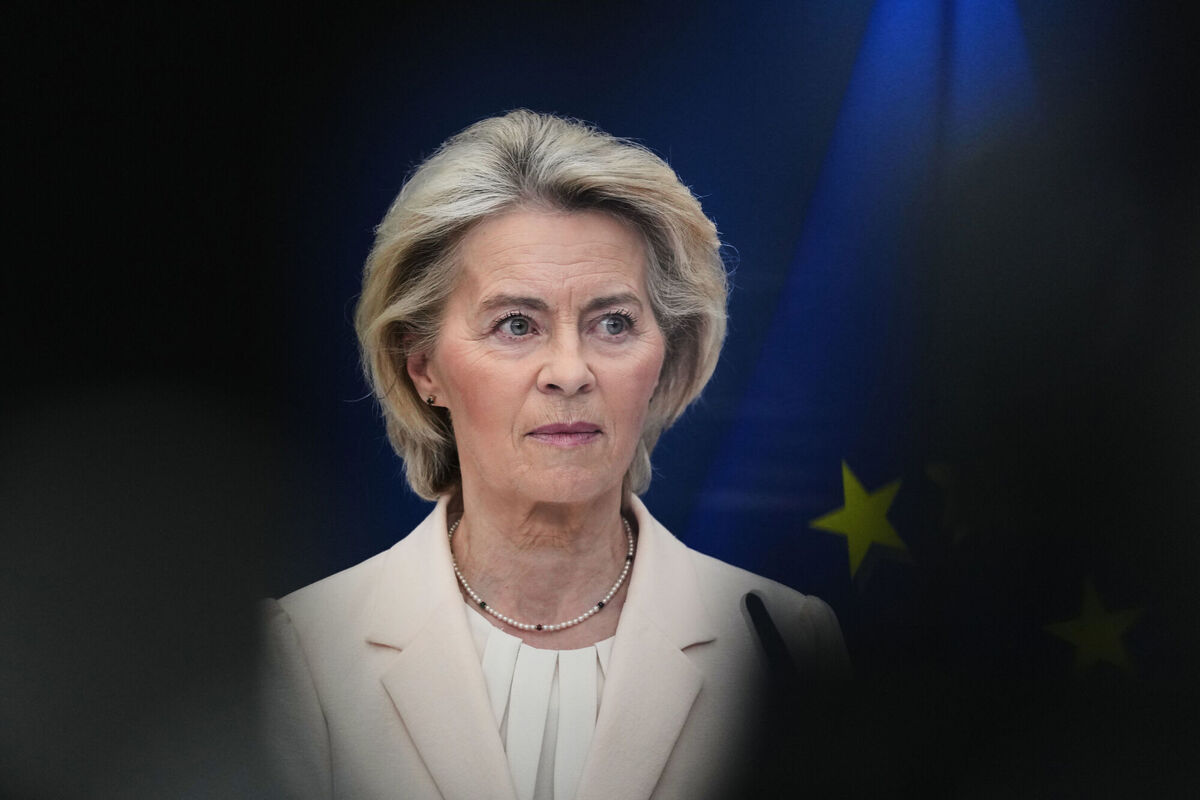
European Commission president Ursula von der Leyen: 'In the first three months of this year alone, we have advanced historic agreements with Mercosur, India, and now Australia.' Photo: AP/Pascal Bastien
The latest developments in the Middle East are a stark reminder of how interconnected our world is.
Shockwaves from the conflict in the Gulf are rapidly spreading across the global economy, driving up oil and gas prices, and pushing up costs for everything from chemicals to fertilisers and food. In this age of mounting geopolitical tension, we must draw closer to partners who share our values and vision of a rules-based world.
That is why I am in Australia today. Geography places the European Union and Australia on opposite sides of the world — and today’s challenges can make that distance feel even greater. But history tells a different story.
Time and again, through the defining crises of the past century, we have stood together. We are not distant strangers — we share, as Australians would say, a true mateship. And in this moment of renewed volatility, we must strengthen those ties even more.
Australia is at the heart of the Indo-Pacific, a region that is fast becoming the global economy’s centre of gravity. It is home to around 60% of the world’s population and some of the fastest-growing economies in the world.
More than 40% of EU imports come from the Indo-Pacific, and the sea lanes that cross it underpin our prosperity. For Europe, bolstering connections with the region is a strategic necessity.
Closer co-operation between the EU and Australia will make both our societies more secure. We have long stood together in defence of freedom, from the beaches of Normandy to its role today as the largest non-Nato supporter of Ukraine.
As the current events in the Middle East again show, instability in one region reverberates far beyond borders. The Indo-Pacific’s stability is therefore inseparable from Europe’s own security and prosperity.
That is why we are launching an EU-Australia Security and Defence Partnership. It will expand joint exercises, deepen co-operation on cyber hybrid threats, and increase the link between our defence industries.
European firms already have a major presence in Australia — Thales employs nearly 3,800 people there, and Rheinmetall is the largest supplier of military vehicles to the Australian Defence Force.
This partnership will further enhance this collaboration, create economies of scale, and reduce costs on both sides.
Shared prosperity is the greatest guarantor of shared security. That is the foundational principle of the European Union and it also defines our relationship with Australia.
With a €1.7tn economy, Australia is already the EU’s third-largest trading partner and second-largest investment destination.
We are bound not just by trade, but by shared democratic values and standards, from labour rights to online safety.
Yet our economic relationship has not kept pace with our ambitions. It is time to modernise it.
That is why the EU and Australia have signed a landmark free trade agreement. It will eliminate tariffs on most EU-Australia trade and could add €4bn to European GDP by 2030.
It will liberalise investment flows in both directions. Today, European investors in Australia face higher screening thresholds than their Asian competitors.
At the same time, Australian superannuation funds, which manage close to €3tn in assets, are seeking stable destinations abroad. Europe is a natural destination. Opening these channels is a clear win-win.
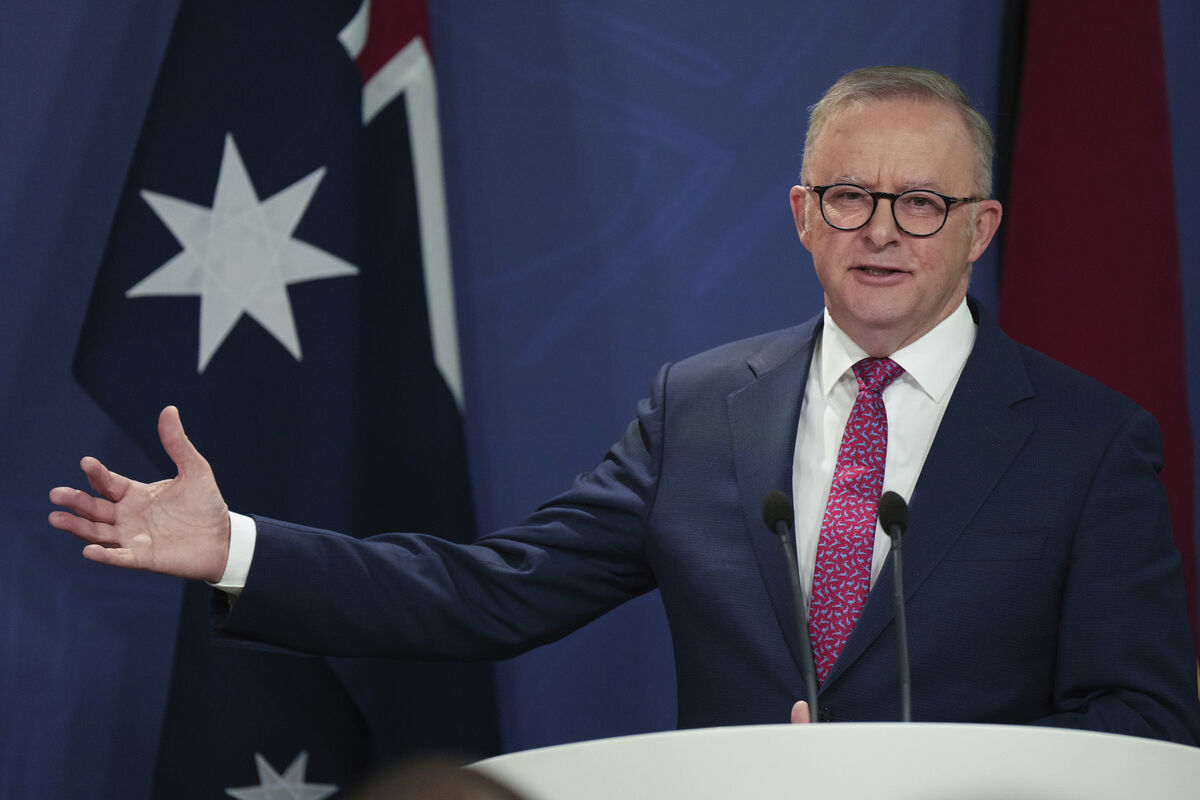
Our economies are not just aligned, they are complementary. As prime minister Albanese has said, Australia is home to almost the entire periodic table of critical minerals.
It is the world's largest supplier of lithium and holds materials essential to power the clean technologies of the future — from electric cars in Spain to offshore wind turbines in the Baltic Sea.
This agreement helps secure access to these essential materials. And as it removes tariffs not only on raw commodities but on processed products too, it promotes joint investment in local processing and higher-value manufacturing.
At a time when critical resources are increasingly weaponised, Europe and Australia can set a different example.
Together, we can build supply chains that are both secure and responsible, supporting local communities while upholding high environmental standards.
These agreements are part of Europe's broader push for strategic independence.
In a world marked by conflict and economic coercion, sovereignty means reducing dependency. It means ensuring that no country can weaponise access to energy, semiconductors or rare earth minerals to hold our economies hostage.
This independence cannot be built in isolation. It requires strong, diversified partnerships with trusted allies.
This is an ambition Europe shares with Australia and many others. Trade flows are not shrinking, but they are shifting.
From India to Mexico, Brazil to Australia, countries are seeking the same things: security, prosperity and the freedom to choose their own path.
In this evolving landscape, the European Union stands out as a stable and reliable partner. We are expanding our relationships right across the world.
In the first three months of this year alone, we have advanced historic agreements with Mercosur, India, and now Australia — a true trade trilogy. Together, we are building a network committed to open and fair trade.
Ultimately, what we are building is trust. The trust that openness and security can go hand in hand. That sovereignty is strengthened, not weakened, through partnership.
And we are showing that, in an uncertain world, mates are strongest when they stand together.
- Ursula von der Leyen, President of the European Commission


CONNECT WITH US TODAY



Be the first to know the latest news and updates