Lorcan Sirr: Meath house the latest example of our disrespect for planning
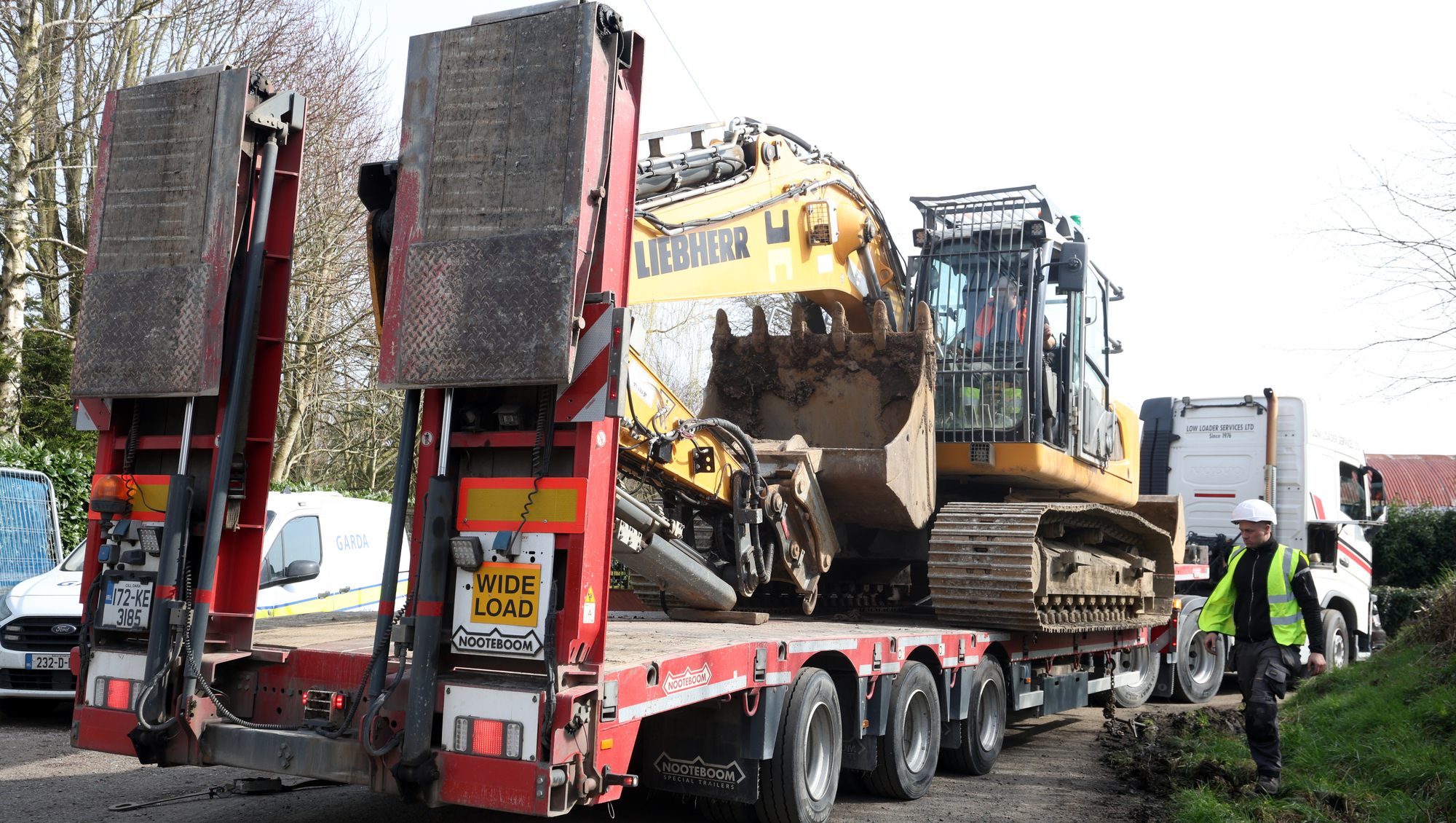
A digger and workmen at the house in Co Meath on Friday which is at the centre of the 20-year legal battle. Photo: Leah Farrell/© RollingNews.ie
The long-delayed demolition of Chris and Rose Murray’s illegally constructed house in County Meath is just another example of Ireland's ongoing problem with the principle and practice of town planning.
In Meath, the Murrays built a 588 sq m house — five times the size of an average new house — “in wilful breach of the planning laws”, having been refused planning permission for a house half that size.
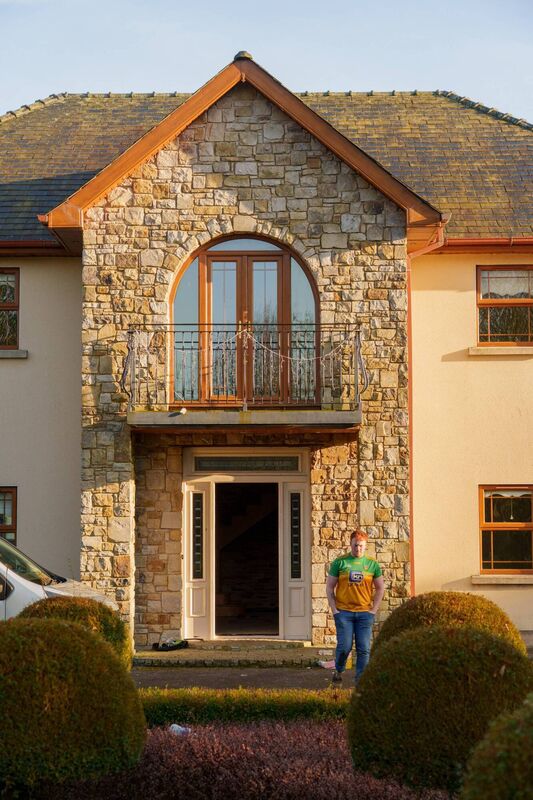
For years they have done their utmost to challenge Meath County Council and the courts in their determination that the house was illegal and needed to be removed. Their final roll of the dice was to propose using the house as social housing, but to be occupied by them at council rents for the next three years.
In Sutton, Co. Dublin, Phillip Farrelly built an “unauthorised” 129 sq m extension described by neighbours as a “monstrosity”. There followed more court cases, finally ending in the Circuit Civil Court ordering its demolition in March 2026.
They’re not alone. Over many decades, many people — including politicians — have spent a lot of energy ignoring, abusing, and misusing the system. A growing number of people are building now, seeking forgiveness later.
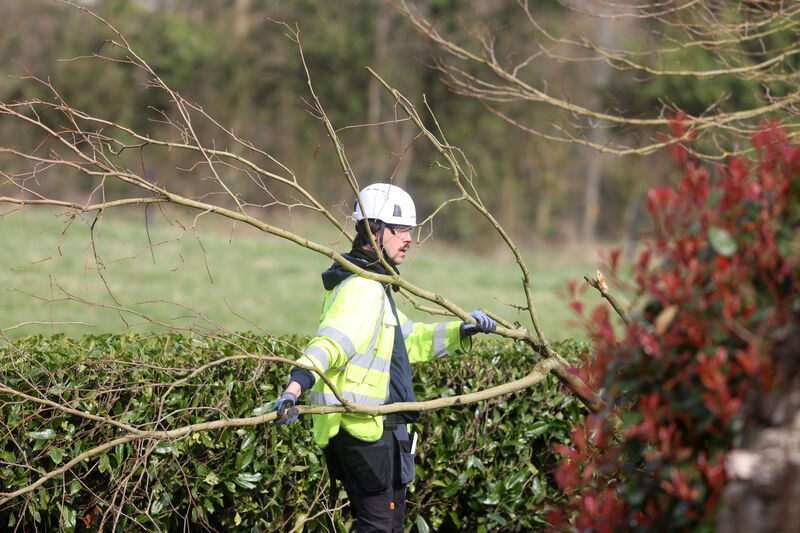
Retention planning permission allows for applicants to correct minor errors in previous applications.
In the last two years over 11,000 applications for retention planning permission were submitted, many for minor errors but also for gyms, house extensions, garages, apartments, log cabins and even entire houses. Of these applications, 55% were granted and just 8% were refused.
A lack of understanding and respect for the planning system has a long history.
In the 1930s, Éamon de Valera referred to town planning as a “seductive profession”.
But TK Whittaker, Secretary General of the Department of Finance appreciated the necessity of Ireland having modern planning legislation to overcome potential constraints for 2% per annum economic growth, and de Valera duly signed the Planning and Development Act 1963.
This introduced the concept of planning permission.

Unelected council officials determining who could build what, and where, prompted Labour Party TD Patrick Hogan to contend that only dictators made good planners.
Facilitated by corrupt payments to politicians, large tracts of land were rezoned in the 1990s to make the owners very wealthy. Facilitated by tax breaks, the Celtic Tiger later saw thousands of houses built where there was no demand for them leading to ghost estates.
In 2002, the 20-year National Spatial Strategy (NSS) was introduced to allow Ireland to develop strategically.
Wholly undermining the NSS, a year later minister for finance Charlie McCreevy announced his plan to move 10,922 public servants from 48 departments and agencies in Dublin to 53 locations in 25 counties, only some of which had been designated a gateway or a hub in the NSS.
This included moving the Department of Community, Rural and Gaeltacht Affairs to a greenfield site at Knock Airport.
Drawn up in secret by Charlie McCreevy, Bertie Ahern, Mary Harney and Martin Cullen, there was no consultation, no evidence of any national benefit, no assessment of how it would affect government departments, workers or families, or alignment with other policies.
John Bruton described it as the single greatest act of administrative and political vandalism since the foundation of the state.
In 2006, developer Michael Bent was fined €400 by the District Court for assaulting a town planner at a nightclub in Scariff, County Clare, having been refused planning permission for a marina development.

Pushing the planner in the chest, he said: “You've interfered in my life, and you don't like me interfering in yours now do you?” He had previously superglued himself to the doors of Clare County Council in protest at an earlier refusal.
In 2016, as minister for housing, Simon Coveney introduced the Strategic Housing Development process where applications of more than 100 units went straight to An Bord Pleanála for decision.
With no avenue for appeals, his initiative unsurprisingly led to the rise of judicial reviews the government is now, somewhat ironically, so frustrated with.
Over the last six years the Planning Regulator (OPR) has tried to prevent councillors from rezoning for development 288 sites on floodplains.
Limerick City and County Council received the highest number of formal directions, relating to eight sites that councillors zoned for development against the advice of the OPR. In 30 instances councillors gave the regulator two fingers, and the OPR had to ask the minister to intervene.
Planning legislation has also become much more complex especially with European directives, environmental targets and case law while increasing complexity has led to the planner-as-consultant industry.
At its core, planning is about making things better. Its roots lie in ‘public health’ — improving conditions, particularly clearing slums where diseases killed thousands each year — which was in the title of the current Department of Housing from 1924 to 1947.
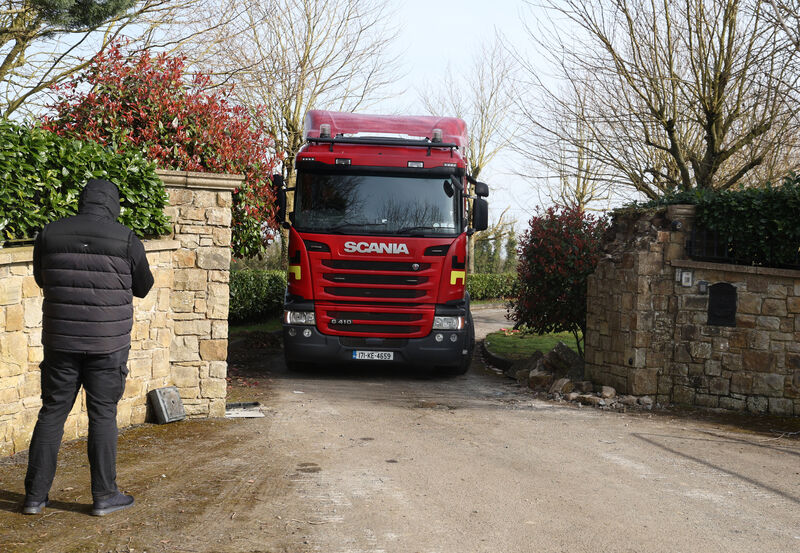
It is also about making provision for the future, balancing social, environmental and physical needs.
As housing delivery has become market-dependent, planning has also come to referee the priorities of the development industry — mostly profits — and the priorities of society such as welfare, health, equity, poverty, and community.
Planning has still not proven amenable to the Irish political system with its emphasis on the national, and electoral politics being rooted in the local.
The result is a permanent tension between policy and practice, central and local government, and the individual and the State.
In general, planning has worked well, its weakness being it can only permit development, not direct it to happen. About 88% of planning applications are approved annually, but many approvals never get built.
The latest government plan to allow the minister for public expenditure and infrastructure to recommend specific planning applications as critical infrastructure for fast-track processing by An Coimisiún Pleanála appears similar to the SHD process, which did not end well.
The planning system is not perfect but never will be given its complexity and under-resourcing.
Neither is the system helped by the time, effort and sensitivities of chasing through the courts those who choose to ignore it such as the Murrays.
The message sent by ordering the demolition of their house and Farrelly's extension is a strong, but necessary, one for maintaining confidence in the system.
However, if elected representatives have little appreciation, understanding or regard for it, then is it any surprise that so few others do too.
- Dr Lorcan Sirr is a senior lecturer at TU Dublin and visiting professor of housing at the University of Galway
CONNECT WITH US TODAY



Be the first to know the latest news and updates