Louise Burne: Government adopts a ‘wait and see’ approach on oil prices
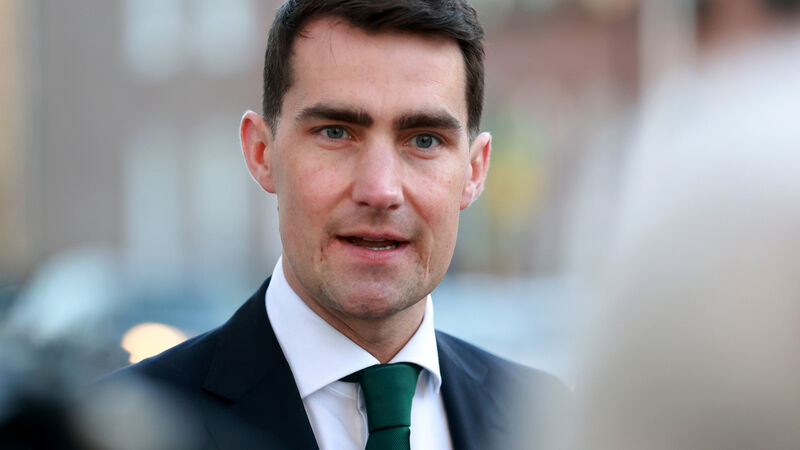
Amid growing anger about energy prices, public expenditure minister Jack Chambers repeatedly ruled out energy credits or excise cuts. Picture: Sasko Lazarov/RollingNews
Standing in the courtyard of a sun-soaked Government Buildings last Wednesday, public expenditure minister Jack Chambers must have been silently praying that the good weather would continue.
His press conference was supposed to be focused on the Critical Infrastructure Bill.
But, as prices at the pumps and the cost of home heating oil continued to rise, he was asked repeatedly about the reintroduction of energy credits and excise cuts.
He ruled them out repeatedly.
Later, I joked to one minister that I had 100km left in the tank but was holding off on getting petrol in case prices started to fall.
“Don’t do that. Go get petrol,” the minister said.
We both knew prices were going to continue to rise. Delaying the inevitable would lead to more pain.
I begrudgingly spent €75 at the petrol station that evening. It had cost €68 two weeks ago, and it will likely be more than €80 the next time around. It is not just petrol and diesel prices that have skyrocketed since the US-Israel attack on Iran.
The average cost of a 500-litre fill of oil rose from €498.56 on February 28 to €832.50 yesterday morning.
As prices continue to soar, so too will the pressure on the Government to intervene.
Every day last week, opposition TDs implored the Government to introduce supports, cut excise duty, and shelve April’s carbon tax increase.
As Jack Chambers was batting away questions from reporters about energy credits, Taoiseach Micheál Martin was doing the same thing in the Dáil.
Sinn Féin leader Mary Lou McDonald told him he could either “take on these price-gouging companies or he can sit back and force households to take the pain”.
Labour leader Ivana Bacik said that “no one expects the Taoiseach to end world war”, but she asked if he could he “act decisively to support people who are up against the wall”?
The answer was the same for both women: It will all be kept under review.
On March 9, 2022, the government announced a reduction in excise duty of 20c per litre of petrol and 15c per litre of diesel as prices soared following the Russian invasion of Ukraine.
The previous month, it confirmed a €200 energy credit.
Today, the Government is holding off and waiting to assess the situation before acting.
One minister told the last week that, when excise duty was cut in 2022, prices were nearing €2.30 per litre.
It is hoped that will not be the case this time.
The difference between the current crisis and the outbreak of war in Ukraine, ministers have argued, is the level of uncertainty.
It is unknown how this war will proceed and how Iran intends to respond.
The other uncertainty is what the US will do next, with president Donald Trump suggesting this could last for four weeks. Whether that will happen is anyone’s guess.
Significant anger is also growing in Government about perceived price gouging.
With the warmer summer days now approaching, there is a belief in Government that energy credits are not the answer.
There is also a fear that older people could feel pressured into filling their tanks when they do not need to.
For now, the Government appears to be adopting a “wait and see” approach.
However, there is an acknowledgement that interventions could be required if things get worse.
The Government also wants to ensure that whatever it may do has a lasting impact.
While the Dáil will not sit this week, the pressure to act will continue to mount when TDs return after St Patrick’s Day. The Government will be hoping the sun will continue to shine.
- Louise Burne, Political Correspondent


CONNECT WITH US TODAY



Be the first to know the latest news and updates