Paula McGovern: Put down the cupcakes — women in business are still far from equal
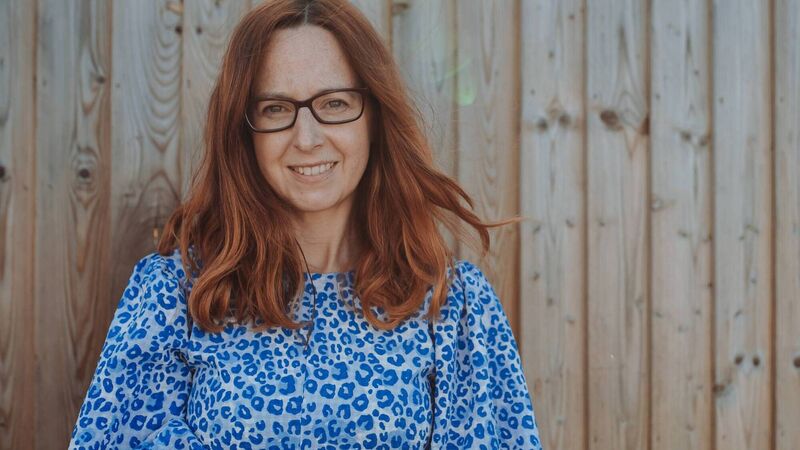
Paula McGovern of Wizard and Grace candles: 'A pink cupcake, a motivational quote on a screen, a female-led lunchtime panel, a LinkedIn post about inspiring women. Then the cake crumbs will be swept up and International Women’s Day will be packed away for another year.' File picture
Somewhere in an office in Ireland this week, there will be at least one of the following: A pink cupcake, a motivational quote on a screen, a female-led lunchtime panel, a LinkedIn post about inspiring women. Then the cake crumbs will be swept up and International Women’s Day will be packed away for another year.
International Women’s Day — born out of protest strikes and marches demanding equality — has been smoothed into something palatable and safe. A celebration rather than a reckoning. Something that does not discomfort the structures it was meant to challenge.
So let me be uncomfortable for a second.
Women make up half the world’s population, yet we hold just 27% of parliamentary seats globally, lead only 7% of the world’s largest companies, and receive less than 2% of global venture capital.
Read More
We are far from equal. The structures we live within — political, financial, and corporate — were built by men, for men, and they have not fundamentally changed.
Work carried out by women is still, in 2026, seen as something peripheral, something lesser, something fundamentally less valuable than the male experience. The cupcakes do not address any of this and I’m tired of pretending they do.
Last month, I walked the floor of Showcase Ireland at the RDS — Ireland’s flagship trade fair for craft and gift. As I moved through it, particularly the Local Enterprise Office (LEO) and Design and Crafts Council area, I saw something striking — not because it was surprising, but because the pattern was so unmistakable.
So many female founders of craft and design companies — women in their 30s, 40s, and 50s, former directors, senior managers, and architects — who have walked away from serious salaries to throw clay, blend skincare, design textiles, and pour candles. Working longer hours for less pay and not one of them looked like she regretted a day of it.
I know this story because I am this story. After 20 years in journalism and communications, I founded Wizard & Grace Wellbeing.
The question I get asked most is: Why? The answer people assume is burnout.
Because corporate burnout is a convenient explanation. It locates the problem in the individual — a failure of resilience — rather than in the structure grinding her down. Call it burnout and you can sell her a wellness retreat. Call it what it is — a rational response to a system she was never meant to fit — and suddenly the system itself has to change.
In my case, like countless others, it wasn’t burnout. I simply saw the system clearly enough to stop pretending it was built for me.
The modern workplace was designed around the assumption of a worker with no domestic responsibilities — someone whose time outside the office was entirely his own. A worker who did not carry — as women still disproportionately carry — the invisible and unpaid labour of running a household, raising children, and managing the mental load of a family’s entire existence. That worker was a man.
Women have spent decades wedging ourselves into that mould, told that if we leaned in harder and stayed at the table long enough, we could make it work. Some of us did and did it well. And then we looked up from the table we had fought so hard to sit at and asked: Who built this table? And whose interests does it serve?
What I saw at Showcase Ireland was not defeat. It was refusal. Quiet, commercially serious, highly skilled refusal.
The creative and craft industries are full of women like this because they offer something the corporate world rarely does: Ownership of the outcome.
For women who spent years watching their ideas diluted in committees, their names missing from work they led, their instincts overridden by men with less experience and more confidence, this is not a small thing. It is the whole thing.
Read More
These women are not hobbyists. They can read a profit and loss statement, negotiate with buyers, and build a brand from nothing. The skills they developed in corporate life did not disappear when they left it. They became a competitive advantage. What they traded was salary for sovereignty.
So far, so palatable. Unfortunately the reality of life as a female founder is more complicated.
LEOs support small-scale businesses across Ireland. In 2024, 64% of LEO training participants were women and 61% of those attending start your own business programmes were female.
But look at what happens when female-led businesses try to scale.
In 2011, just 7% of Enterprise Ireland’s high potential start-up investments included a woman founder. By 2022, that had risen to 37%. But in 2023, it dropped back to 29%.
These figures include companies with at least one female founder; data on female-only founding teams is hard to find.
The picture becomes even starker when founders seek external investment.
Globally, female founders receive less than 2% of venture capital. Analysis of global venture capital deployment in 2024 shows that of the $289bn invested worldwide, 2.3% went to female-only founding teams, 83.6% went to all-male founding teams, 14.1% went to mixed-gender founding teams.
A 2025 Organisation for Economic Co-operation and Development (OECD) report found that 99% of women founders started by self-funding — not because they didn’t want investment, but because accessing it proved so difficult. Those who did seek funding described encountering what the OECD called a stereotypical male view of entrepreneurship from investors who did not understand the businesses women were building.
This is the plateau.
Women make up nearly two thirds of the early-stage enterprise pipeline in Ireland. They bootstrap, they build and they show up in record numbers and then they hit a wall built from other people’s assumptions about what a founder looks like.
I have been advised — more than once, by pragmatic businesspeople genuinely trying to help — that if I want significant investment, I should bring a man into the room when I pitch. That a male co-founder would make the pitch land differently because the vast majority of investors are men. That advice was not cynical. It was accurate. It should enrage every person who reads it.
I am telling you this not for sympathy but because it is data — one data point among thousands describing a system in which, in too many rooms, the credibility of a business is still measured by the gender of the person presenting it.
International Women’s Day was never meant to be a celebration of how far we’ve come, but a reckoning of how far we are being held back.
So keep the cupcakes if you must. But show us the cap tables, the pay gaps, and the investment parity.
Because the anger that birthed this day in 1910 was justified. It still is today.
- Paula McGovern is the founder of Wizard & Grace Wellbeing, a West Cork-based essential oil candle company


CONNECT WITH US TODAY



Be the first to know the latest news and updates