Cruelty of our deportation system raises many questions
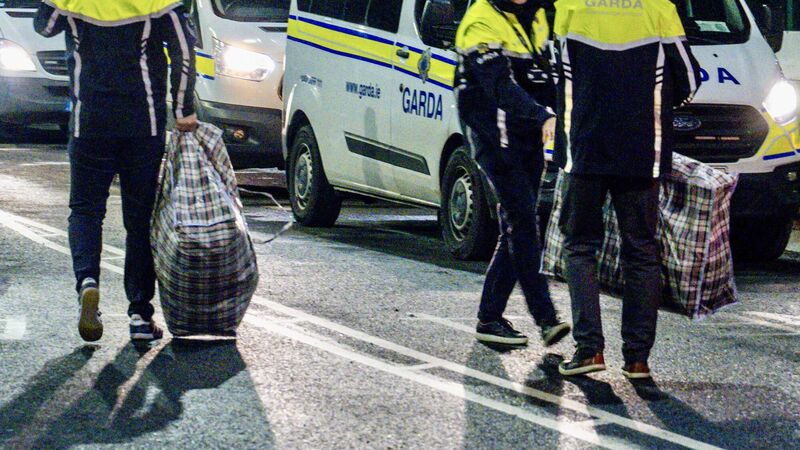
One family had every reason to believe that no removal would occur before a revocation decision issued. Instead, they were separated on a pavement outside the GNIB offices. File picture: Chani Anderson
On February 28, 63 people were deported from Ireland to South Africa, nine of them children deported as part of their family units.
According to An Garda Síochána, ten of those deported had been convicted of offences in Ireland, including crimes targeted under operations against sex offenders and drug trafficking, as well as road traffic offences.
The returnees were accompanied on the flight by members of the Garda National Immigration Bureau, medical staff, an interpreter and a human rights observer.
While the deportation was legal, what happened in the weeks leading up to it raises urgent questions about how this State enforces deportation orders and the cruelty of the system which is now in place.
Read More
When a person receives a deportation order, they are instructed to present at the Garda National Immigration Bureau (GNIB) in Dublin on a specified date and time to carry out the deportation. Most of the time, nothing happens at this first appointment, and it becomes a monthly sign-in exercise.
A number of people with deportation orders have applied through the Department of Justice to revoke them, something permitted where there has been a material change in circumstances such as new humanitarian concerns, health issues or a change in family circumstances.
Decisions on revocation currently take over 12 months to issue. Previously, the State would wait until these applications were decided before deporting but over the past two years, we are seeing huge changes in how the Department of Justice operates.
Read More
On February 13, 38 people arrived at the GNIB for scheduled appointments. As they left the building having been given their next appointment date, they were detained and taken to Cloverhill Prison and the Dochas Centre at Mountjoy Prison.
The law allows those with deportation orders to be detained for up to 56 days to facilitate removal. Historically, detention tended to arise where a person had failed to comply with reporting conditions. Here, the 38 people who had complied were detained without warning.
Among those detained were a father and adult son, taken into custody in front of their 13-year-old relative. The family had followed every instruction given to them.
Days earlier, acting in good faith on directions from IPAS, they had relocated to Dublin. They were awaiting a decision on a revocation application grounded in humanitarian considerations.
They had every reason to believe that no removal would occur before that decision issued. Instead, they were separated on a pavement outside the GNIB offices.
After witnessing his father and brother being detained, gardaí reportedly suggested that the child may have to enter foster care so as his mother could be detained. Only the absence of an available placement prevented that from happening.
It was not policy that spared this child further trauma; it was lack of capacity in an already overstretched system.
His upheaval had begun days earlier when he returned home from school on a Friday to learn he would be moving 280 kilometres away the following Monday. No discussion of deportation. No explanation beyond relocation.
A child who had attended Irish schools since the age of eight, whose memories of life before Ireland were faint, was uprooted from friends and teachers overnight.
Within days, he would witness close family members being taken into custody and face the prospect of foster care himself.
Another young woman detained that day had a serious medical condition requiring daily medication. When she failed to return home, her family traced her phone’s last signal to Santry before the signal disappeared.
Calls and emails to the GNIB and the Department of Justice yielded no confirmation of where she was being held. For hours, they did not know if she had been deported or was in detention.
When those detained finally managed to contact their families, some confirmed that they were not given medication for days. Some slept on mattresses on cell floors in overcrowded conditions.
The prison system, already under strain, was plainly not equipped for such an intake.
Under EU law, immigration detention is supposed to occur in specialised facilities, separate from those serving criminal sentences.
Ireland has opted out of the EU Returns Directive, but the underlying human rights principle is straightforward: administrative detainees — people who have committed no crime — should not be subjected to penal conditions indistinguishable from punishment because deportation is an administrative measure, not a criminal sanction.
Elsewhere in Europe, designated immigration detention centres are the norm. Even where prisons are used in exceptional circumstances, detainees are kept strictly separate from convicted prisoners.
What does it say about our system when compliance is met with detention? When families are separated without warning while applications are pending?
When a child’s protection from foster care depends on the availability of a bed and not on principles? When people seeking humanitarian consideration vanish into prisons without their families being told where they are for days?
No one disputes that the State should have the power to enforce deportation orders, but enforcement must be humane.
It requires consideration of the rights of the child, proper medical care, timely decisions on revocation applications and facilities that recognise the distinction between administrative detention and criminal punishment.
Above all, it requires that we resist the slide into language that erases the human beings at the centre of these decisions. We are at a crossroads in history where international law and human rights are being eroded by the day.
As a country we need to make a choice to actively ensure that human rights are respected in all of the State’s actions.
If we are to remain a republic that values dignity and fairness, then the system that removed these people must be examined and improved before the next deportation operation is carried out.


CONNECT WITH US TODAY



Be the first to know the latest news and updates