Britain's decline offers us a preview of the USA's future
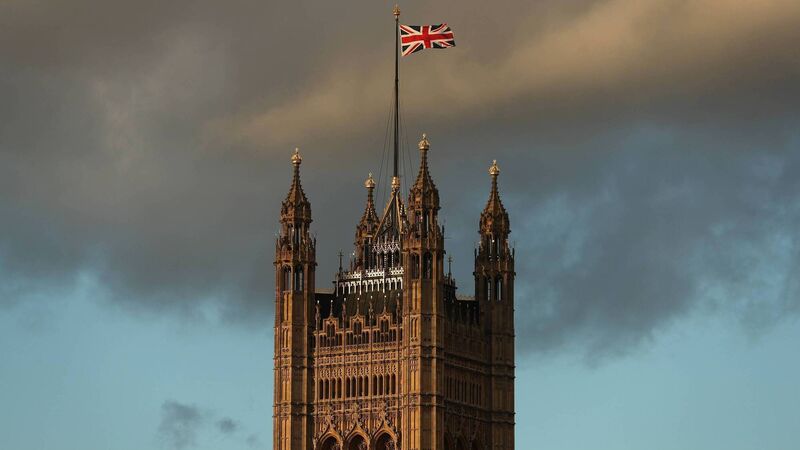
The British flag flying atop the Palace of Westminster on December 7, 2018, ahead of a crucial vote by MPs on the Brexit deal agreed by then prime minister Theresa May and the EU. Picture: Daniel Leal-Olivas/AFP/Getty
When issuing their warnings about Western 'civilisational erasure', US president Donald Trump and vice president JD Vance often point to Britain, and especially London, to make their case.
But while Britain does offer a cautionary tale, it is not the one Maga has in mind.
Rather than indulging in anti-immigration culture wars, Trump and his followers’ time would be better spent examining how Britain struggled with the loss of global pre-eminence.
No other country’s recent past offers a clearer preview of America’s potential future.
The Anglo-American relationship has been perpetually fascinating.
From the 19th century onward, impoverished British politicos and aristocrats often maintained their status by marrying into American money.
Britons used the New World to rejuvenate the old one, but they always bristled at their new dependence, as illustrated by the fictional Grantham family of Downton Abbey.

The two countries remained allies through the Second World War and its aftermath, but the relationship was never free of tension.
The Brits snootily thought of themselves as the subtle Athenians, and the Americans as the crude Roman successors.
As the Americans built their new empire, they came to resent British attempts to cling to the old order.
Sterling used to be the world’s dominant currency, and then it wasn’t.
But, even in the 1960s, the US treasury reckoned that Britain still provided the perimeter defence of the dollar.
Then came the pound’s devaluation in 1967, which was the beginning of the end of the dollar standard for the rest of the world.
US leaders even borrowed British language to address their own currency concerns.
After British prime minister Harold Wilson told a television audience that devaluation would not affect the value of the “pound in your pocket”, US president Richard Nixon told his constituents: “If you are among the overwhelming majority of Americans who buy American-made products in America, your dollar will be worth just as much tomorrow as it is today.”
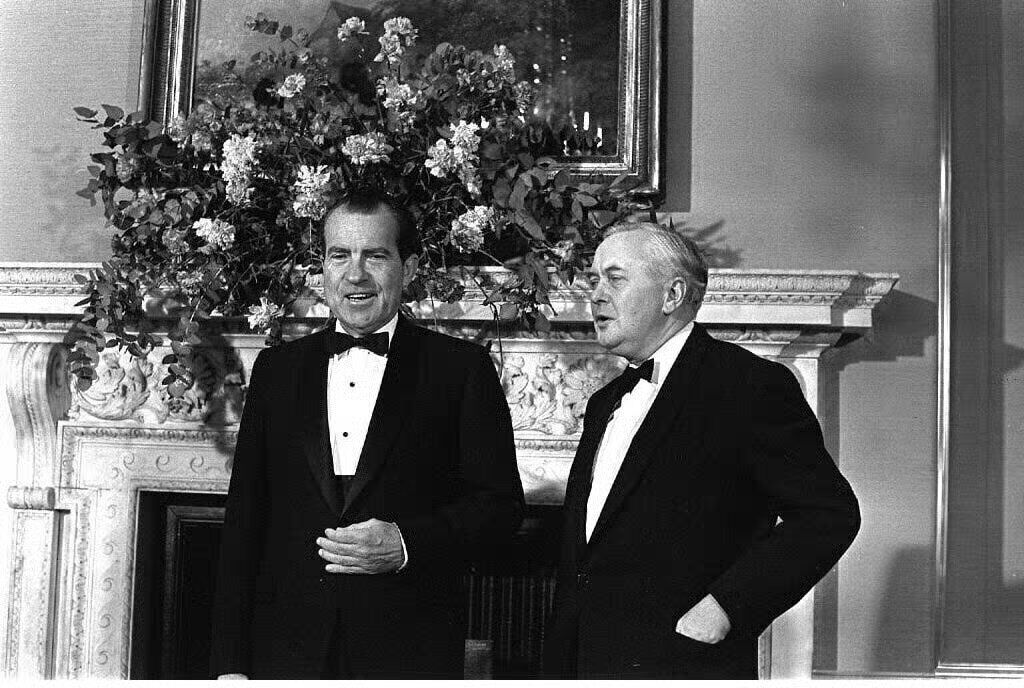
Neither statement was true.
The sliding currency was, in fact, a precursor to the coming inflation crisis.
At a time when the rest of the world is looking for alternatives to the dollar, Britain’s decline offers another parallel.
Like the Trump administration, Britain took pains to find countries that still wanted to align with it politically.
After 1945, two such countries were Egypt and Argentina, both of which held large pound reserves but rapidly grew tired of being linked to a weakening hegemon.
Likewise, Trump is trying to sustain American power through his oddly composed Board of Peace (which largely comprises authoritarian regimes that see something to gain from flattering the president).
As is so often the case, the declining power’s main vulnerability is fiscal.
Just a few years ago, Liz Truss’s short-lived British government showed how unfunded tax reductions (or expenditure increases) can rattle bond markets, threaten pension funds, and produce an unsustainable rise in the cost of state borrowing.
Now, markets are increasingly concerned about the prospect of sustained deficits pushing up US borrowing costs.
Americans might also draw lessons from Britain’s protectionism during the stagflationary 1970s.
At the time, the Labour Party’s left (and the economists who cheered it on) argued that if the government would only spend more, it could push up investment, raise productivity, and thereby cut inflation to make goods more affordable.
It was a complete illusion, leading to accelerating, rather than falling, inflation.
One now hears the same argument from Trump’s advisers, who confidently insist that the AI revolution and massive investments in data centres will raise productivity so much that inflation will fall and fiscal deficits will vanish.
Again, they would do well to consult economic history.
Britain’s decision to exit the EU ushered in a decade of uncertainty, with endless trade policy debates about the rules of origin in a world of complex supply chains, and about exemptions for
essential or irreplaceable items.
The deep, persistent uncertainty that Trump’s tariffs have introduced could have an even larger and more deleterious effect on the US economy than Brexit did in Britain.
The British experience also offers political lessons.
The Jeffrey Epstein saga is international in scope, but its ramifications, perhaps surprisingly, have been felt most acutely in Britain.
The scandal threatens to bring down both the monarchy — owing to then-Prince Andrew’s involvement, and the question of who knew about it — and the current prime minister, who appointed as ambassador to the US a former minister with deep ties to the sex offender.
So far, US politics — where Epstein’s tentacles reached more deeply — seems to be less vulnerable.
But, like the trade story, this is a scandal with ramifications that will only multiply over time.
Moreover, the scandal is more than a tabloid news story, because it is suggestive of a deeper rot. Britain and the US both navigated the 20th century brilliantly because of their two-party political systems. They did not have to deal with the difficult bargains required in multi-party systems to form coalition governments.
But what happens when both parties lose credibility?
In Britain, the scandal has contributed to the rise of an outside party that draws its strength from the bankruptcy of the status quo.
Now that Maga has taken over the Republican Party, and the Democrats are deeply divided between centrists and leftists, the British party system’s implosion offers a final preview of America’s future.
- Harold James is professor of history and international affairs at Princeton University, and the author, most recently, of (Yale University Press, 2023)
• Copyright: Project Syndicate
Read More
CONNECT WITH US TODAY



Be the first to know the latest news and updates