The 10 infrastructure projects that will show if the Government is fulfilling its building promises
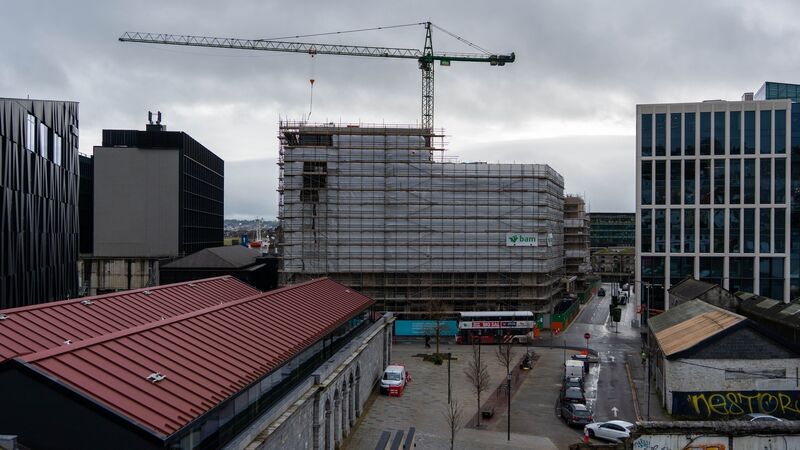
The problem facing the Government is that many of these measures will take years to implement, with an even longer wait for people to reap the economic and social benefits. File picture: Noel Sweeney
The Government’s long-awaited accelerating infrastructure report arrived late last year to much fanfare, but there remain high levels of scepticism as to how quickly it will bear fruit on the myriad infrastructural challenges across the South-West.
It's a long overdue attempt to sort Ireland's infrastructure deficit, but the problem facing the Government is that many of these measures will take years to implement, with an even longer wait for people to reap the economic and social benefits.

So how will the Government, and indeed the electorate, know if we are making progress?
The following 10 projects, though far from exhaustive, should be considered bellwethers for an improved delivery mechanism for critical infrastructure and housing delivery in the South-West and across the country. Not all need to be completed, or even fully under construction, but momentum must be visible.
Read More
Each of these projects matters for a different reason, but all are vital for the same underlying one: quality of life and economic resilience.
Many are essential for us to simply catch up with the demands of our expanding population, most notably the water and housing projects. It’s worth noting and preparing for the fact that delivering these projects will challenge our climate action goals, and all were conceived well before AI or war in Europe emerged — building on moving sands is ill-advised.
This project has landed on the desks of many ministers since the 1970s. Back then, population growth and economic concentration highlighted the inadequacies of the River Liffey to meet Dublin’s needs.
Optimistically, construction might begin in 2028 with a fair wind. With a formal application finally made late last year, 2026 should see more validation/submissions and, no doubt, objections, with public consultation starting over the next few months, if construction is to begin as forecast.
Given where this project currently sits, it could act as the perfect test of how the new way of doing business will work in reality. However, many expect this project to be sitting on the desk of future ministers in the coming decades.
This project will see the reopening of freight services, strategically linking Shannon Foynes Port to the national rail network, and will be delivered over two phases.
Phase one focuses on track renewal and phase two on communications and yard improvements. The project was due to complete in 2025 and is now scheduled for the first half of 2026 and considered on schedule.
The bypass spans approximately 7kms, extending from Croagh to Adare. It includes four additional river bridges, three signage gantries, and seven overbridges/underbridges. It also includes two new railway bridges, over the Foynes to Limerick railway line mentioned above.
The Government approved the advancement of the bypass construction in November 2023 to facilitate early delivery, and the project is scheduled for completion by June 2027, ahead of the Ryder Cup at Adare Manor.
The National Planning Framework (NPF) aims to have a population growth rate in the rest of the country that is twice that of the Greater Dublin Area. Cork and Limerick will have to attract, retain and sustain the vast majority of this by generating sufficient economic growth up to 2040.
Turning Cork and Limerick into a connected region through rail connectivity will underpin the required housing delivery, labour access and urban regeneration required. Hopefully the region will hear the trains a-coming this year.
MetroLink has become more than a transport project. It is a test of Ireland’s ability to deliver complex urban infrastructure. It will cleave through the political landscape of many future governments.
Connecting Swords, Dublin Airport and the city centre, it addresses congestion, labour mobility and climate goals in a single corridor. The project has faced a long planning and procurement journey, and 2026 must be the year when that preparatory phase gives way decisively to delivery.
The Government will attempt to introduce a higher threshold for judicial reviews and world-class consultation towards the procurement process proper.
Expect heated political debate at this stage as the estimated “costs” of the project will become more apparent. The coalition will have to counter with the many societal and economic benefits of the project.
The complete Opera Square project has multiple elements including a 14-storey landmark office building, a new city library, a hotel, apartments, retail and restaurant units, and a large civic plaza.
The development integrates 16 preserved Georgian buildings with new construction and is scheduled for full completion in 2027.
The pipeline for major road expansion in Ireland is incredibly sparse despite a large allocation of exchequer funding. BusConnects and national road upgrades are the projects which are most visible to the public and progress on essential road upgrades has been very slow.
Expect progress on the M28 from Cork to Ringaskiddy, bypasses like Slane and, of course, Adare.
Adare has the potential to become an exemplar of how expeditiously infrastructure can be delivered generally, not just when an international sporting event such as the Ryder Cup is imminent. If the Government hopes for an early win to show progress, this would be an easy starter.
The political system now understands that solving housing means first solving infrastructure. The Government’s €11.22bn investment in 2026 will not translate into homes without significantly increased water, wastewater and electricity grid resilience.
If we’re making progress, keep an eye on commencements, not just planning permissions granted. The latter spiked last year, but never translated into commencements. We will need to see a higher proportion of permissions moving to commencement within a six-month period.
This year, the Land Development Agency will continue to grow in importance and most likely assume the mantle as the biggest developer in the State by 2028.
The Government will be watching with bated breath to see if tax measures in Budget 2026 kickstart apartment building in Dublin and Cork, reigniting the political debate on “funds”.
This strengthens Ireland’s energy security and embeds us more firmly in the European electricity market. It supports decarbonisation, price stability and system resilience.
Energy infrastructure of this kind is complex by nature, but its strategic value is clear, particularly in an era of geopolitical uncertainty.
By the end of this year, we will need to see most of the cable laid along most or all the 575km route. There will need to be a series of substation upgrades on both sides of the water.
)
Grid upgrades and renewable integration are the quiet enablers of everything from data centres to electric vehicles. Without them, climate targets and economic growth come into conflict. With them, they reinforce each other.
The challenge is pace: demand is moving faster than infrastructure.
- Shane Dempsey is director general of the Association of Consulting Engineers Ireland (ACEI)

CONNECT WITH US TODAY



Be the first to know the latest news and updates