Colin Sheridan: In an age of institutional distrust, legitimacy migrates to the personal
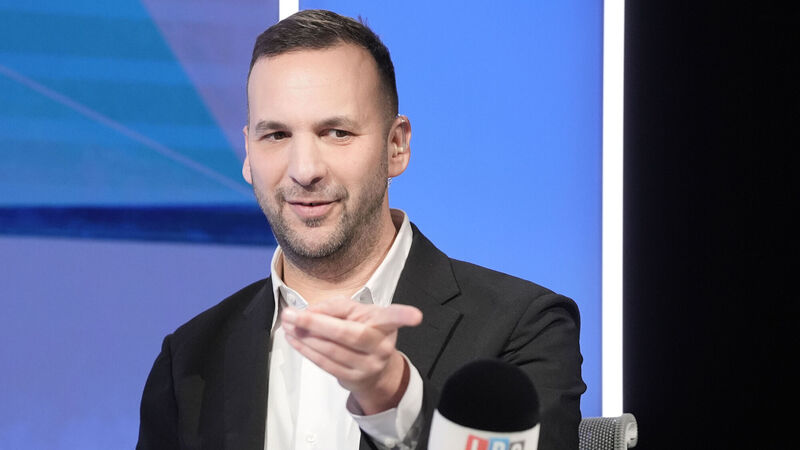
Green Party leader Zack Polanski. On paper, he isa bundle of contradictions that resolve into credibility. Picture: PA
There is a moment, early in the Green Party’s recent campaign video, where Zack Polanski is simply running. Not away from anything. Not towards a microphone. Just running — through a recognisable city, breathing audibly, speaking directly to camera.
He talks not about “policy frameworks” but about life as it is lived now: Exhaustion, alienation, anger, hope.
It is rare to see a politician allow themselves to be this physically vulnerable. Rarer still to watch it without the performance collapsing into parody.
The video — released some weeks ago and circulating far beyond the Greens’ usual ecosystem — achieves something striking: It makes a political leader feel human first, and a brand second.
In that inversion lies the Polanski moment.
There is no shortage of politicians who can speak well. What the co-leader of the Green Party of England and Wales is doing differently is communicating in a register that cuts across class, cynicism, and algorithmic fatigue.
Polanski isn’t selling transformation as spectacle. He frames it as intimate, relatable, and necessary.
Environmental politics has long suffered from a communicative deficit. It has often sounded managerial when people are grieving, technocratic when people are angry, abstract when people are struggling to afford to live.
The science may be urgent, but the language has rarely felt lived in. Polanski, with a flourish uncommon in British public life, inhabits it.
But his power is not borrowed. He is, on paper, a bundle of contradictions that resolve into credibility: A Jewish politician outspoken on genocide in Palestine; an intellectual without ego; a radical without performative rage.
He speaks about care, solidarity and planetary limits not as ideological positions, but as human ones.
That is why the video works. Not because it is slick — it isn’t — but because it is congruent. The breathlessness and lack of polish reinforce the sense that this is not an image being imposed, but a self being extended.
Crucially, it has reached people across Britain who have not felt reached in a long time.
There is a cohort — younger, digitally saturated, politically literate but emotionally estranged — for whom politics has become a closed circuit.
Endless crisis, endless discourse, endless disappointment. They are not apathetic, but overstimulated and under-invited. They are watching war in their pockets and ecological collapse in their feeds.
They are not looking for another promise, but for a voice that understands the psychic weather. Polanski might be that person.
This moment is as much about personality as it is about the Green movement.
In an age of institutional distrust, legitimacy migrates to the personal. People ask less what you represent, and more who you are.
Predictably, Polanski has been written off as a dilettante by parts of the political establishment. That dismissal brings its own power.
From a British perspective, this moment is being tested in real time.
In Manchester voters in the Gorton and Denton by-election go to the polls in a contest once safely Labour but now among the most unpredictable races in recent British politics.
The by-election matters for several reasons. For Labour, it is a stress test in an urban seat that should be secure.
A strong Green performance would suggest progressive voters are willing to move beyond Labour in pursuit of a sharper climate and social justice agenda.
For the Greens, even coming close would validate Polanski’s strategy: That authenticity and moral clarity can translate into votes, not just online enthusiasm.
More broadly, the contest reflects the fragmentation of traditional party loyalties in England’s cities — a landscape no longer reducible to two dominant tribes.
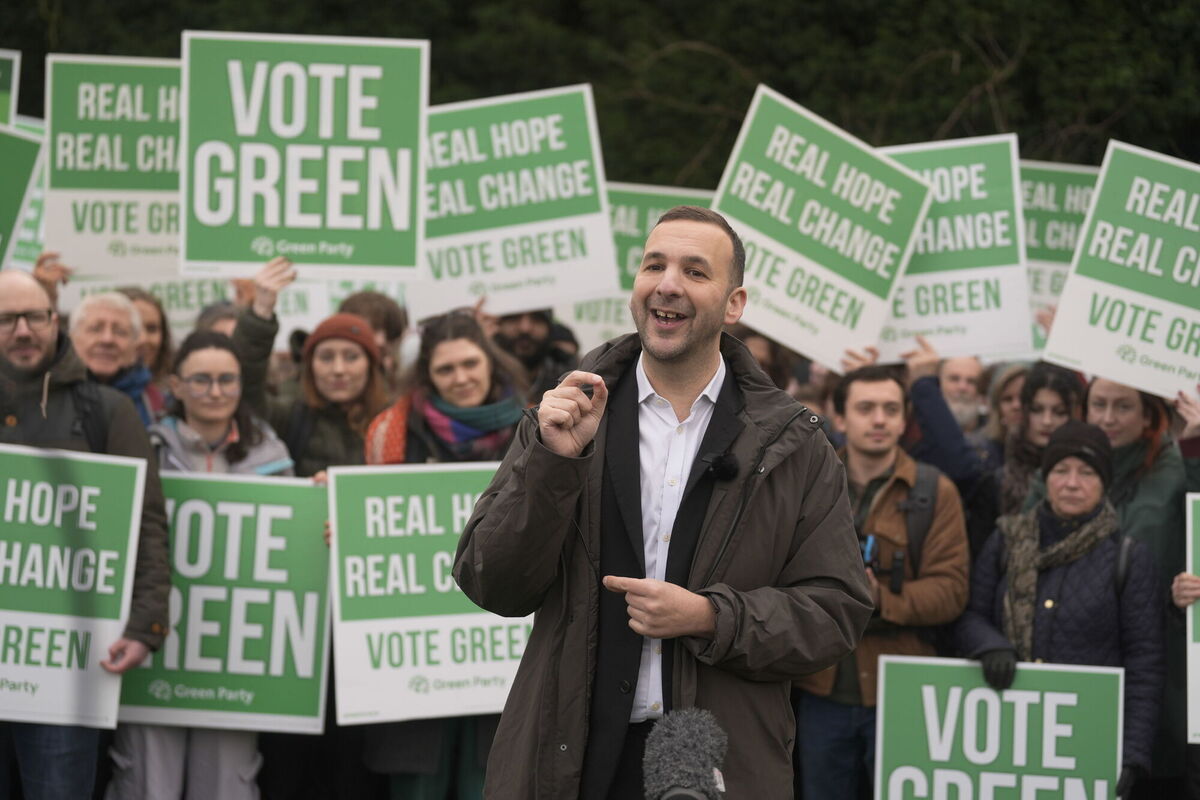
Veteran journalist Tim Walker puts it bluntly: “If I were a sitting Labour — or more especially Lib Dem MP — I’d be terrified to face a Green opponent.”
“The thing about Labour and the Lib Dems is they script their candidates. I had to take part in daily calls when I was (briefly) standing in Canterbury for the Lib Dems where I would be told what I thought about everything. Whereas Greens can basically just talk common sense — and on issues like Gaza, be human.”
In a culture dominated by message discipline and risk management, the Greens’ lack of institutional power has become an asset. They are not yet polished into caution. They can still sound like people.
Walker frames them, like Reform UK, as a disruptor force — though of a different kind. Reform trades in grievance. Polanski offers coherence. But the vacuum they exploit is similar: Disillusionment with scripted politics.
“The great thing about the Greens,” Walker says, “is I think they will go after the super rich rather than endlessly going for the squeezed middle.”
For Saoirse McHugh, former Irish Green Party candidate and climate activist, the Polanski moment is less about arithmetic than emotional infrastructure.
“I think I can only be optimistic about Zack Polanski,” she says.
“Even if he doesn’t make massive electoral gains, the fact that he has gained so much support is hopeful. There are so many people who want life to be better for everybody and will get behind somebody articulating that.”
She situates this in what she calls a hostile environment.
“We’re not living in a neutral space. There’s infinite sums of money being spent trying to convince us not to care about anybody else or the planet. And even with all that, people like Zach and his message are popular and growing. That’s hopeful.”
For McHugh, the culture-war intensity is not accidental. Social division, she argues, distracts from environmental breakdown and the interests that benefit from inaction.
If that is even partly true, figures like Polanski represent more than communications success. They disrupt a distraction. They reconnect ecological breakdown to everyday life in language that doesn’t require translation.
“Environmentalism in politics has always been up against it because it directly challenges the way the world works,” McHugh says. “But it has truth on its side.”
What the vote will reveal is not simply whether the Greens can win a seat, but whether this appetite for authenticity has electoral weight.
Most politicians could not have made that video without it feeling contrived. Polanski does not need to perform authenticity because he is willing to risk it.
In a political culture built on simulations, that risk still reads as truth.

CONNECT WITH US TODAY



Be the first to know the latest news and updates