Unequal access to remote work is a policy failure
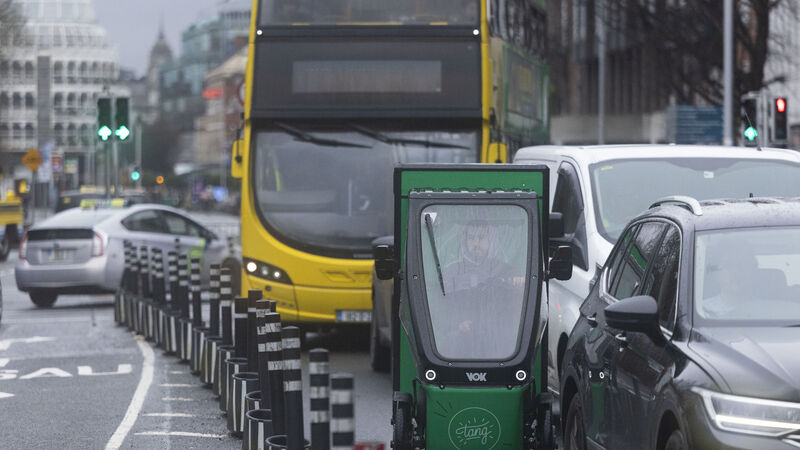
If access to remote and hybrid work is allowed to harden into a perk for higher-paid roles, then inequality will be built into the working week itself. Longer commutes, heavier congestion and higher emissions will be the price paid by those with the least choice. Picture: Sam Boal/Collins Photos
If current patterns continue, you should only have access to remote or hybrid working if you earn more than a €100,000 a year, and not at all if you earn much below €60,000. Harsh? This week we learned an “overwhelming” number of jobs in the Irish economy offer no flexibility to work from home, prompting concern remote and hybrid work is now largely confined to higher-paid roles.
JobLeads, an online job platform based in Germany, reported this week that only 3.7% of 48,000 active Irish job postings are fully remote, with 13.4% hybrid, and 83% requiring daily workplace attendance.
It also found just 5% of roles paying under €60,000 offer remote or hybrid options, while jobs paying €100,000 and above account for more than a quarter of them.
These figures suggest the push-back to the office could collapse one of the most significant innovations in modern working life. It also risks hardening inequality within the workforce if remote work becomes an exclusive perk for higher-paid staff, condemning others to longer delays and wasted time.
The overnight shift to remote work during the covid pandemic in 2020 was remarkable because it was largely unplanned, yet it mostly worked. We quickly adapted to its possibilities and learned to recognise its limitations. For the most part, it was warmly embraced and was spoken of in almost revolutionary terms.
Regional economies got a boost, and workers with caring responsibilities experienced a greater degree of flexibility, allowing for a more sustainable balance between caring and work demands.
Despite all these gains, anxieties about workplace collaboration, city centre footfall and productivity have continued to colour the debate. This is why Fórsa has challenged employers over unilateral attempts to force people back into the grind of 10 commutes a week.
Most recently, this has arisen in a dispute with the Department of Social Protection over increased office attendance. The matter is now due to go to a conciliation process.
In a survey of 14,000 Fórsa members last year, 55% of respondents said their main priority was to protect existing hybrid and remote working arrangements. It reflects the real concerns of Irish workers, who have already proved beyond doubt that remote and hybrid arrangements can serve the needs of workers and employers without compromise.
A drift back to the pre-covid status quo, driven by concern over commercial property values or an old-fashioned desire for control, would constitute a real political failure by the government that facilitates it.
No government will be rewarded for forcing more people to spend more time in more traffic. Dublin is now the third most congested city in Europe. Its main arterial routes are clogged every morning, for miles in every direction.
In this context, being herded back to the office is making life tougher than it needs to be for a lot of people, not least those with caring responsibilities at home. The same applies to those who have made the difficult decision to move further away to afford a home.
Taking those JobLeads figures at face value, the only exception would be higher paid, senior staff and management grades. In that scenario, higher-paid staff avoid peak commuting while junior colleagues, mandated back to the office, collaborate with them over video calls.
The Government's own remote working policy, published in 2021, envisaged 20% of public sector employees working remotely or on a blended basis, with further annual increases planned up to this year.
However, downward pressure on the value of commercial property, and management anxiety over productivity and oversight, has eroded employer enthusiasm for remote and hybrid working in the intervening years.
The response from employers looks shortsighted when you consider Irish productivity has not been adversely affected by remote and hybrid working. Labour productivity, measured by the CSO, shows an increase in total economy activity between 2022 and 2025. Insisting workers increase their current level of exhausting and pointless hours of commuting will do little to build on this.
If access to remote and hybrid work is allowed to harden into a perk for higher-paid roles, then inequality will be built into the working week itself. Longer commutes, heavier congestion and higher emissions will be the price paid by those with the least choice.
That is not an inevitable feature of modern work. It is a policy failure, and it should not be accepted as progress.
- Niall Shanahan is media relations director at trade union Fórsa
CONNECT WITH US TODAY



Be the first to know the latest news and updates