There's no such thing as a binary choice on food ethics
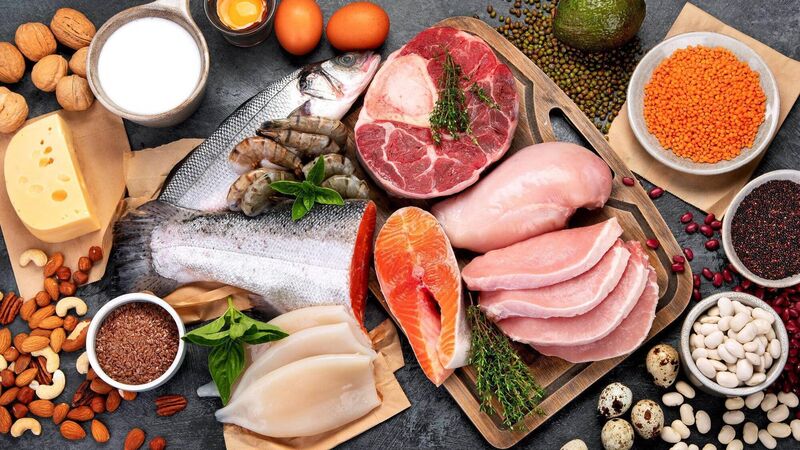
The choice between meat and beans is not binary â the environmental impact is never straightforward.
I am an environmentally conscious meat eating event caterer who is increasingly being asked to cater entirely vegan menus.
For those who know me, itâs not a stretch to say Iâm fond of a challenge.Â
In the past two years I have truly relished teaching myself how to create exquisite wedding menus for my vegan couples.Â
Often the best dishes are created from constraints. Eliminating meat from a menu certainly feels like a constraint for someone who adores it.
However, I try to pay attention to what food is telling us, and I tune in as closely as possible to the arguments for and against all sorts of issues pertaining to what we consume and have access to.Â
CLIMATE & SUSTAINABILITY HUB
Recently, Iâve been trying to gather a deeper understanding of the arguments for and against consuming red meat on a global scale and the deep dive research has left me no closer to a solid opinion on what is right and what is wrong about meat consumption.Â
I absolutely respect and admire everyoneâs individual right to choose their diet based on their sensibilities. In fact, how fortunate are those of us who have a choice?Â
My wonderings are more to do with the marketing of âbeans vs red meatâ and the mixed messages based on global meat production methods, versus how we produce beef here in Ireland.
I have enormous respect for Irish farmers and the work they do.
The cow, arguably the backbone of Irish agriculture, is increasingly being labelled as a problem to be managed.Â
The bean, meanwhile, seems elevated to hero status. No doubt beans are cheap, efficient and climate-friendly. But what are the nuances of Irish beef production versus large scale beef production?
According to the Environmental Protection Agency, agriculture accounts for over a third of Irelandâs greenhouse gas emissions, with livestock methane doing much of the heavy lifting.Â
That statistic alone places enormous pressure on farmers, policy-makers and rural communities.
But methane is not without nuance as a measure of impact.
Unlike carbon dioxide, methane is a short-lived gas. It breaks down relatively quickly in the atmosphere.
This has led to ongoing debate about how it should be measured and weighted, with bodies like Teagasc and a number of Irish scientists arguing that conventional climate accounting doesnât fully capture this difference.Â
That doesnât make methane irrelevant, but it complicates the story somewhat.
Globally, the numbers feel harder to ignore.Â
Thereâs a study that gets cited again and again, the Oxford one, which shows beef coming out worst of all the common foods when it comes to land use and emissions.
That research sits behind much of the international pressure on high-income countries to eat less red meat.
Even within that same research, thereâs a line that rarely makes it to the headlines.
Not all beef is the same. The worst systems are vastly worse than the best.

This is where Irish farmers start pushing back. Our cattle are largely grass-fed. Theyâre not confined to feedlots. Theyâre not dependent on imported soy grown on cleared rainforest.Â
Much of Irelandâs farmland simply canât grow crops for direct human consumption, but it grows grass exceptionally well. In that context, cattle donât feel irrational. They make sense.
Regenerative grazing, keeps surfacing in these conversations. The idea is that well-managed cattle might improve soil health, support biodiversity, maybe even sequester some carbon.Â
The cow, not as a problem to be eliminated, but as a tool, if used carefully. I want that to be true. Itâs an appealing idea.
But again, the evidence doesnât settle. Some benefits are real. Some claims are overstated.Â
No one seems entirely convinced that regeneration can simply balance out methane at scale. The story doesnât have a clean ending.
And then, inevitably, we arrive at the bean.
Beans are presented as the answer to several problems at once. Theyâre cheap. Theyâre efficient.Â
They fix nitrogen in the soil, reducing the need for synthetic fertilisers that are energy-hungry and rough on waterways.Â
Theyâre shelf-stable, nutritious, and have a far smaller emissions footprint per gram of protein. From a systems point of view, it makes sense that weâd eat more of them.
But this is where I start to feel a bit uneasy.
Beans are often framed as the solution. As if food culture, farming systems, rural economies and identities can just pivot, cleanly and quickly.Â
In Ireland, beef isnât only something we eat. Itâs land use. Itâs generational work.Â
Itâs debt structures, policy decisions made decades ago, and lives organised around animals and seasons.
So, is there a way to keep eating beef that makes sense?
Probably not in unlimited quantities. Probably not cheaply.
Maybe a future that includes beef looks like fewer animals, better prices for farmers, higher prices for consumers, and an acceptance that plants move back to the centre of the plate.Â
That beef becomes something more occasional.
But then another question surfaces. Who actually gets to decide what a sustainable food system looks like?Â
Scientists. Farmers. Policy-makers. Retailers. Or the rest of us, standing in the supermarket aisle, trying to do our best with the information weâve been given.
I donât think beans are the enemy. And I donât think cows are either.
What troubles me is the way the conversation seems so very binary. One hero. One villain. One right answer.Â
Without enough space for the realities of how food is produced, where it comes from, and who carries the consequences of changing it.Â
In spite of my deep dive, I still donât have all the answers.