Rosita Sweetman: Dublin ‘hidey hole’ love story cut short
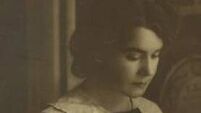
It was in Seabank that great aunt Winifred fell in love with dashing freedom fighter, the deputy chief of staff of the IRA, and minister for home affairs Austin Stack
Rosita Sweetman: Dublin ‘hidey hole’ love story cut short

Winifred set about turning Seabank into a depot for the making and distribution of first aid supplies for the IRA fighters in need of refuge. One such fighter was deputy chief of staff Austin Stack. File Picture: Niall Carson/PA

Banging

around in the vaults of family history that is the inside of my head, social media, books, news clippings, friends, and the internet, I stumbled onto a startling and rather wonderful revelation: My great aunt was a feminist and a revolutionary.

Yay, as the young people say.

Not only that, but the beautiful house Seabank on Strand Rd, Dublin, that she had gifted my mum and dad contained a “hidey hole” — or, as it was then rather inelegantly named, “a priest’s hole” — tucked away behind the wardrobe in mum and dad’s bedroom. Built into the wall, this was a thrillingly stifling, pitch dark wooden box, where sitting with your knees up against your teeth was the only posture option. It wasn’t a priest’s hole at all, but constructed for freedom fighters on the run.

Winfred and Austin Stack: A love story cut short.

HISTORY HUB

If you are interested in this article then no doubt you will enjoy exploring the various history collections and content in our history hub. Check it out HERE and happy reading

It was a copy of “priests’ holes” constructed in “Big Houses” during the 1500 and 1600s’ in Britain, when Catholic persecution was at its height, but the claustrophobic box we played “Priests on the Run” with was designed and built for men on the run from the British.

Thrillingly, it was in Seabank that great aunt Winifred fell in love with dashing freedom fighter, the deputy chief of staff of the IRA, and minister for home affairs Austin Stack.

Quite the giant leap for Winifred Cassidy Gordon, or Winnie, a merchant’s daughter from Enniskillen whose first husband had been an RIC inspector. More yays!

After the death of their only child, along with her first husband, Winifred went to Paris to drive American ambulances during the First World War — the nearest an intrepid young woman could then get to medicine and a battlefield.

Her brother, my mum’s father, was master of the Coombe Hospital. But fewer than 4% of doctors at the time were women.

She returned to Dublin in 1916, and immediately became involved in the fight for freedom. She volunteered her nursing skills from her time in Paris in Baggot St Hospital. Now, it is sadly rotting and abandoned

 Attending the requiem Mass for executed brothers Padraig and Willy Pearse, an act of bravery with post-1916 Dublin crawling with British spies, it was while visiting their mother later she met the leaders of the republican movement.

Clearly not one to waste time, Winifred set about turning Seabank into a depot for the making and distribution of first aid supplies for the fighters. She provided the famous “hidey hole” for fighters in need of refuge.

It was on Bloody Sunday — the day Michael Collins’s Squad killed members of the Cairo Gang, the British spies attached to the army, followed that afternoon by the infamous Black and Tans bursting into and indiscriminately opening fire on spectators and players alike at a football match in Croke Park — that Austin Stack, then deputy chief of staff of the IRA, came to Seabank and was hidden. And fell in love.

1916 Rising

The path of revolutionary love did not run smooth. Stack — arrested in Kerry as Roger Casement’s tragic attempt to land arms off the coast went horribly wrong, sending the local British into overdrive the weekend before the 1916 Rising, was imprisoned and held in solitary throughout Easter Week. He only got scraps of news on how the 1916 Rising had gone, along with how all his comrades had been executed, weeks later.

“For now”, he wrote, “the whole thing seemed to me one of great tragedy.”

It was. He was sentenced to death, then later released under amnesty. The hills of Kerry blazed with bonfires to welcome him home.

Both Winifred and Austin were imprisoned “for anti-treaty activities” during the Civil War, the terrible internecine conflagration that followed the fight for independence.

Under intense pressure from Britain - accept our last-minute chicanery that independence will not include Northern Ireland, or else - brother turned against brother. The cruelty was off the charts.

Hunger strikes, led by Stack to gain political status both in British and Irish prisons, took their terrible toll. His letters to Winifred are tender, domestic, heartbreaking

Comrades near death. Hunger robbing sleep. Stomach cramps so awful they can’t walk. Hallucinations.

“My old head in a bad way.” “There’ll be a corpse from here ‘ere long.”

“Give my love to all my friends.”

Finally freed, he and Winifred married. But marital bliss in her beautiful Seabank was to be short lived.

Like Constance Markievicz, whose health had also been destroyed by prolonged hunger strikes, he died five years later.

A love story cut horribly short.

Now comes the strange part: As a child growing up in Seabank, I knew nothing of all this.

Winfred Stack. 
Winfred Stack. 

No idea that great aunt Winifred had been at the centre of the revolutionary struggle.

No idea she had been an executive member of Cumann na mBan.

No idea that Seabank had been at the centre of the revolutionary struggle. No idea that the priest’s hidey hole wasn’t for priests at all.

Was it patriarchal prejudice that back then, when women married, they didn’t just lose their maiden name, they lost their back story?

Was it political prejudice? Dad and his family, all staunch Fine Gaelers, not happy to glorify the rebels’ past — even though this was his wife’s story? Even though the house we all grew up in, the house we adored, had been a gift from his wife’s aunt? Dad, the kindest of men, didn’t think any of this was worth a mention?

Much later, long-widowed mum, sailing off into one of her periodic “highs”, would say: “I couldn’t stand all those Sweetmans!”

It puzzled me. Were we, her children, not Sweetmans? It didn’t occur to me we were also 50% hers — Maddens and Cassidys.

I’m really sad I didn’t know more. Sad I didn’t know to ask mum more. Frustrated I’m only getting to know great aunt Winifred’s wonderful story now.

Still, at least now.

More in this section

Revoiced

Newsletter

Sign up to the best reads of the week from irishexaminer.com selected just for you.

Cookie Policy Privacy Policy Brand Safety FAQ Help Contact Us Terms and Conditions

© Examiner Echo Group Limited