Venezuela, Trump and oil: why this intervention shatters the rules-based world order
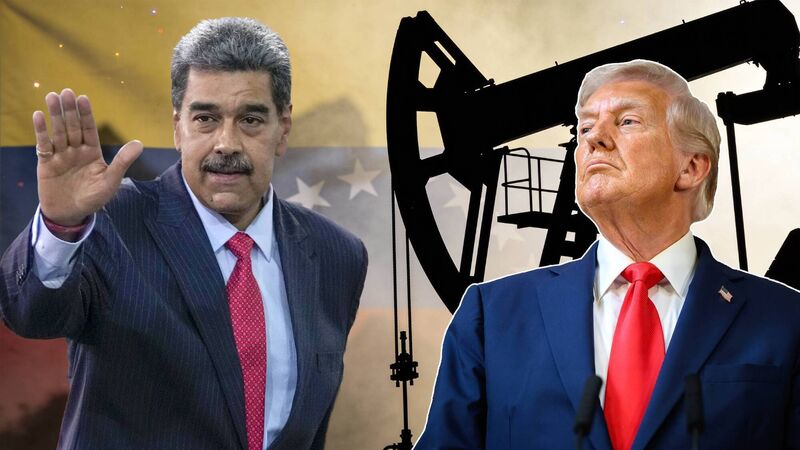
Some South American governments have welcomed the president Nicolás Maduro's removal from office by the Trump administration. Other have condemned it as a violation of sovereignty.
Shortly before dawn last Saturday, Caracas was jolted awake by the thunder of aircraft and the dull percussion of explosions. Within hours, the extraordinary had become reality: United States special forces had entered the Venezuelan capital, seized president Nicolás Maduro, and flown him out of the country. By nightfall, he was in US custody and facing charges in New York.
Donald Trump announced the operation himself, framing it as a strike against narco-terrorism and corruption. Almost immediately, he went further. The US, he said, would oversee Venezuela’s transition. Its oil industry would be brought under new management. Order would be restored.
A sitting head of state had been removed by a foreign military without international mandate. However the operation is ultimately categorised — intervention, abduction, regime change — its implications stretch far beyond Venezuela’s borders.
For Barry Cannon, a Latin America expert at Maynooth University who has studied Venezuela for decades, what distinguishes this moment is not only its scale — but its candour.
“This is different in its lack of pretence,” he says.
“The United States has regularly intervened in Latin America, sponsored coups, undermined governments. That history is long. But usually it’s wrapped in the language of democracy promotion or humanitarian concern.
According to US officials, the operation was months in preparation. Intelligence cooperation, surveillance, and cyber operations were used to track Maduro’s movements and weaken sections of Venezuela’s security apparatus. Airstrikes hit strategic sites around Caracas. Elite troops moved quickly. By mid-morning, Maduro was gone.
Trump wasted little time claiming personal credit. He spoke openly about Venezuela’s oil reserves and Washington’s right to “run things” during a transition. It was the language not of reluctant intervention — but of ownership.
International reaction was swift and divided. Some governments welcomed the end of Maduro’s rule. Others condemned the action as a breach of sovereignty and international law.
Most, especially European leaders, equivocated. Emergency meetings were convened. Statements were issued. Yet, beyond diplomatic protest, there has so far been little in the way of consequence.
“By any serious definition, this violates international law,” Cannon says.
“There’s no UN mandate. No multilateral process. It sets a precedent that should worry a lot of states — not only in Latin America.”
To understand why this episode has reverberated so powerfully across South America, it must be placed in a much longer historical frame.
US involvement in Latin America did not begin with Trump. It runs through the Cold War and beyond: The overthrow of Guatemala’s government in 1954; support for military dictatorships across the Southern Cone; proxy wars in Central America; the invasion of Panama.
For much of the 20th century, US foreign policy in the region was presented as a struggle for democracy, stability, or freedom. Yet, in practice, it frequently meant the shaping or removal of governments whose politics conflicted with American strategic and economic interests.
Journalist Vincent Bevins documents this global pattern in , tracing how the US exported models of repression and political engineering across the global south. Latin America was central to that story. Coups, sanctions, proxy forces, and economic warfare became instruments of influence, even as official rhetoric spoke the language of liberty.
“People talk about this as if it’s unprecedented. It isn't,” Cannon says.
“The US has regularly intervened. It has sponsored coups. Chávez faced one in 2002. What’s new is the openness — the lack of pretence.”
That failed coup against Hugo Chávez, briefly supported by Washington, is seared into Venezuelan political memory. It marked the beginning of a long period of confrontation between Caracas and successive US administrations. Over time, that confrontation increasingly took the form not of tanks — but of sanctions.
Long before jets circled Caracas last weekend, Venezuela was already deep in crisis. Once the powerhouse of South American oil production, its economy had collapsed under the combined weight of mismanagement, falling oil prices and international restrictions. Infrastructure decayed. Hyperinflation hollowed out salaries. Millions left the country.
Cannon is unequivocal about the role of sanctions.
“US sanctions have crippled Venezuela in ways outsiders can’t imagine,” he says.
“Oil is the backbone of the economy. Once you sanction that, you’re not targeting elites, you’re suffocating the entire society.”
The US formally designated Venezuela a security threat during the Obama administration, introducing early sanctions that were later expanded under Trump’s first term and maintained, with variations, in successive years. The European Union supported many of these measures. Their stated aim was to pressure the government. Their effect, Cannon argues, was systemic collapse.
“The economic implosion around 2014 or 2015 was devastating,” he says.
Hospitals lost access to basic supplies. Imports dried up. Wages became meaningless. The humanitarian consequences of sanctions were rarely framed as such in Western discourse, Cannon says, because they were perceived as a cleaner alternative to military force.
“There was this illusion that sanctions were a soft option. They’re not. They destroy societies.”
Now, military force has arrived anyway. It has arrived accompanied by open discussion of oil.
Trump has spoken repeatedly about Venezuela’s reserves, which are among the largest in the world. His administration has indicated that production and revenue flows may be placed under US oversight during a transition.
To Cannon, this is not a slip of the tongue. It is the logic of the operation.
“He’s not even trying to cloak this in the old rhetoric,” Cannon says.
“He’s talking about control. About resources. About who’s loyal and who isn’t. Trump has said Venezuelans will ultimately benefit from his intervention. I’m intrigued as to which Venezuelans actually will.”
For years, Washington’s Venezuela policy revolved around supporting opposition figures presented internationally as democratic alternatives to Maduro. Among them was María Corina Machado, frequently profiled in Western media as a liberal reformer and potential transitional leader.
Cannon rejects that framing.
“She has spent over 20 years courting Washington,” he says.
“She has repeatedly called for violent, military intervention against her own country. That is not the rhetoric of a democracy-minded opposition leader. That is the rhetoric of a stooge. And now she’s got her wish.”
Yet, even in this moment, Machado and other opposition figures appear sidelined. Trump’s recent statements have focused on reshaping elements of the existing state.
This, Cannon argues, reflects a cold strategic calculation.
“The US has made a calculation that it’s better for them to deal with a Maduro-free regime, rather than replace it with an opposition it has long funded and promoted,” he says.
The implication is devastating for Venezuela’s opposition movement. Years of aligning itself with US policy, Cannon suggests, have not translated into political leverage. Loyalty, in this worldview, is less valuable than stability and access.
“Trump seems to have decided it’s more efficient to do business with the old structures, once the inconvenient figurehead is removed,” Cannon says.
“That makes a mockery of the opposition’s entire strategy.”
Across South America, governments are absorbing the message. Some, generally those ideologically closer to Washington, have welcomed Maduro’s removal. Others, including Brazil and Mexico, have condemned the operation as a violation of sovereignty.
The region is once again divided into camps: Those perceived as co-operative, and those now acutely conscious of their vulnerability.
“For the countries Trump doesn’t like,” Cannon says, “the message is very simple.”
In Trump's own words: They need to watch their ass.
Even where no immediate intervention is expected, the psychological effect is profound. The seizure of a president by a foreign military power, without serious international repercussions, reasserts an old truth in a new form: That sovereignty in the Americas is conditional.
This logic does not stop at the equator. In recent days, Trump has revived rhetoric about Greenland, openly speculating about US control over the strategically vital Arctic territory. This is despite it belonging to Denmark — a Nato ally that already hosts American troops.
In an interview with the New York Times Trump was asked why he didn't reopen bases and send troops to Greenland under an existing treaty.
“I think that ownership gives you a thing that you can’t do with … a lease or a treaty,” the US president said, adding “that’s what I feel is psychologically needed for success.”
On the surface, Greenland and Venezuela have little in common. Yet Cannon sees continuity.
“This is a worldview in which power entitles you to space, resources, leverage,” he says.
If Venezuela can be struck with limited cost, he argues, the boundaries of the imaginable shift. What was once unthinkable becomes debatable. What was once rhetorical becomes operational.
Europe, meanwhile, has struggled to articulate a coherent response. The European Union urged restraint and respect for international law, but announced no concrete measures. For Cannon, this is part of a broader pattern.
“The EU has been incredibly weak (and) subservient to Washington,” he says.
“We saw it after Gaza. We’re seeing it again now.”
The consequences extend beyond Venezuela. Each moment in which international law is invoked, but not defended, erodes its authority.
“When Europe talks about a rules-based order,” Cannon says, “fewer and fewer people believe it.”
Amid this geopolitical upheaval, a strange juxtaposition looms. Mexico, Canada, and Colombia have all qualified for the next World Cup, a tournament co-hosted by the US, Mexico, and Canada. The imagery will be one of unity, spectacle and celebration.
But sport does not exist in a vacuum. What happens if the US is sanctioning or destabilising countries whose teams it is hosting? Sport cannot insulate itself from geopolitics. It simply absorbs it.
The removal of Nicolás Maduro is not an endpoint. It is the opening of a volatile new chapter.
Venezuela now faces an uncertain transition, shaped less by internal consensus than by external force.
Neighbouring states are recalibrating alliances. Europe is confronting its own limitations. And the world is watching whether the norms that have governed sovereignty since the Second World War will hold.
“This is about oil. It’s about power and control,” Cannon says. “It always has been. The only difference now is that nobody’s bothering to hide it.”