Allegiances are shifting as the US begins to resemble a corrupt soviet satellite
It has been projected that the US will be the only country out of 184 to see a decline in visitor numbers and revenue this year. Invasive scrutiny of the online speech of anyone wishing to enter the US has a big part to play in that effect, writes Liz Carolan
Allegiances are shifting as the US begins to resemble a corrupt soviet satellite

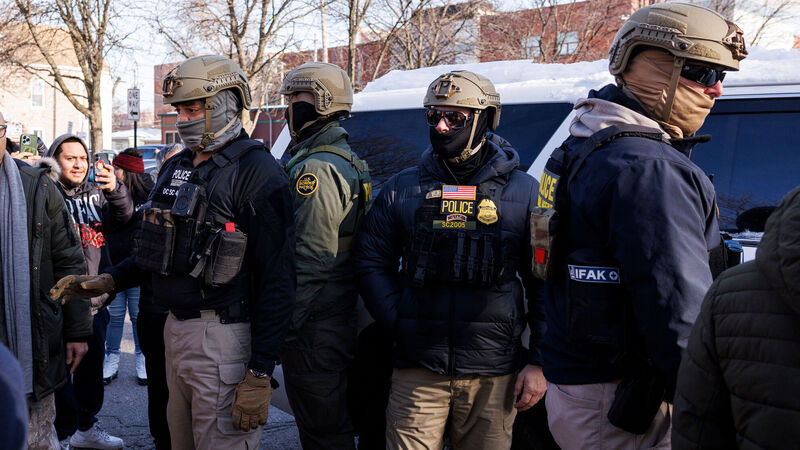
Capricious and extractive border experiences are not normally a sign of a strong country, and in some ways this is becoming true of the United States. File photo: Anthony Vazquez/Chicago Sun-Times via AP

If I ever had to admit a prejudice against a group of people, it would be border guards. Specifically, it would be border guards stationed at remote or run down land crossings. 

More than once have I found myself shaken down for a bribe in the no man's land between nation states, beyond the reach of fairness, justice or adequate phone signal. I have had property “confiscated”, been taken to smokey windowless rooms for questioning, and told — when a friend and I refused to hand over €50 for some invented crime — that “two pretty girls like you don’t want to spend the night in a Serbian prison”. They weren’t wrong. We paid.

The problem with these land crossings is that they give small men unaccountable and discretionary power over outsiders who have nowhere else to go in that moment. Of course the rational part of my brain knows that these individuals are simply responding to the conditions created by others. 

My shakedowns have happened in places where officials are underpaid and where their chances of escaping this grim outpost have more to do with patronage than their performance. Overall I know that the prospect of a maliciously erratic border experience is, to say the least, not a sign of a strong country.

Yet this seems to be the path that the United States of America is taking. The Trump administration announced in December that people wishing to travel to the US will soon be subject to (even more) invasive scrutiny of their online speech, exposing themselves to the capricious and rapacious whims of not only isolated border guards, but some of the most powerful men on the planet. 

Those applying for the ESTA visa waiver, which is how most Irish citizens gain access to the US for work trips or holidays, will soon need to make five years of their social media history, and 10 years of personal and work email addresses, available to the US government for examination. The process will also likely soon switch to an app that you need to download onto your own phone, and there are indications that the door is being opened to further biometric and even DNA data.

This is the kind of scrutiny of speech that the US introduced already this year for those seeking student visas and work visas, including the J1, though these proposals would present a large-scale scaling up of surveillance. The justification is on national security grounds, with preventing terrorism often the mentioned rationale. 

Two reasons to be wary

But two features of the United States in the Trump era should make us wary of engaging with this new system.

The first is that the current US administration has increasingly used speech that it does not like as justification for making immigration decisions. It revoked the visa of Colombia’s left-wing president after he spoke at a pro-Palestinian march in New York in September. 

Hundreds of students studying in the US have been threatened with deportation and visa cancellation for protesting about Gaza, something that a US judge has ruled illegal for its suppression of the free speech of visa holders. 

Meanwhile a Norwegian tourist was detained for five hours in Newark Airport and not admitted to the US, sent home to Norway, he claims, because the border officers objected to a meme of Vice President JD Vance looking like a baby on his phone, which they had searched.

This chimes with travel advice offered by KPMG earlier this year, prior to the current proposals, suggesting that individuals travelling to the US “should refrain from posting, commenting on or engaging with content online that relates to President Trump or his administration, the war in Gaza or any other current event that is known to be controversial or sensitive in the US political landscape”.

People have to travel to the United States for all manner of reasons, yes for that holiday-of-a-lifetime, but also visit family, to study or to access medical care. Many people also have to travel there for work, either due to partnerships or employment with US firms, or to engage with many of the global organisations — like the UN and World Bank — that are based there.

All of that will now be conditional on the capricious approval of the Trump administration of your publicly expressed beliefs and opinions; the ultimate border guard power trip. And the administration has shown that this extends to elected officials as much as anyone else. 

The judge in the case of the US student visa holders was particularly critical of the “chilling effect” that those cases would have on other visa holders; this new step amounts to a warning shot against much of the world to not speak ill of Trump or his interests.

Liz Carolan: 'Abusive border guards may have extracted some dollars from me over the years, but in doing so they also earned a disdain that has made me avoid them at all costs going forward.'

The second feature of the current US power structure that should make us wary of the new proposed speech data collection is their increasingly close relationship with surveillance tech companies. 

The New York Times has been reporting over the course of this year on the growing relationship between controversial data firms like Palantir and swathes of the US Government, from social security to national security, and most notably the immigration apparatus. 

That firm has a partnership with the US’s Immigration and Customs Enforcement (ICE) agency to track in real time the movements of migrants within the US, and it is not a huge stretch to imagine a firm like Palantir being part of any new visa waiver surveillance operation. 

Much like the outsider stranded in no man’s land, people entering that system have no say over how their data will be shared or exploited, especially if made available to a company supporting both private corporations and the Governments like the one in Israel.

The effect on the US

Capricious and extractive border experiences are not normally a sign of a strong country, and in some ways this is becoming true of the United States. The state’s systems, from the courts to social welfare, public health to trade, which were built over centuries, are starting to crack under the weight of exploitation, destructive cuts and abuse. 

Yet the country continues to benefit from the extraordinary power and capital accumulated over the last 250 years — economic, political and cultural — even as that power is pawned for the enrichment and self-aggrandisement of Trump and his courtiers. That very real power makes these border shakedowns and abuses of power a lot more anxiety inducing than any half-hearted threat of a Serbian prison cell.

People will still have to travel to the US, much as they still need to trade with the US, because it takes more than a year to fully spend down 250 years of capital. But there are signs that those with other options are starting to choose them. 

The World Travel and Tourism Council projected that the United States will be the only country out of the 184 it analysed to see a decline in visitor numbers and revenue this year. Much as we are seeing new trading alliances emerge that cut out the US, it is likely that we will see conferences, organisations and business ties slowly shift to other centres of gravity.

Abusive border guards may have extracted some dollars from me over the years, but in doing so they also earned a disdain that has made me avoid them at all costs going forward.

  • Liz Carolan is a tech & democracy strategist, writer & campaigner. Mick Clifford is away.

More in this section

Revoiced

Newsletter

Sign up to the best reads of the week from irishexaminer.com selected just for you.

Cookie Policy Privacy Policy Brand Safety FAQ Help Contact Us Terms and Conditions

© Examiner Echo Group Limited