Draft drugs strategy prioritises health over enforcement — but at what cost?
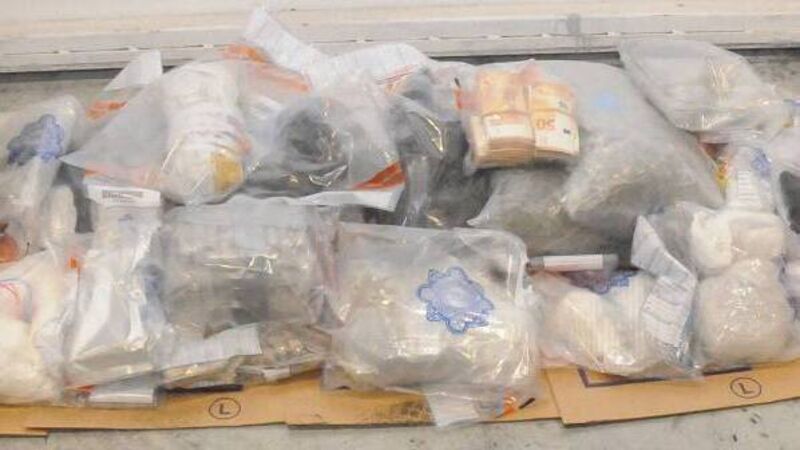
An action in the draft version of the next national drugs strategy states that it will 'support interventions' which reduce the availability and impact of illicit drugs in communities. But it is silent on what these could be. File picture: An Garda Síochána
A draft version of the next national drugs strategy firmly signals a move to a health approach to the drugs issue — with noticeably less emphasis on the role of justice or the gardaí.
This is arguably in line with the wish of many people, organisations and groups that have spoken to various committees and the Citizens' Assembly on Drugs Use and/or produced research or advocacy documents.
It doesn’t represent the views of other agencies, including the gardaí, while the perspectives of people living in the most affected communities are difficult to capture or reflect in debates.
Also part of the realignment in the draft National Drugs Strategy 2026–2029 appears to be a distinct watering down, if not absence, of an economic analysis of the issue.
Parallel with this appears to be confirmation of a lesser role for communities or community organisations in the decision-making structures.
The long-standing pillars of previous drugs strategies were: supply reduction; prevention; treatment; rehabilitation and research. The pillars in the new strategy are: protect; provide; champion; prioritise and prepare.
The first ‘principle’ of the new strategy states: “Respond to drug use from a health perspective, with an emphasis on evidence-based prevention, harm reduction and treatment.”
Other key principles include:
- Right to health for people who use drugs and right of children to be protected from the harmful effects of drug and alcohol use;
- Giving people with “lived or living experience” a role in the design and delivery of services;
- Collaborative working within Government and with stage agencies, civil society and impacted communities to address causes and consequences of drug use.
The goals in the previous strategy, covering 2017–2025, were: Promoting and protecting health; minimise harms from substances and promote recovery; address harms of drug markets and reduce access to drugs and support participation of individuals, families and communities.
The draft strategy does say it is "also supportive" of a key pillar in the EU Drugs Strategy — to improve security and protect society by “addressing drug production and trafficking”.
An action in the draft states that it will “support interventions” which reduce the availability and impact of illicit drugs in communities. But it is silent on what these could be.
It clearly states that the criminal justice system is “not designed” to deal with personal drug issues.
The previous drugs strategy (albeit twice as long as the draft) mentioned the word ‘garda’ 55 times, while the draft refers to 'garda' on 11 occasions. The word ‘illegal’ (regarding drug use) is used 37 in the previous strategy; three times in the new.
The previous strategy said “communities experiencing large-scale social and economic deprivation and marginalisation continue to be disproportionately affected by drugs issues”.
That strategy mentioned the word ‘disadvantage’ 17 times. The new strategy mentions it once. ‘Deprivation’ is mentioned seven times in the previous strategy; once in the draft.
The word ‘poverty’ is mentioned four times in the last strategy and not at all in the new one. The word ‘economic’ is mentioned 18 times; twice in the draft.
The draft strategy is going out for public consultation.


CONNECT WITH US TODAY



Be the first to know the latest news and updates