Social enterprises can be powerful drivers of climate action
In an era of increasingly severe storms, social enterprises are reusing, repurposing, and recycling resources in innovative ways — while also reinvesting back into their social cause
Social enterprises can be powerful drivers of climate action

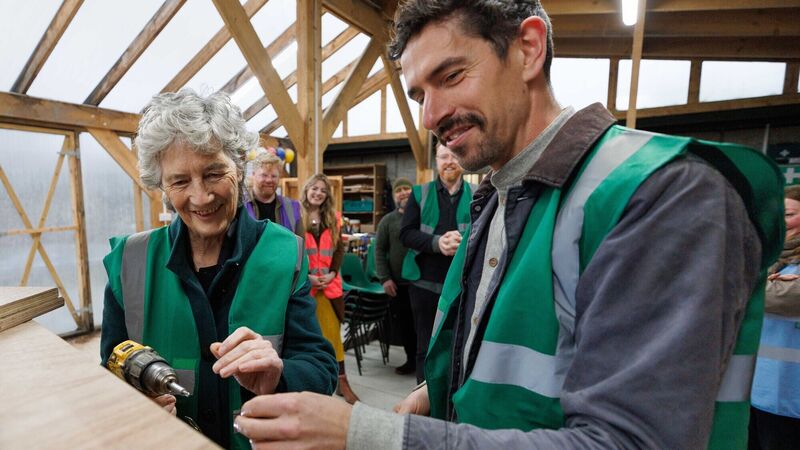
President Catherine Connolly working with instructor Cian Corcoran assembling a cabinet during her visit to Common Knowledge, the award-winning social enterprise in Co Clare earlier this month. Picture: Eamon Ward

Storm Bram earlier this month again reminded us that our island of Ireland is especially vulnerable to extreme weather patterns. We are all too aware of how Ireland’s climate is changing but it hasn’t translated into action beyond grim statements, finger pointing, and blame.

Yes, Ireland has astutely declared a climate emergency and, yes, there are policies to achieve a 51% reduction in greenhouse emissions by 2030, but we find ourselves in the troubling nowhere land between climate action and climate inaction.


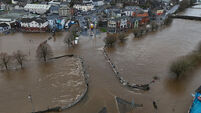
Storms such as Floris, Bert, Darragh, Éowyn, and most recently Bram with their intense winds and floods have not only wreaked havoc but have brought the future to us in the present.

Whether we accept it or not, Ireland is experiencing more storms more regularly.

We have been bombarded with images of and stories about recent storms that have shown in the most stark way just how damaging extreme climate events can be to our society, our economy, and our environment. 

CLIMATE & SUSTAINABILITY HUB

About 40% of the Irish population lives within a few kilometres of the coast — you don’t need to be an expert to see the risks to homes, businesses, and infrastructure as storm activity increases. We only have to ask ourselves how we would cope without electricity at home for weeks on end or with knowing that our livelihoods have been severely impacted or even lost.

So how can we respond?

Climate resilience

Much has been written about the important role of science in modelling prediction around storms and rising seas. This is not in doubt but there is so much more to be done.

Policymakers need to continue to translate this prediction work into approaches to guiding a pathway toward climate resilience that clearly recognises the many ways climate change disproportionately affects the most vulnerable.

Small business can lead the way 

While the damage caused by storms is something we see and are shocked by, one area that often gets overlooked that is quietly leading the way in climate action is business — small business.

Social entrepreneurs are innovating through business ventures to create and sustain social change and impact. They may be hiding in plain sight insofar as we know there are around 4,300 operating in Ireland. They employ 3% of the Irish population and have a combined income of €2.34bn.

Their impact must be observed firsthand in the local context to understand why they are so important. Social entrepreneurs provide opportunities to the long-term unemployed, people with disabilities, migrants, the Traveller community, and former offenders.

Graham Dwyer is an associate professor at Trinity Business School and co-director of Trinity Centre for Social Innovation. 

These are the invisible armies known locally to be playing a crucial role in making Ireland more climate resilient while at the same time balancing complex, concurrent, and compounded inequalities that are accentuated by climate injustices.

Social entrepreneurs and their employees are driven by a mission to achieve social and environmental good by selling goods and services that enable them to invest back into causes, which has been the basis for the formation of these social enterprises in the first place.

They can exist as intermediaries in the ways that they connect, facilitate, capacity-build, and bridge gaps that private, public, and non-profit sector organisations struggle to plug.

In many ways, the impact of social enterprises highlights the failures of big businesses, which often fail in their responsibilities to reduce their carbon emissions.

Business for good

Simply put, social enterprises reuse, repurpose, and recycle resources in innovative ways that are moving the needle towards climate action.

While lowering carbon emissions, they also transform business for good by prioritising impact while reinvesting back into their social cause. They educate, facilitate, and support communities to tackle climate change as well as social change.

While we know that Ireland cannot hold back the seas and storms that come with climate change, we do have control over how we respond.

Social enterprises lead the way by showing how a low-carbon society can be achieved that collectively enables us all to be part of solutions in the climate action discussion, rather than being part of the problem.

The most dangerous place to be is in the nowhere land between climate action and inaction, where we avoid the difficult discussion about who is accountable and responsible — the inconvenient truth is, we all are.

• Graham Dwyer is an associate professor at Trinity Business School and co-director of Trinity Centre for Social Innovation, Trinity College Dublin. He is the author of Making Sense of Natural Disasters (Palgrave Macmillan).

x

CLIMATE & SUSTAINABILITY HUB

More in this section

Revoiced

Newsletter

Sign up to the best reads of the week from irishexaminer.com selected just for you.

Cookie Policy Privacy Policy Brand Safety FAQ Help Contact Us Terms and Conditions

© Examiner Echo Group Limited