Stormy with a chance of protons: How Irish scientists are forecasting the Northern Lights
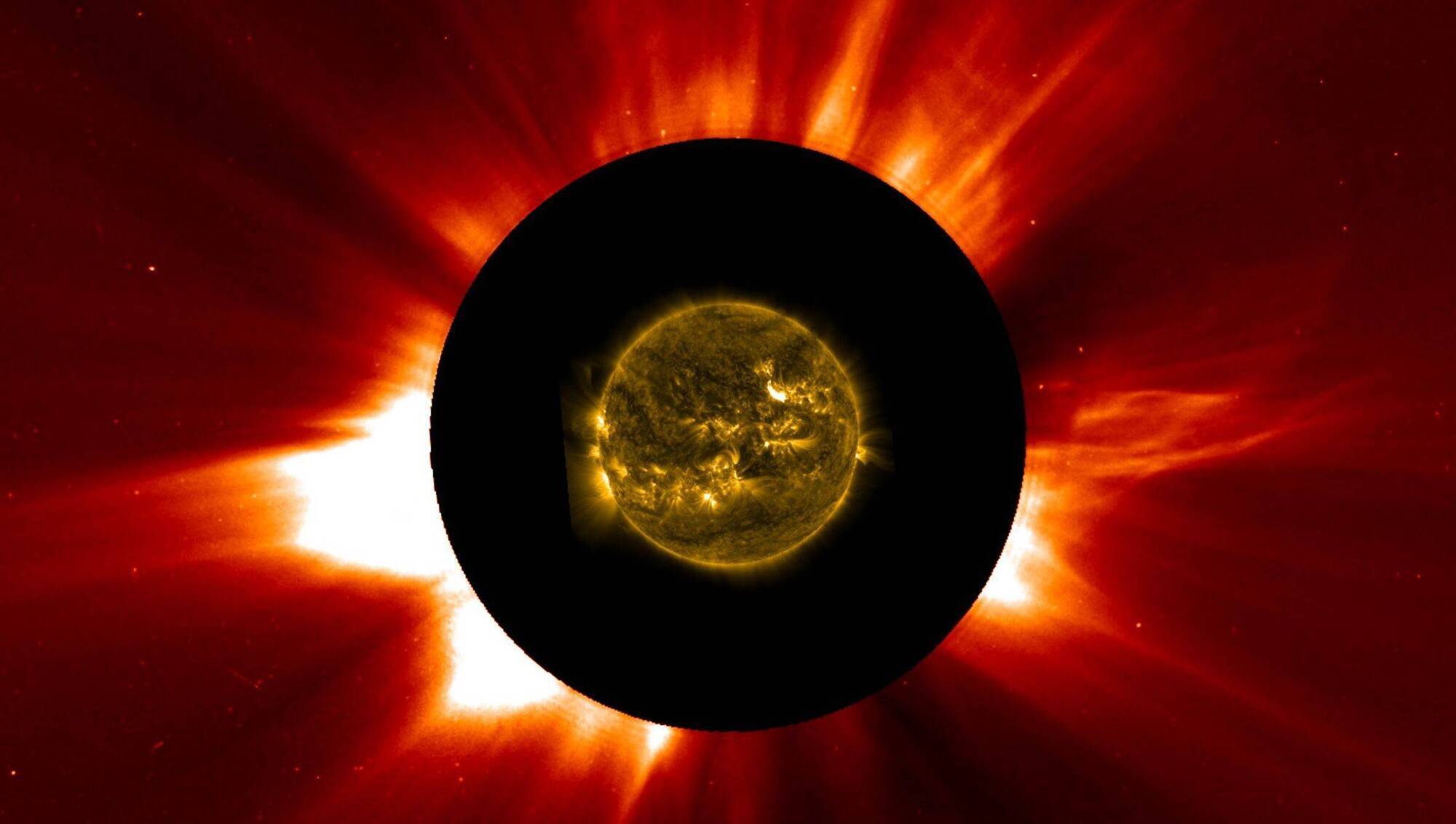
A large flare and solar storm captured by Nasa’s Solar Dynamics Observatory and ESA/Nasa’s Soho spacecrafts on November 11. Picture: Peter Gallagher (DIAS)/ESA/NASA/JHelioviewer.
Last week, the sun unleashed three large solar storms from a group of sunspots on the eastern side of the sun.
Travelling at millions of kilometers per hour, the first two storms traversed the 149m kilometres from the Sun to the Earth in about two days.
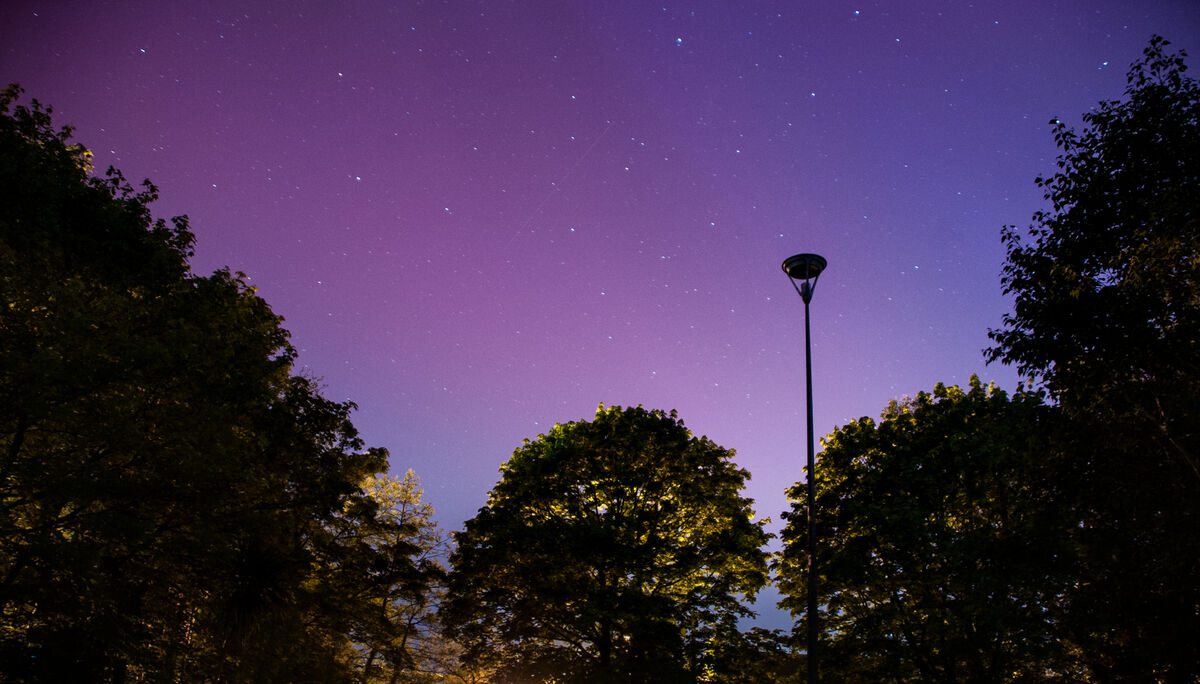
These storms were so strong that they triggered the northern lights to be visible from across Ireland on Tuesday night. Indeed, the lights were spotted as far south as Spain and Italy — but that wasn’t the end of it.
A very fast and powerful solar storm arrived at Earth on Wednesday night, delivering another direct hit to our magnetic field and atmosphere. But what causes solar storms?
The story of the northern lights starts in the magnetic field of sunspots. On the sun, sunspots merge together, creating large groups that are many times the size of the Earth.
As they grow, they store huge amounts of energy in their twisted magnetic fields. Similar to an elastic band, there’s only so much twist that these gigantic magnetic fields can take.
We call these eruptions “solar storms”. Solar storms do very little as they travel through space. However, if they do hit Earth, they can cause spectacular displays of the northern lights, also called the aurora borealis.
And how can they affect us? While the northern lights are beautiful to behold, dancing red, green, and purple in the atmosphere above our heads, they can also be associated with more sinister effects.
Our modern lives are now dependent on a multitude of technologies which are affected by solar storms, including GPS, radio communications, navigation systems, and power grids.
In 1989, a large solar storm caused a large portion of the Canadian power grid to trip. This left millions of consumers without power for many hours. More recently, Sweden's air traffic control was significantly impacted by a major event in 2015, which caused radar failures and Swedish airspace to be closed for several hours due to radio bursts from a solar flare.
This week, the increased solar activity caused interruptions in short-wave radio communications across Europe and Africa. Meanwhile in the US, Nasa postponed a rocket launch by the Blue Origin space technology company founded by Amazon founder Jeff Bezos.
Similar to weather and natural disasters, solar storms and space weather can have implications for national infrastructure and the day-to-day lives of Irish citizens. For this reason, space weather is now included as a natural hazard in the Government’s national risk assessment.
"Space weather and its impact on global connectivity is a risk … In its more severe forms, space weather can cause significant disruption to the electricity grid and transportation networks. Satellites are vulnerable to its effects and can become disabled or damaged," the assessment said.
Researchers from DIAS, Met Éireann, and Geological Survey Ireland have recently set up a national project called the Magnetic Network of Ireland (www.MagIE.ie) to monitor the Earth’s magnetic field in Ireland.
MagIE gives automated warnings of when geomagnetic storms occur, which can also be of use to power grid operations.
The European Space Agency, which Ireland is a member of, takes space weather very seriously. It has increased its space weather budget to almost €1bn a year in order to protect their satellites, GPS/GNSS and communications and navigations systems from space weather.
Ireland is the only ESA member state not participating in ESA’s space safety programme, so Irish researchers and space technology companies are asking the Government to sign up to the space safety programme at the upcoming ESA ministerial in late November.
Thankfully, the chances of a really bad space weather event is low. However, similarly to a global pandemic, the impacts on our daily lives could be significant.
- Professor Peter Gallagher is the head of astronomy and astrophysics department at the DIAS School of Cosmic Physics
Check out the Irish Examiner's WEATHER CENTRE for regularly updated short and long range forecasts wherever you are.
CONNECT WITH US TODAY



Be the first to know the latest news and updates