Paul Kearns: It's not as simple as Bob Geldof thinks for Israelis to 'snap out of it'

Israeli activists take part in a protest against the war in the Gaza Strip, Israel's measures regarding food distribution, and the forced displacement of Palestinians, in Tel Aviv last week. Picture: AP/Ohad Zwigenberg
“What has happened to the Israeli people?”.
Bob Geldof last week made an impassioned plea to Miriam O'Callaghan on RTÉ’s for “Israelis to snap out of it” and “to rise up against their government”. In the context of the daily horrific images from Gaza and more than 20 months of onslaught on the Palestinian civilian population, Geldof asks an important and, I would argue, very profound question: “What has happened to the Israeli people?”.
But here is a startling fact. In no other country in the world over the past two and a half years have there been larger and more consistent political demonstrations against the current far-right Israeli messianic government than in Israel itself.
Within weeks of assuming power, hundreds of thousands of Israelis began protesting weekly against the anti-human rights agenda of their government. The coalition of five right-wing, religious, and Jewish supremacist parties that make up the government received a minority of the popular vote (48.4%) in the election that brought them to power.
Political parties to the left — admittedly a broad spectrum from centre-right to progressive left — won more than 50% of the vote in that fateful election. Sometimes the vagaries of the electoral system tip victory to the loser.
Those demonstrations have at times reached more than a quarter of a million on a single Saturday night in Tel Aviv alone. Since the October 7 Hamas terror attack, and despite an inevitable rallying around the flag effect, tens of thousands of Israelis opposed to Netanyahu have continued to take to the streets.
Demonstrations only ceased when rockets rained down from Hamas at the start of the war, and more recently, over the 12-day war with incoming ballistic missiles from Iran.
If families of the remaining hostages have been unable to pressure their government to prioritise Israeli lives, the lives of their children held in underground tunnels for two years, does Geldof think that they can pressurise the government to consider the fate of Palestinian children?
Mainstream, secular, and centrist Israelis feel under assault. First, they came under attack from their government, then came the trauma of October 7 and the murder of over 1,200 Israelis by Hamas in a short few hours.
Within 48 hours of those terror attacks, anti-Israeli demonstrations had erupted around the world, and then came months of rocket attacks, including cruise missiles from Iran. Despite the war, or perhaps because of it, the government continues to assault its civil liberties by advancing authoritarian legislation. In addition, the exponential growth of global anti-Semitism is undeniable.
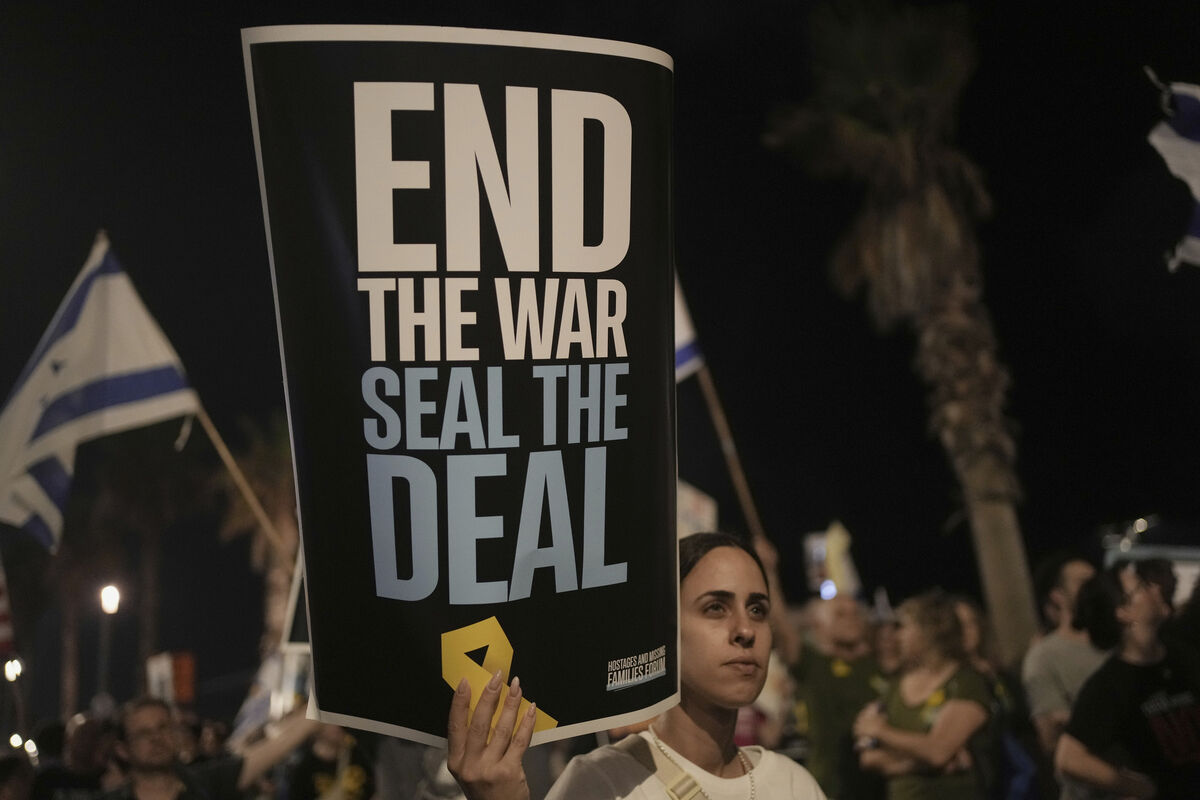
Most Israelis are vehemently opposed to their messianic revolutionary government. They are revolted by the images of marauding settlers on the West Bank, and also sickened by the words of many far-right ministers that ricochet around the world in minutes. Some of those same far-right ministers have mocked and belittled the families of hostages. Today, 70% want the war to stop, irrespective of so-called concessions to Hamas.
International revulsion at the dystopian images coming from Gaza is understandable. With that, revulsion has come an undeniable visceral hatred of all Israelis. I think hate is not too strong a word. Visceral hatred of Israelis is now not just politically acceptable; it is widely socially championed — and let’s be clear, we are talking about Israeli Jews. One in five Israeli citizens is a Palestinian or an Israeli Arab.
Geldof says Israelis are subject to “heavily censored news”. There is, however, no government censorship of the news in Israel, at least not in the general understanding of the word. The mainstream commercial TV news channels indeed refuse to show what the rest of the world sees nightly.
Ironically, it is the public service broadcaster, Kan, which recently shows the most graphic footage. News editors have told me Kan’s two commercial rivals are more concerned about a TV ratings war than revealing the truth of the war in Gaza.
In fact, many journalists of the left-leaning newspaper, the Israeli paper of record, are fearless in their criticism and condemnation of both the government and the war on Gaza. Some of the most powerful investigative journalism exposing Israel's war crimes in Gaza has come from Israeli Haaretz investigative journalists.
This includes a recent damning revelation of a shoot-to-kill policy of Israeli soldiers at food distribution points in Gaza. is on sale in every town and city in Israel. Perhaps the very fact Haaretz is readily available makes the seeming indifference of too many Israelis more inexcusable.
Geldof argues there are no excuses for the seeming Israeli difference to genocide 70km from Tel Aviv. He is right, there aren’t. I have written many times in this newspaper about the moral failures of Israeli society, particularly its universities, trade unions, and television media stars, to speak out more loudly about the undeniable Israeli war crimes.
There is, of course, no context to acts of genocide. There is, however, a context to the simple assertion that Israelis “snap out of it” and “rise up against their government”.
If the fate of governments were determined by the scale and duration of street power alone, this unpopular far-right regime would have long since been consigned to the dustbin of political history by Israelis themselves. And perhaps, just perhaps, tens of thousands of dead Palestinians would be alive today.
- Paul Kearns is an Irish journalist living in Israel


CONNECT WITH US TODAY



Be the first to know the latest news and updates