Pádraig Rice: Dáil must become a better workplace to truly represent Ireland
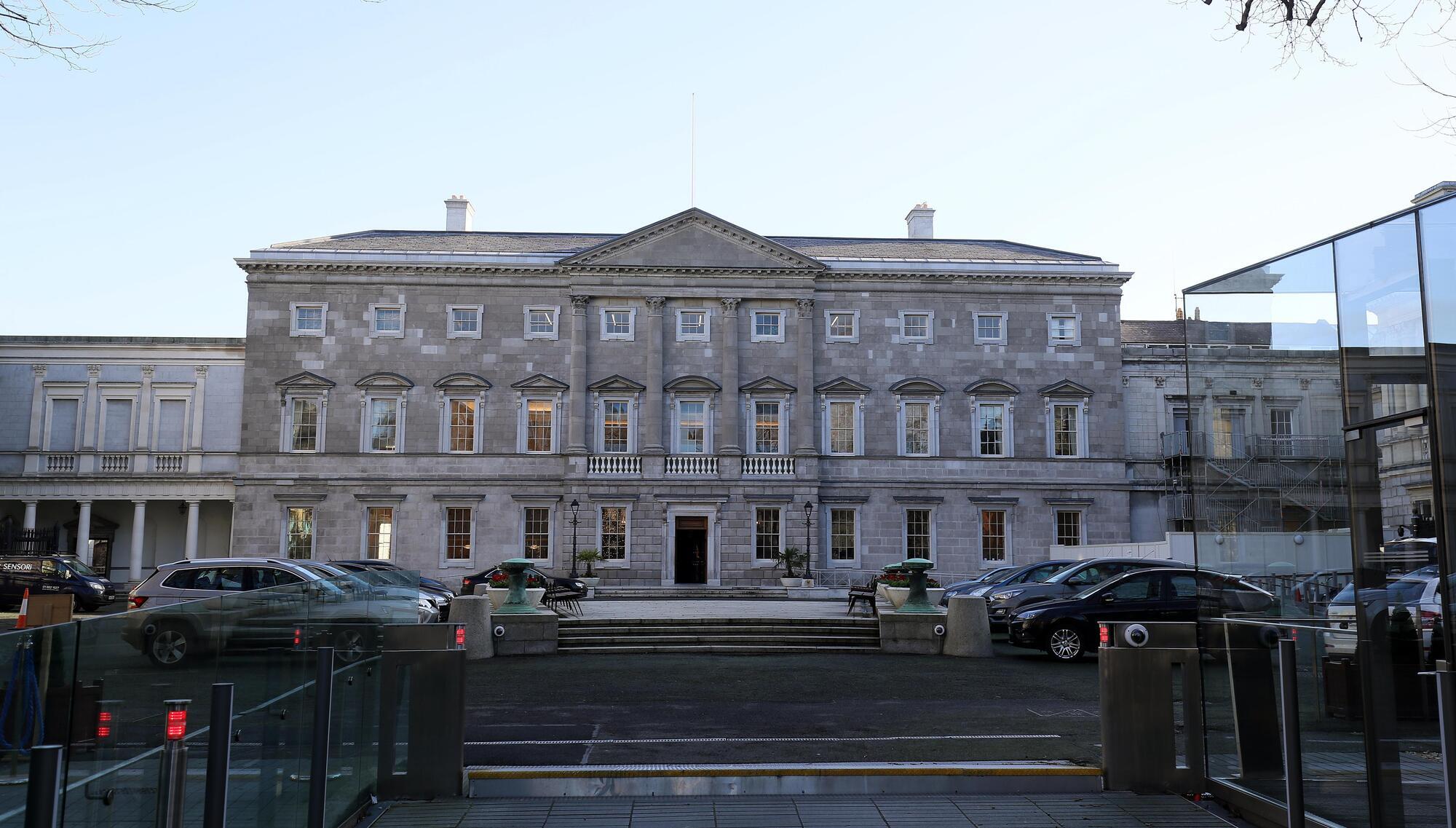
A little under four months into the 34th Dáil, first-time TD Pádraig Rice reflects on the chamber's composition, its workload, and its long paralysis due to the speaking rights row
Pádraig Rice: Dáil must become a better workplace to truly represent Ireland

'Why is the Dáil chamber so often empty?' That's one of the questions constituents ask first-time TD Pádraig Rice. Stock picture

The first four months of the new Dáil have been turbulent, tense, and testing. They have also been eye-opening.

High expectations of making progress on behalf of the people have been dented by a dominant political class who are determined to choke the political system for their own political gain.

Speaking rights row

This has been epitomised by the speaking rights row that has paralysed the parliament. I have been deeply disappointed by this debacle and disturbed by the dishonesty that underpinned it.

The truth is that the Government has rewritten the rules, fundamentally restructured the Dáil’s agenda, and significantly altered how the Dáil functions. In the process, they have upended longstanding traditions and decades of parliamentary norms.

Call me naive, but I was struck by the extent to which the truth was twisted. Thankfully, the majority of people saw through it.

I was also struck by the lengths the Government was willing to go to in an effort to appease and accommodate the demands of Michael Lowry — a TD that the Moriarty Tribunal found to be “profoundly corrupt”.

Despite the damage it has done to our democracy, Mr Lowry has declared this whole debacle a victory.

34th Dáil has achieved little

In between the rows on speaking rights, the Dáil has achieved very little since the election. 

Instead of passing urgently-needed legislation, the Government has scheduled statements on any number of issues. Week after week they have set aside hours of precious Dáil time for these very general discussions without any clear objective or outcomes.

Instead of a long, general discussion on healthcare, we could have progressed the long-awaited Mental Health Bill. Instead of a general debate on ageing, we could have finally advanced a statutory right to homecare. Instead of a general session on foreign affairs, we could have passed the Occupied Territories Bill.

This has led some to brand this a ‘do-nothing Government’. That charge stands up to objective scrutiny.

The Dáil discussions that have taken place are often presented in black-and-white terms. I think this does a disservice to the debates, the Dáil, and to the people who elected us.

We need to spend more time acknowledging the grey, and shedding light on the complex and complicated parts of these.

We need to discuss these issues with due care and consideration. This is the only way we will get robust solutions.

The limitations of the debates are compounded by the lack of diversity in the Dáil.

Whole swathes of Irish society are underrepresented, such as women, young people, migrants, black people, Travellers, working-class people, LGBT+ people, and disabled people.

The Dáil should look like Ireland. This one doesn’t.

Fianna Fáil and Fine Gael 'merger' 

I have been surprised by the political merger of Fianna Fáil and Fine Gael within the Dáil chamber.

Pádraig Rice says he has noticed the intermingling of FF and FG TDs in the Dáil chamber whereas opposition TDs (including Sinn Féin, the Social Democrats, and Labour) sit in party blocks. Picture: Houses of The Oireachtas

In contrast to the opposition, who sit in blocks according to our political parties, Fianna Fáil and Fine Gael intermingle and, to a large extent, are indistinguishable in Dáil debates.

The result is a uniform and sometimes monotone voice from the Government benches. It’s no longer clear to me what distinguishes the two centre-right parties from each other.

What has been clear to me over recent months is that he who shouts the loudest gets the most attention. I don’t think this is healthy. It means that the quieter and sometimes more considered voices don’t get airtime or traction.

Shouting rarely achieves much. Real progress is achieved through discussion, careful consideration, dialogue, and compromise.

Much work done outside the chamber

Since becoming a TD, one question has been asked of me a lot — why is the Dáil chamber so often empty?

On a given day, a Dáil sitting could start at 9am and run until 9pm or later.

It is in no one’s interest for all 174 TDs to sit in the chamber for 12 hours each sitting day. If we did, nothing would be achieved.

Generally, TDs go to the chamber when we have a speaking slot. That is why proceedings are broadcast throughout Leinster House and on TVs in each office. This way, we can get on with our work, while keeping an eye on the Dáil.

I believe that a TD’s time is best spent meeting people, listening to their concerns, consulting experts, reading reports, developing solutions to problems, and presenting those as coherently as possible during speaking slots.

This involves a degree of specialisation, with TDs taking a deep interest in one slice of public policy.

In my case, that is health policy. I’m determined to understand the challenges in our healthcare system as deeply as possible and use my limited speaking time in the Dáil to highlight the failure to progress solutions such as Sláintecare.

Factors limiting diversity of the Dáil

Over the last few months, I have also realised that this work is not family-friendly, with long sitting days and late evening voting blocks.

The lack of access to remote voting and the complete absence of proper arrangements for maternity, paternity, parental, and adoption leave compounds the problem.

It also limits participation and excludes whole cohorts of people.

Pádraig Rice at the general election count centre in Nemo Rangers last November when he won a seat for the Social Democrats in the Cork South-Central constituency. Picture: Larry Cummins

We need a parliament that is fit for purpose and attuned to 21st-century Ireland. This in turn also means a parliament that accepts the separation of Church and State and ends the practice of daily Catholic prayers at the start of every Dáil sitting.

I agree with the minister for children who recently said that the Dáil needs to do better and the Dáil needs to be better.

We need a more productive parliament that has deliberation at its heart. We need a political system that is capable of responding to and resolving the pressing issues faced by the people.

We need a politics that is kind, caring, and honest. We need TDs who are willing to stand up for what is right, whatever the political cost.

Unfortunately, only four months in, and I must say I’m worried.

Little has been done to address the key challenges facing the nation. No child in Ireland should be homeless, or without a school place, or left languishing on a hospital waiting list. Yet this is the lived reality for thousands of children across the country.

The heartbreaking stories from these families motivates me, despite the constraints, to keep fighting for a better, fairer, and more equal Ireland.

  • Pádraig Rice is a Social Democrats TD in Cork South-Central, first elected in 2024.

x

Your home for the latest news, views, sports and business reporting from Cork.

More in this section

Revoiced

Newsletter

Sign up to the best reads of the week from irishexaminer.com selected just for you.

Cookie Policy Privacy Policy Brand Safety FAQ Help Contact Us Terms and Conditions

© Examiner Echo Group Limited