We need to make AI 'human more' rather than 'human less'
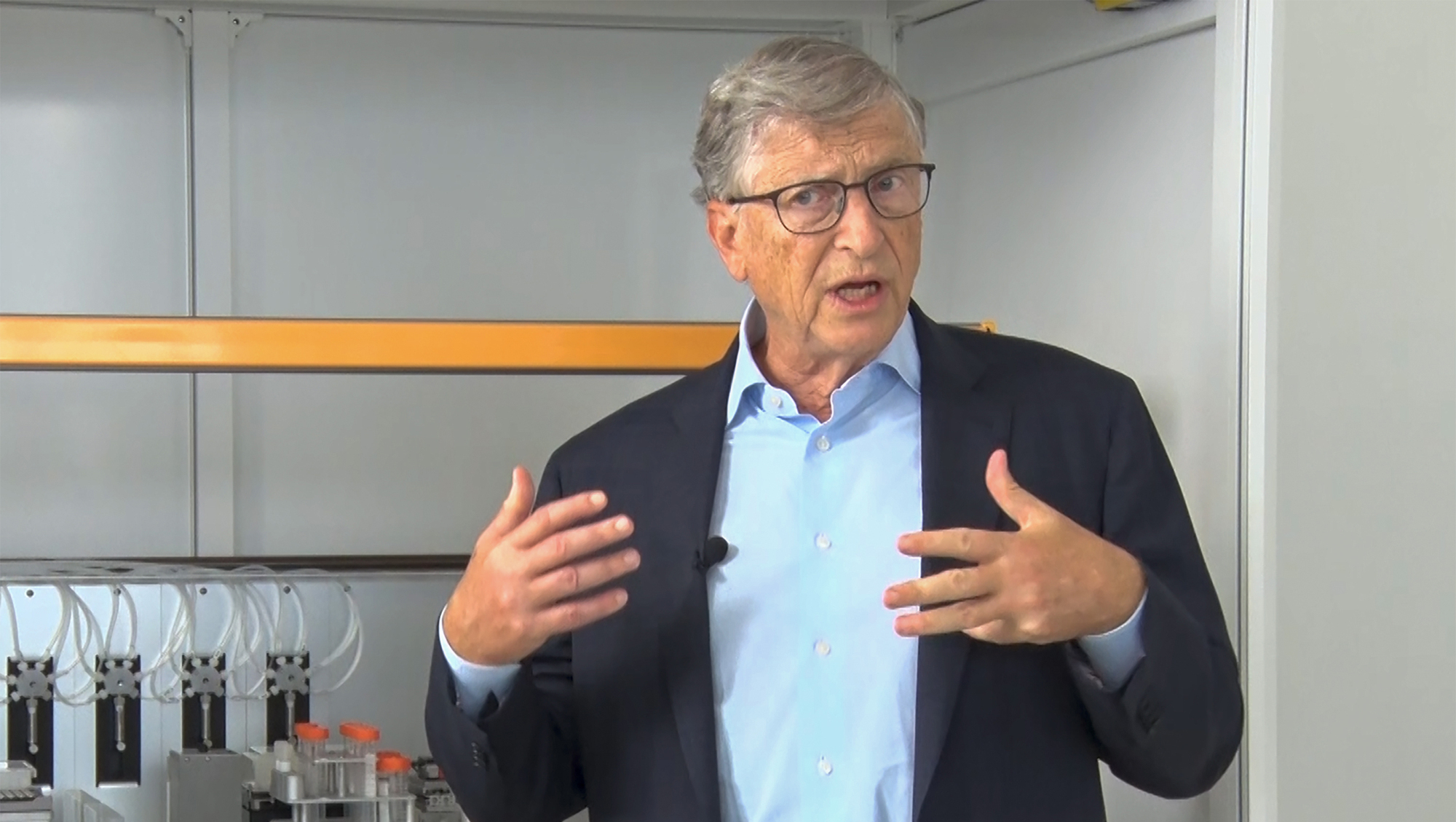
Bill Gates says we always overestimate the change that will occur in the next two years and underestimate the change that will occur in the next ten. Picture: AP
When I decided to train Artificial Intelligence to be emotionally intelligent, lots of people said I was brave. Telling people they’re brave is usually a polite way of saying ‘That’s a crazy thing to do’. I had already heard the word ‘brave’ a lot when I decided to take voluntary redundancy from my permanent, pensionable career as a TV producer in RTÉ.
But emotional intelligence was something I felt passionate about. I had discovered how to really connect emotionally with audiences when I directed and produced , , and for RTÉ — series that were IFTA nominated and watched all over the world.
When I left RTÉ, I returned to university to study Relationship Mentoring — a form of psychotherapy — and I discovered more about the neuroscience of emotional intelligence. Our emotions are the barometer for the way we navigate our world and we ignore them at our peril. We make decisions based on our feelings.
Emotional intelligence is a power skill that makes people feel valued but it’s in short supply — only 36% of us are emotionally intelligent. I decided to try and democratise this skill by training AI to be emotionally intelligent.
In June 2020, Open AI released GPT3, the forerunner of ChatGPT, and I realised I could now achieve this. I founded emotionise ai — a Generative AI startup — that was one of the first in Ireland to work with Open AI, over a year before ChatGPT was released.
Today we have created our AI model EIMEAR (the first 3 letters stand for Emotionally Intelligent Model) that helps improve outcomes for customer support and employee engagement.
This journey of becoming an AI founder and creating our AI model has meant I’ve had a ringside seat for the AI revolution now underway and it’s been absolutely fascinating.
Experts say the impact of AI will be bigger than the internet, the mobile phone and cloud computing combined. AI is like electricity — it will touch us all — not just in work and education, but in our everyday lives.
One of the reasons for this is what’s referred to as the hype around AI. Like all transformational technologies, some people have accused AI of overpromising and under delivering. Generative AI and large language models seem like magic but we’re now standing back and asking what is their real value? Because it’s estimated between 70 and 85% of Gen AI projects are failing.
The danger is that this disillusionment means some businesses and individuals are walking away and not engaging. This is a mistake.
Bill Gates has said that we always overestimate the change that will occur in the next two years and underestimate the change that will occur in the next ten.
The internet digitised information. AI is digitising intelligence, and at a much faster rate.
And that’s the key part of this revolution. As a species, we have never created a technology that has the potential to be more intelligent than us. It’s a paradigm shift, where humans and technology are evolving together.
So we need to examine the immediate threats and opportunities. It’s been predicted AI could take 20% of worldwide jobs by 2050 and the World Economic Forum recently released a report saying 60% of the global workforce needs to be upskilled within the next five years.
It’s already having a seismic impact on our education system as teachers and lecturers grapple with not knowing if their students have used ChatGPT to write their assignments.
But AI is also being lauded as the saviour of humanity — capable of huge strides in medicine, diagnostics and healthcare — and many experts maintain it will help solve our climate crisis.
I recently had the opportunity to meet with Jack Chambers, minister for public expenditure and digitalisation. I wanted to share our experience of this paradigm shift. As we roll our AI model out to users, we’ve observed that the key to engagement, along with implementing a successful AI strategy, is education and communication because this builds trust.
We need to be able to understand and trust AI to make the most of the opportunities and changes ahead. So we urgently need to educate business and the public service on how to understand and implement it, especially considering the EU AI Act is now in force since last February.
But we also need to educate society. For example, what should parents know about AI to help inform their children’s career choices? How can we ensure we hang on to the vital skill of critical thinking? What about ethical issues and our data privacy?
I believe we need to make AI human more rather than human less. Ironically that also means training it to admit it may not have all the answers. One of the current dangers of AI is that it’s trained to answer no matter what, meaning it can double down on the wrong answer. This month John Hopkins University in the US published research showing breakthroughs in training AI to hold its hands up when it can’t definitively answer something or make a prognosis.
According to Shannon Vallor in her book , we now face a stark choice in how we build AI technologies. She says we can use them to strengthen our human virtues, salvaging a shared future for human flourishing or we can continue on what she believes is our current path, using AI in ways that disable human virtues by treating them as unnecessary for the efficient operation of our societies and the steering of our personal lives.
We all need to inform ourselves now to ensure we make the right choice.
CONNECT WITH US TODAY



Be the first to know the latest news and updates