Jennifer Johnston: Beloved author whose work examined human relationships and dynamics
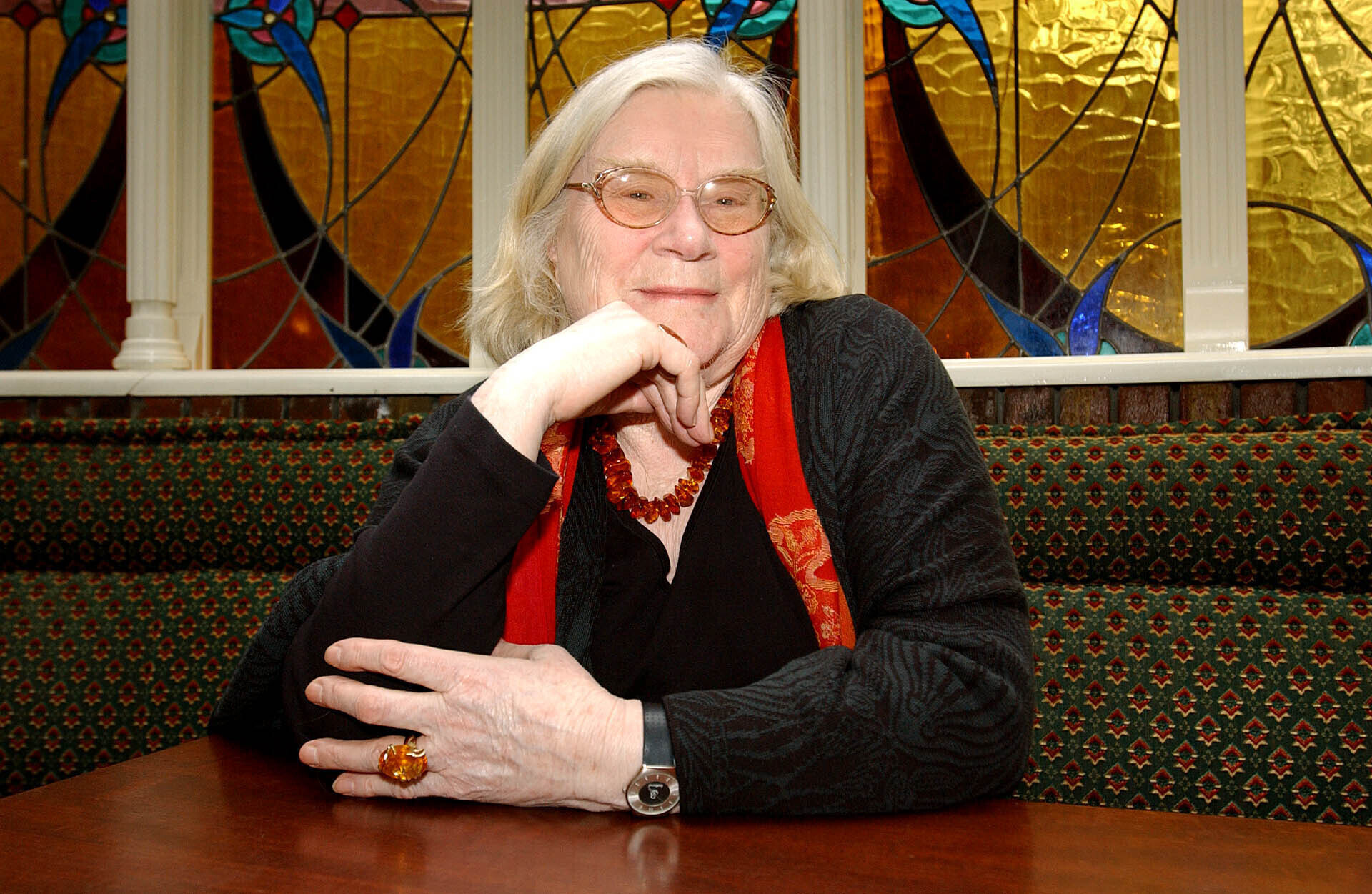
Author, Jennifer Johnston in 2005. Tributes have been flooding in for the Dublin writer since her death. File picture
Jennifer Johnston, beloved and prolific writer of novels, plays, and short stories, has died.
Born in Dublin in 1930, the first child of playwright Denis Johnston, and of Abbey actor and producer Shelagh Richards, she leaves behind a unique and considerable legacy.
For some, she will be forever associated with Big House novels. Many of her imagined worlds exist in that lost universe of the Protestant ascendancy class, but it was not an association she welcomed.
“It’s so damaging. People call me a ‘Big House’ writer, whatever that means; it drives me mad.”
Adding in a later exchange, “Human relationships, that’s really what interests me and it has always been so.” Her Protestant upbringing did have its impact, however.
Her parents’ divorce when she was a child was barely remarked upon — unusual in mid-century Dublin. Despite Ireland being staunchly anti-divorce, nobody was all that bothered by it “because we were Protestant and people kind of expected that sort of thing from Protestants,” she said.
She enjoyed two marriages herself, the first to husband Ian Smyth, leaving her Trinity degree in English and French to get married, noting the university’s lack of ‘vitality.’ They lived in Paris before settling in London. She later remarried Denis Gilliland, returning home to Ireland, and to Derry specifically.
Labels aside, Johnston’s work certainly has a preoccupation with conflict created by class, culture, and nationality. She likes to step back from social division and family dysfunction in her work and observe. Describing life as a “difficult business,” she once likened herself to an artist returning to a fresh canvas to examine and re-examine people’s lives and hearts.
Unpretentious and self deprecating, she described writing as simply “trying to share what’s inside your head.” In Johnston explores a beautifully innocent relationship between an old Protestant man and a young Catholic boy. She was fascinated by the similarities between the very young and very old.
Middle age, she argued, lacks innocence, because it is weighed down by the ‘paraphernalia’ of living.
is her most famous novel and again looks at a friendship that bridges conflict — in this case, one of class.
shortlisted for the Booker in 1977, is set within the turbulence of the North.
Her next, , won the Whitbread Award for Best Novel in 1979 and swings back to the War of Independence. In 1989 her play won the Giles Cooper Award. She received a Lifetime Achievement Award from the Irish Book Awards in 2012 and was one of the writers nominated in 2014 for the position of first Irish Laureate for Fiction.
Before wanting to become a writer, Johnston dreamt of being an actor, no doubt influenced by her parents.
Describing herself as a “clumsy, uncoordinated child” who longed to transform into other characters on stage, she worried that she was “sort of strange looking” and couldn’t see very well.
As an actor she feared she was likely to bump into stage furniture and take a tumble, so she transferred her desire for transformation onto the page.
At the age of thirty-five, deciding that writing was in “her blood,” she began to delineate characters who seemed to leap from the page without fear of injury.
She looked for inspiration in the world around her long before she began to write and recalled her time in Trinity as being spent in quite a bit of voyeurism, her peering accentuated by her weak sight. “Parties relaxed” she shared in an interview “when she and her gaze left.” Elsewhere she explained that “writers are terrible thieves, thieves and liars and we are stealing from people all the time.”
Her first book arrived at the world when she was forty-two. A fear lay at the root of her desire to write at the time. Specifically, she worried that if she were knocked over by a tram, she would simply disappear without a trace. Initially, her writing was a “vanity,” she said — for which readers and admirers are no doubt grateful.
Years later she described that first book as being more exciting than having her first child. Pressed on the comment she said it was true — never one to hide an honest reflection.
Indisputably a writer’s writer, fans of her work celebrate it for its terseness and emotional accuracy, a sharpness and economy that seemed only to increase as she aged.
Tributes have been flooding in for the Dublin writer since her death.
Column McCann describes her as having been “Brave enough to write it down, wise enough to make it up.” He suggests that "she had her ear to the trees of many different Irelands, past and present."
Eilís Ni Dhuibhne says her personality was as striking as her writing. Both combining good-humoured kindness and alarming honesty to an exceptional and refreshing degree.
She was devoted to other writers, especially emerging writers and many have mentioned her kindness in recent days.
When journalist Barry Egan interviewed Johnston in 2011, he described her as being a “mischievous, impish woman with a she-devilish glint in her eye. And all at once, as being like a “bold child who likes to have too much fun,” recalling the relationship between the old man and young boy in the novel that first introduced Johnston to the world.
In 1988 her daughter Sarah Smyth wrote “It’s only in adulthood that I began to appreciate in her a sincerity, a warmth, a loyalty, and a genuine interest in whoever she might be talking to. I love to watch people visibly warming to her.” No doubt readers will continue to warm to Johnston, through her many novels and plays, and through her artfully crafted characters — a legacy indeed.
Jennifer Johnston is survived by her children Patrick, Sarah, Lucy, and Malachi, her grandchildren Sam Daniels and Attikos Lemos Smyth, her brother Micheal and half-brother Rory. She was predeceased by her husband, David Gilliland, former husband Ian Smyth, and half-brother Jeremy.