Mick Clifford: Could Montgomery County determine who will be the next US president?
With Pennsylvania the biggest prize among the seven swing states up for grabs, within the state there are deemed to be a few counties that will have an outsized influence on the result
Mick Clifford: Could Montgomery County determine who will be the next US president?

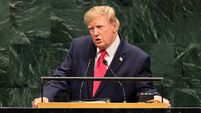
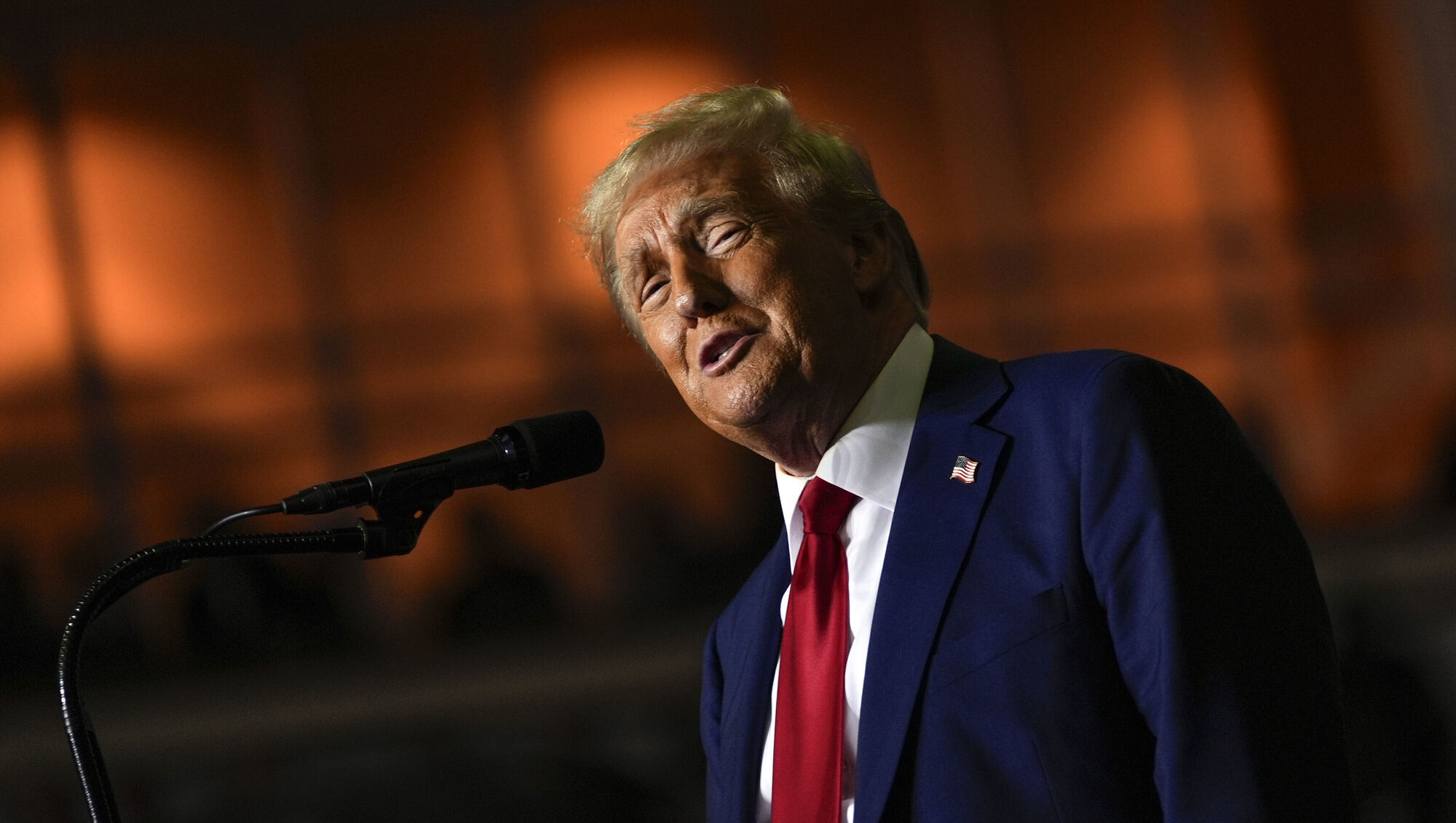
Republican presidential nominee Donald Trump addresses a campaign rally in Allentown, Pennsylvania. Picture: AP /Julia Demaree Nikhinson

Every vote is equal in a democracy. But in the US presidential election, some votes are more equal than others. Asma Davis has just cast her early vote in Number One Montgomery Plaza, Norristown, in Montgomery County, Pennsylvania. 

Asma has lived all her life in east Norristown, this suburb of Philadelphia. She walks out into the strong autumn sun and agrees to talk to the reporter from Ireland. 

“I voted early just so as not to get caught up with any crowd on the day,” she says. It is put to her that her vote is more precious to whomever she voted for president than votes that will be cast in most of the other states in the union.

“I guess so,” she says. “Because this is a swing state but that didn’t affect how I voted.” 

Philadelphia residents wait at city hall to cast their ballot on the last day of early voting on Tuesday. Picture: Matthew Hatcher / AFP via Getty Images

She doesn’t offer to reveal her choice, which probably feeds into her general reluctance to talk politics. “I know who I want to be president and I’ve known for a time.” 

The reality is that votes by Asma Davis and a few thousand like her could be crucial in deciding who will be the next president. Pennsylvania is the biggest prize among the seven states deemed to be up for grabs. It has 19 electoral college votes, more than any of the others. 

Polling guru Nat Silver has determined that if Harris swings the state, her chances of winning the election rocket to 91%. If Trump is victorious here, he’s given a 96% chance of making it back to the White House. 

On election night, no result will be anticipated and parsed as much as the one emerging from Pennsylvania. There are more than 160 million registered voters in the USA, but the roughly nine million votes in Pennsylvania are considered the biggest prize of all.

Within the state, there are deemed to be a few counties that will have an outsized influence on the result. The cities of Philly and Pittsburgh, which hug the eastern and western borders of the state respectively, will comfortably vote Democratic. Much of the expanse between them are unlikely to do anything but opt for Trump. 

Donald Trump works behind the counter during a campaign event at McDonald's restaurant in Feasterville-Trevose, Pennsylvania. Picture:  Doug Mills-Pool/Getty Images

In such a milieu, suburbs like Montgomery County are expected to be crucial. Trump’s former buddy and briefly White House spokesperson Anthony Scaramucci recently declared on a podcast that the county could be the one which will determine the next president.

Its neighbouring county, Bucks, was in the news a few weeks back when Donald Trump donned his apron and dispensed French fries from the local McDonalds. What was less reported was what unfolded not far away from Ronald’s finest as two opposing groups of locals squared up to each other. 

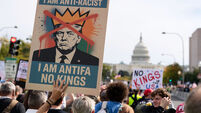
A report on the incident described at least 50 people on each side screaming at each other while filming the exchanges. They shouted about Project 2025 and January 6 and transgender youth, vaccines, abortion and fascism. The incident was a reminder that even in the placid and relatively well-off suburbs, base instincts are now in full flight.

Norristown is the capital, or seat as they call it, of Montgomery. It is 15 miles from the centre of Philly, the train hugging the fast flowing Schuylkill River all the way out of the city, past the tightly packed public housing, the industrial wastelands, until arriving at relative prosperity. Out here, the American dream is still doing a healthy trade.

The town isn’t much bigger than Tralee, population wise, but spread out far and wide. Its main street is lifted straight from Hollywood’s middle America, with two- and three-storey clapboard houses, a smattering of independent retailers and even a building that has seen better days outside which a plaque identifies it as home of the Ancient Order of Hibernians. 

A gentle wind is pushing stiffened golden leaves down the street but the sun’s dominance gives the autumn day a glorious sheen. This is fall in America, but not as we know it.

Democratic presidential nominee at a campaign event at the Ellipse near the White House in Washington DC on Tuesday. Picture: AP /Stephanie Scarbrough

Early voting has been taking place at One Montgomery Plaza, across the road from the imperious city hall, which harks back centuries. A woman wearing a Democratic party name tag is taking a cigarette break. She won’t give her name because in her position she is banned from talking to the press. She is an election observer on behalf of her party, “to make sure nothing weird is happening at the selected site”. She is a volunteer, sent down from New York for the purpose.

When asked whether her presence is as a result of all the tomfoolery around so-called election fraud, she says no. “I’ve been doing this for years,” she says. “Nothing different about it.” Neither does she agree with the proposition that the voting she is keeping an eye on is more critical than it would be in, say, her native state.

“Every vote counts,” she says. “You have the electoral collage for the president but there are ballot elections for congress and for state offices so it’s important to vote.” And how is the early voting going in her estimation? “I really haven’t a clue.” It becomes obvious that she is not in the mood for dispensing anything other than the party line and really you couldn’t blame her.

While she has been doing this for years, there is no question but that security has been ramped up here, as elsewhere, in anticipation of disputes after polling day, particularly if Trump loses. Montgomery County has created a nine-member “threat assessment management unit” charged with investigating threats related to the election.

In January 2021, a man fired shots after entering the county’s Democratic Committee office in Norristown. He was subsequently convicted of making terrorist threats. Luckily, nobody was in the office at the time, but Montgomery County board of elections chair Neil Majhija said this was just luck. “The incident told us there are things we can do and there are steps we can take to prevent acts of violence.” 

Once again, the nefarious developments in the democratic process in the time of Trump are amplified in a swing state. It was also in Pennsylvania that Trump kicked off his “stolen election” stuff, claiming he had actually won the state. 

The reality was that legally postal votes can only be counted in the state after the polls close and it became obvious early on that Biden had won it. 

Afterwards, the Supreme Court refused to hear a case on behalf of Trump on the laws around the counting of postal votes.

The stakes in the suburbs are best illustrated by looking at the last two elections. There are four counties that ripple out from the city of Philadelphia which are key: Montgomery, Bucks, Delaware and Chester. Each backed the Democrat in the 2020 and 2016 election, but turnout was crucial. 

In 2016, Hilary Clinton won 57.27% in these counties to Trump’s 42.73%. Four years later Biden captured 59.56% to Trump’s 40.44%. That two and a quarter percentage increase for Biden represented 30,000 extra votes. If Clinton had got those four years earlier, she would have won the state and by extension the election.

There was a time when these suburban counties could be guaranteed to vote Republican. That was back in the day when the prosperous suburbs were largely inhabited by white well-to-do folk who were happy with the status quo and the party’s focus on tax cuts and good financial husbandry. 

Over the past 30 years though, the character of these places has evolved, with the influx of college-educated black and Latino families. These cohorts, many if not most of them, brought up in the Democratic tradition have stayed with the party.

Another factor in the blue-ing of these previously red strongholds has been the moving away from religion of these newly prosperous residents. 

Meanwhile, reflecting national trends, the former working-class base of the Democratic party has now taken flight to what the Republicans are offering. In such a churn, the Democrats have come out better in the suburbs of Philadelphia.

Supporters cheer durning a campaign rally with Democratic presidential nominee Kamala Harris in Washington DC on Tuesday. Picture: AP/Ben Curtis

Not everybody is obsessed with division or even the forthcoming election. Katie Diamond emerges from the Plaza building hosting early voting but she smiles when asked whether she cast her ballot. “I’m not that interested in it,” she says. “I’m not going to vote, I think they are equally good and bad the two of them. And I think it’s all set up no matter which way you vote.” 

She is hovering on 30 years of age and feels she is not alone. “I know in this country young people are disillusioned with politics,” she says.

Katie’s local election board will be trying hard to get some change out of her. The chairman, Mr Makhija, initiated what might ordinarily appear a corny event earlier this year. He held what he termed a “voter hall of fame” in an attempt to highlight that turnout is not what he wants it to be.

On a Thursday last April, he brought 16 voters into his office to present them with leather bound certificates in honour of their long adherence to voting in each election. The oldest among them had been voting since 1956.

“I think it’s so important that in the midst of everything that’s happening in politics, where people are cynical or disillusioned, that we actually recognise the people who are so committed to the system,” he told local media. 

He said he wanted to come up with new ways of making voting more accessible. He’s due some credit because an NBC tracking poll that goes back nearly 20 years has found enthusiasm for a presidential contest has never been as low. 

There is plenty of negative emotion around the election, but, it would appear, very little positive.

More in this section

Revoiced

Newsletter

Sign up to the best reads of the week from irishexaminer.com selected just for you.

Cookie Policy Privacy Policy Brand Safety FAQ Help Contact Us Terms and Conditions

© Examiner Echo Group Limited