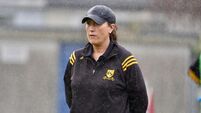
'Cystic Fibrosis tore through my family, but now sufferers can hopefully breathe easier'
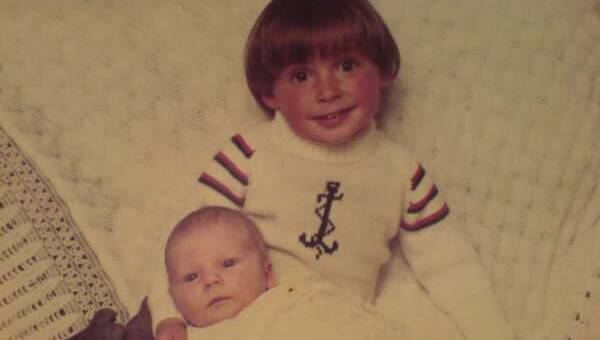
Laura and Conor as babies before they died from Cystic Fibrosis within three years of each other in the 80s.
As a child, Cystic Fibrosis (CF) felt like a sword hanging over the neck of my family. The very mention of the disease was enough to stop us in our tracks. It had claimed the lives of my two cousins — Conor and Laura — both just five years old when they died.
I can still see my father opening the front door and hearing the words, “We lost Conor. He’s gone.” My uncle Jack could barely talk.
In 1984, at the age of eight, the death of a child should have been a foreign and distant country for me, but Conor O'Reilly's passing was the second in our family in nearly four years.
Conor was a lovely child with ginger hair. I remember him as a rascal, always giddy, but he had a softness and a gentleness that always shone through.
When he died, it was the first time I ever saw my father Patrick crying.
Conor's death, just four years after his older sister Laura, was a terrible blow to our whole family.
Laura was a lovely girl with soft, silky hair and a big smile that disguised a determined personality — even at five. To this day, I remember them both vividly.
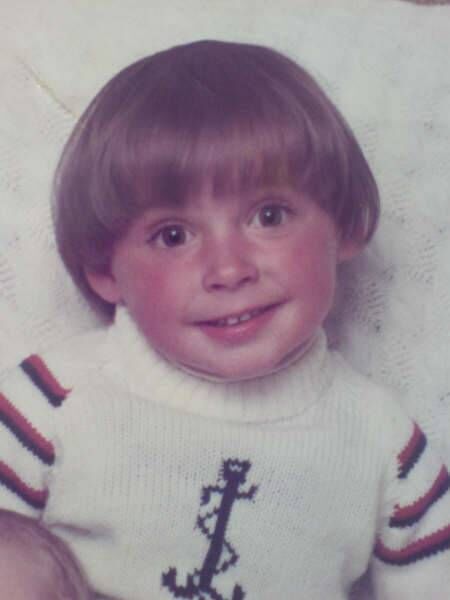
The siblings were diagnosed with CF when they were around 12 months old: Laura passed away on July 9, 1980, and Conor died on 27 January, 1984. I’ll never know how my aunt Bernie and uncle Liam survived the loss of their first two children.
It was hard for me at the time to try and understand why my two cousins were not around anymore. We were always told Laura and Conor had Cystic Fibrosis, but I couldn’t see a difference, except they both had a cough. But I had a cough sometimes too, so I just thought they had a bad flu.
I remember playing with Laura, who was the same age as me, in my front garden. I tried to plait her hair during a game of snakes and ladders, but her locks were like velvet and slipped through my fingers.
Me and my cousins were a little bit older when Conor died, and by then we could see he was not as strong as the rest of us, and so we had to mind him when he came to play.
But then one day Conor was gone too. We all lived in the same housing estate in Drogheda at that time, so when our two beautiful cousins stopped coming to play, the garden felt empty. I didn’t know how to process any of it. How does a child process the death of another child, let alone two children?
But yet their loss was always there, for all of us. As the years went on, my mother spoke to us about Conor and Laura’s passing many times, but my father would say very little, before walking away from the conversation.
But my experience of CF did not end there.
As the years went on, the condition claimed the lives of three friends of mine, one of whom died in 2021, as well as all of the children with CF who were being treated in a clinic in Drogheda around the same time as Conor and Laura.
Bernadette Maguire, my classmate, and her sister Jennifer were two of those children. On October 2, 1986, Bernadette lost her fight with Cystic Fibrosis. Many of my friends took her name for our Confirmation. She was extremely close to another girl in my class, Grainne Rafferty and we still talk about her today.
Bernadette’s old sister Jennifer, who also had CF, died six weeks later on November 13, 1986, just as she was about to undergo a lung transplant — one of the first of its kind back then. CF is a fault protein that affects the body’s cells, tissues and the glands that make mucus and sweat.
Ireland has the highest incidence of CF in the world, with about 1,400 children and adults living with the disease and more than 30 new cases diagnosed every year. We also have a more severe form of the disease than other countries as we have a greater proportion of severe Cystic Fibrosis mutations.
Back in the 1980s a diagnosis of CF meant the clock was ticking — there was no escaping it. The patients that survived to their teens were few and far between.
In 1998, a study by CF Ireland showed that most adults with CF (87%) were single. But by 2017, thanks to improvements in medical science, that figure changed dramatically. Not only were CF patients living longer — 26% of people surveyed at the time were parents.
The idea of anyone having a baby when they had CF was never included in previous studies, because the chances of a long life were slim, let alone having a baby.
Now people with the disease are having families and living independently. One of the gamechanger drugs that has made this possible is Kaftrio. It is considered a revolutionary treatment for CF patients that can stabilise the disease.
Ivacaftor (Kalydeko) is another breakthrough treatment — the first drug designed to treat the basic defect of CF. Ivacaftor was originally approved for adults and then sequentially over several years for older and younger children.
Experts in the field say the earlier treatments can begin, the more likely that progression of the condition can be slowed down or halted in children, which is why the publication of one study this week is so important.
Led by RCSI and Children’s Health Ireland, it included the first baby in the world with CF to be diagnosed from birth and enrolled in this kind of trial. It paves the way for eligible newborns to start treatment on the medicine at the time of diagnosis (typically at newborn screening) rather than having to wait.
“This is a huge moment in Cystic Fibrosis,” said Paul McNally, Associate Professor of Paediatrics at RCSI and Consultant in Respiratory Medicine at CHI.
“This is an important development because almost all children are diagnosed through newborn screening at around this time,” he said.
This news has been welcomed by so many familied impacted by CF. Cork singer Myles Gaffney had opened up about his own family’s loss after he wrote “Breathe Easy” which is sung by Stephanie Rainey in aid of CF Ireland last year.
The song was written in memory of his wife’s niece, 24-year-old Cork woman Ciara Curran O’Gorman who had CF and died just 12 days after the birth of her first child in CUH in 2017.
Ciara had been responding well, but unexpected complications arose, and she died after having “the best treatment” in the hands of her medical team, according to her family. Myles and his family say news of this groundbreaking study on CF is very welcome.
“Breathe Easy” also reminded me of my friend Samantha “Sam” Cruise who was one of the prominent campaigners for Kaftrio.
Sam, who was 30 years old, had become very unwell, and died on November 6, 2021. She was a stunning vibrant young woman who had lived an incredibly long life with CF.
She highlighted the importance of Kaftrio medication particularly for younger children, but unfortunately for Sam, she was not well enough to get started on the drug herself.
On March 21, the Kaftrio drug was approved for children aged six to 11 with Cystic Fibrosis.
More than 40 years ago, when my cousins Laura and Conor died, I used to hear my family say, “one day there’ll be a cure for CF”. The findings in the study published this week, will give great hope to parents who have just learned that their child has Cystic Fibrosis.
While there is no miracle cure, there is every reason to hope that hundreds of families today will not have go through the suffering endured by my family and many others in the past.

CONNECT WITH US TODAY



Be the first to know the latest news and updates