The Watermelon: Generation TikTok leads the way with a new form of protest
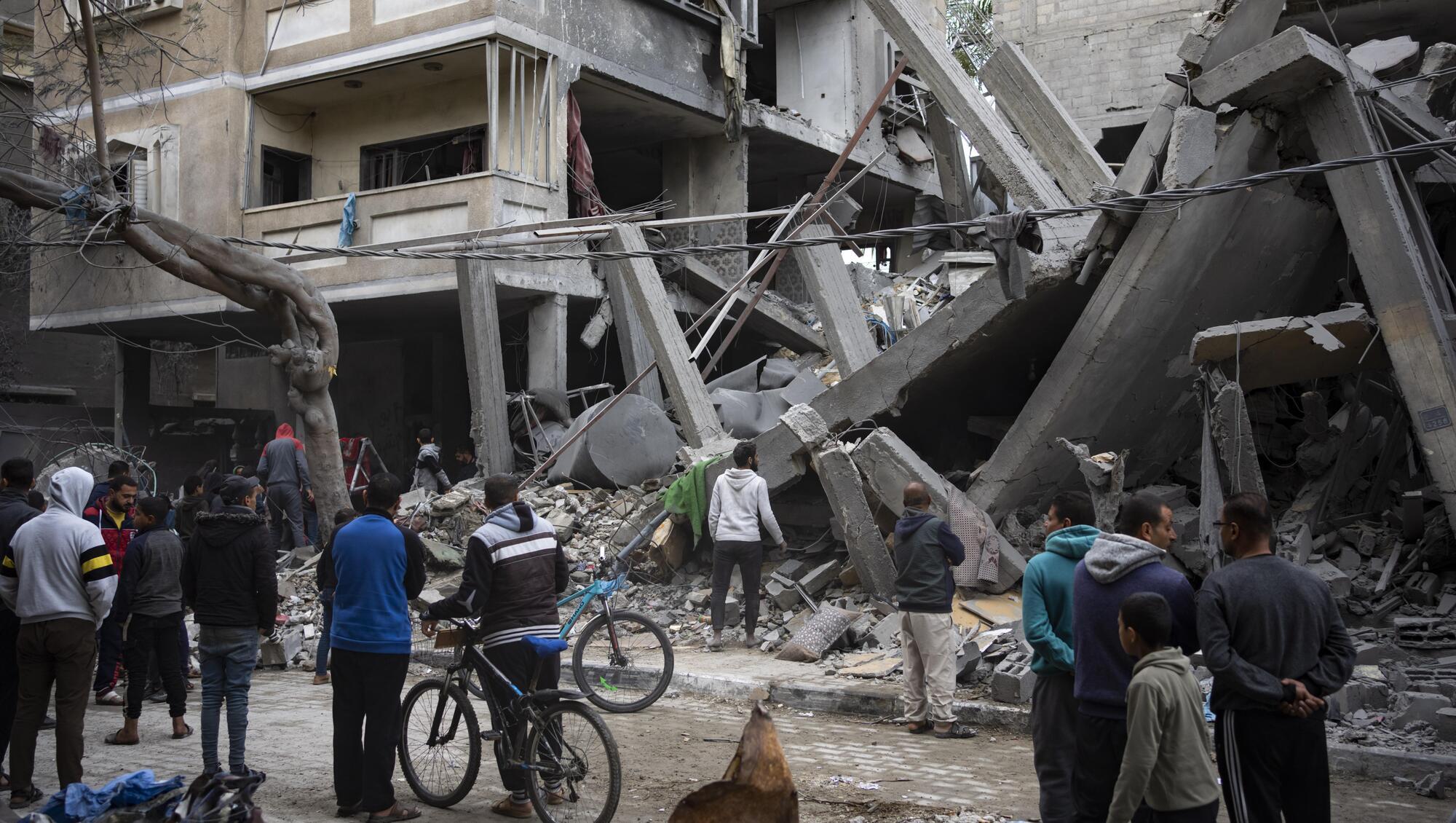
Palestinians inspect the damage of residential buildings after an Israeli airstrike in Rafah, southern Gaza Strip.
SCROLLING through your social media feeds in the last few weeks, you may have spotted a rise of one specific emoji — the watermelon.
It has filled comment sections on Facebook, Instagram, TikTok, X and has been pasted into replies to some of the biggest names and events on the planet.
In an age of algorithms, digital media, content creation and trending TikTok videos, the watermelon is rocketing to the top.
But why? Here is some context.
For one weekend in February every year, the focus of the US is all around the Super Bowl. It draws in more than 110 million viewers in the States every year alone (that’s before you get to other countries) and is in the top five most marketable brands in global sport.
Companies pay eye-watering sums to get 30 seconds of advertising during it — as do countries.
Israel joined the list of countries promoting themselves during the NFL’s big dance, stumping up $7m (€6.5m) to promote the idea of “bringing all dads back home,” referencing the October 7 kidnap of Israeli hostages by Hamas.
However, in the hours and days that followed, Gen Z began a new form of protest, spurred on by the killings in Rafah.
The NFL has 18m followers on TikTok and another 12.7m to boot on YouTube — but when highlight clips were being posted by the league from the Super Bowl, the majority of the comments weren’t related to the snippet.
‘Don’t forget about Rafah’, ‘I stand with Rafah’, ‘All eyes on Rafah’.
When a video of Taylor Swift was uploaded to the NFL’s feed of her reacting during the game, it was the same — ‘there are civilians being murdered right this second'.
One of those civilians was Sidra Hassouna, a seven-year-old girl who was hit by an Israeli airstrike and killed instantly, a picture of her body strewn over a wall going viral in the days following.
When US President Joe Biden joined TikTok in early February, his comments were immediately bombarded by supporters of Donald Trump — but also by people urging him to say Sidra’s name.
Sidra is not the only name to have popped up over and over in comment sections of major businesses and corporations (the Baftas and the Golden Globes have also been targeted.) Photojournalist Motaz Azaiza and filmmaker Bisan Owda, who had both been documenting life in Palestine since the outbreak before being forced to flee, have also seen their names repeated by the younger generation on TikTok, X, and YouTube.
Major social networks have also made some questionable decisions.
Motaz Azaiza had periods where he wasn’t allowed to post by Meta, while Cork comedian Tadhg Hickey had his TikTok account deleted after a number of pro-Palestine posts.
Then there was the debacle surrounding Basketball Ireland’s Instagram getting temporarily disabled in the wake of the women’s national side’s match with Israel in February — which Meta claimed was an “error". Which may help to explain the extraordinary increase in the number of watermelons you now see while you’re swiping.
When the Palestinian flag was banned in the 60s, the watermelon became a new symbol of support of Palestinian causes — a sliced watermelon, with its bright red interior, green-and-white rind and black seeds, has all the colours of the flag.
Using the watermelon in place of the flag helps avoid algorithmic censorship from social media companies like X or TikTok and will also get around blocking filters.
Of course, the tech giants will not be found wanting here and will in turn happily feed more content to keep social media activists engaged.
While it might be tempting to dismiss Generation TikTok as merely swiping their way to activism, the reality is this cohort has plenty of consumer power to wield.
Just ask McDonald's, which found itself in the eye of the storm when its Israeli operation donated thousands of free meals to the Israeli military. The online campaign to boycott the fast food chain over this perceived support for Israel quickly gathered momentum and, as a result, the company missed its first quarterly sales target in nearly four years in the Middle East. Chief executive Chris Kempczinski acknowledged the boycott had resulted in a “meaningful” hit to business in the Middle East and other countries while hitting back at “misinformation”.
When the consequences of social media activism starts to hit the bottom line for business then this type of campaigning is more likely to lead to change because while the watermelon might be a powerful icon in the world of social media, ultimately it is another ‘w’ where the true power lies — wallet.


CONNECT WITH US TODAY



Be the first to know the latest news and updates