When is criticism of Israel antisemitic or legitimate? 
Antisemitism must be identified and fought, but so too must efforts to squash reasonable protest of Israel by conflating it with antisemitism, writes Joshua Shanes
When is criticism of Israel antisemitic or legitimate? 

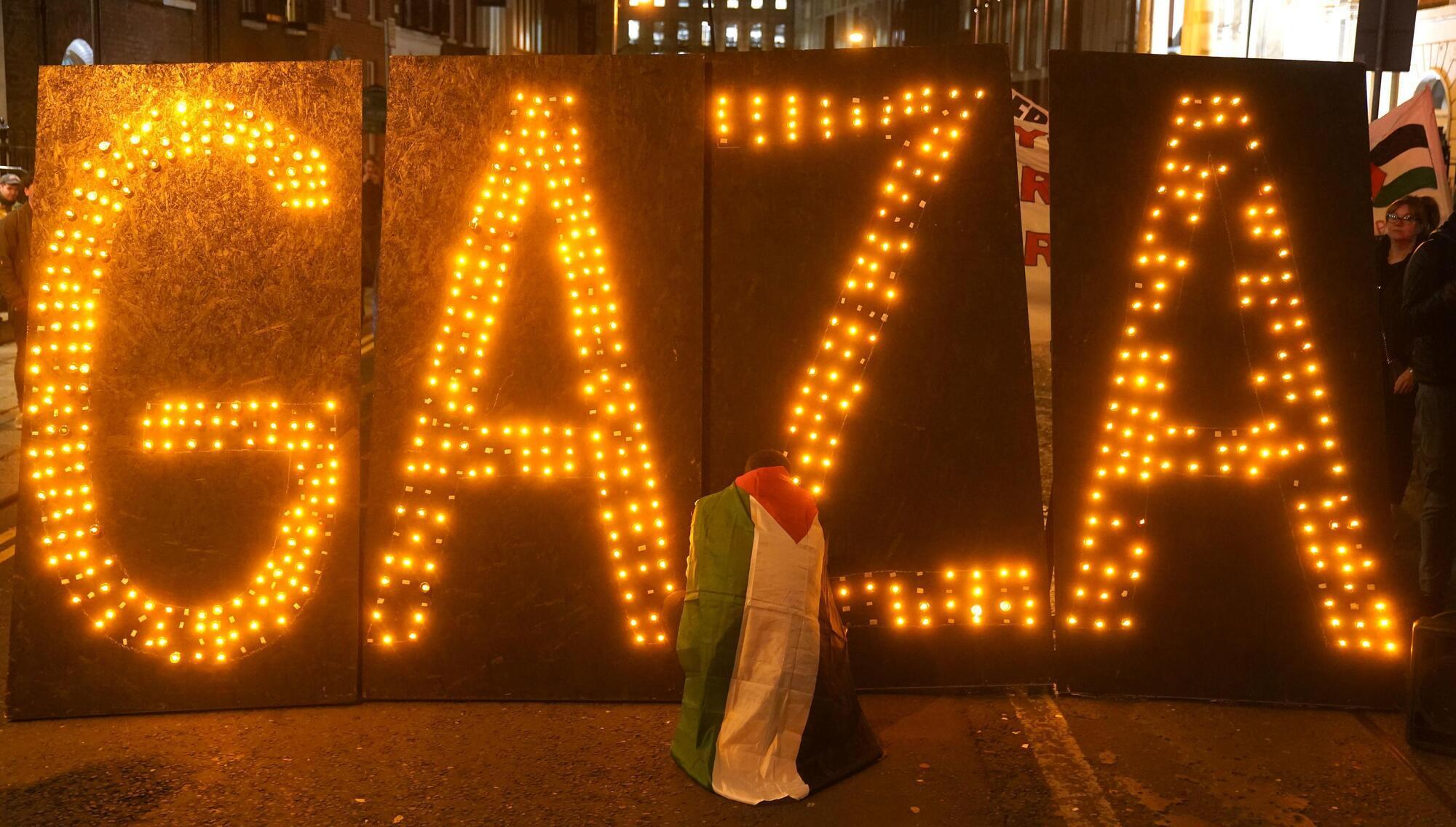
People attending a Pro-Palestinian protest at Leinster House, Dublin. Picture: Brian Lawless/PA

There has been a sharp increase in antisemitism around the world since the October 7 massacre by Hamas and Israel’s subsequent military attacks in the Gaza Strip.

The apparent connection of this spike to many countries’ condemnation of Israel’s response has brought renewed focus on the relationship between antisemitism and anti-Zionism. When does criticism of Israel “cross the line” to antisemitism, and when is it a legitimate political expression?

As a scholar of modern Jewish history, antisemitism, and Zionism, I suggest that the key to understanding that relationship begins with understanding antisemitism itself.

Anti-Jewish animosity is certainly not new — it dates to antiquity. The early Christian church attacked Jews for rejecting Christ and blamed them collectively for crucifying him.

The Gospel of John in the New Testament was particularly vitriolic, accusing Jews of being Satan’s children. Medieval Christians added other myths, such as the infamous blood libel — the lie that Jews ritually murdered Christian children for their blood. Other myths accused them of poisoning wells, of desecrating the consecrated host of the Eucharist to reenact the murder of Christ; some even claimed that they had inhuman biology such as horns, or that they suckled at the teats of pigs.

Such lies led to the violent persecution of Jews over many centuries.

In the 19th century, these myths were supplanted by the additional element of race — the claim that Jewishness was immutable and could not be changed via conversion. Though this idea first appeared in 15th-century Spain, it was deeply connected to the rise of modern nationalism.

In 1879, the German journalist Wilhelm Marr coined the term “antisemitism” to reflect that his anti-Jewish ideology was based on race, not religion. He chose the term because he imagined the Jews as a foreign, “semitic” race, referring to the language group that includes Hebrew. The term has since persisted to mean specifically anti-Jewish hostility or prejudice.

Modern antisemitism built on those premodern foundations, which never completely disappeared but was fundamentally different. It emerged as part of the new politics of the democratic modern era.

Antisemitism became the core platform of new political parties, which used it to unite otherwise opposing groups such as shopkeepers and farmers, anxious about the modernising world.

Unlike anti-Jewish hatred in this past, this was less about religion, that Jews rejected Christ, and more about political and social issues.

 Antisemites believed the conspiracy theory that Jews all over the world controlled the levers of government, media, and banking and that defeating them would solve society’s problems.

Thus, one of the most important features of modern antisemitic mythology was the belief that Jews constituted a single, malevolent group, with one mind, organised for the purpose of conquering and destroying the world.

Antisemitic books and cartoons often used claws or tentacles to symbolise the “international Jew,” a shadowy figure they blamed for leading a global conspiracy, strangling and destroying society. Others depicted him as a puppet master running the world.

Caricatures of George Soros portray him as a puppet master secretly controlling all levers of government, media, the economy, and even foreign migration.

In the late 19th century, Edmond Rothschild, head of the most famous Jewish banking family, was villainised as the symbol of international Jewish wealth and nefarious power. Today, it is typically the billionaire liberal philanthropist George Soros who is often portrayed in similar ways. Caricatures of Soros portray him as a puppet master secretly controlling all levers of government, media, the economy, and even foreign migration.

This myth that Jews constitute an international creature plotting to harm the nation has inspired massacres of Jews since the 19th century, beginning with the Russian pogroms of 1881 and leading up to the Holocaust.

Modern antisemites ascribe many immutable negative traits to Jews, but two are particularly widespread. First, Jews are said to be ruthless misers who care more about their ill-gotten wealth than the interests of their countries. Second, Jews’ loyalty to their countries is considered suspect because they are said to constitute a foreign element.

Since Israel’s establishment in 1948, this hatred has focused on the accusation that Jews’ primary loyalty is to Israel, not the countries they live in.

In recent years, the relationship between antisemitism and anti-Zionism has taken on renewed importance. Zionism has many factions but roughly refers to the modern political movement that argues Jews constitute a nation and have a right to self-determination in that land.

Some activists claim that anti-Zionism — ideological opposition to Zionism — is inherently antisemitic because they equate it with denying Jews the right to self-determination and therefore equality.

Others feel that there needs to be a clearer separation between the two, that not all criticism of Israel is anti-Zionist, and not all anti-Zionism is antisemitic.

Zionism in practice has meant the achievement of a flourishing safe haven for Jews, but also led to dislocation or inequality for millions of Palestinians, including refugees, West Bank Palestinians who still live under military rule, and even Palestinian citizens of Israel who face legal and social discrimination. Anti-Zionism opposes this, and critics argue that it should not be labeled antisemitic unless it taps into those antisemitic myths or otherwise calls for violence or inequality for Jews.

Definitions of antisemitism

This debate is clearly evident in the competing definitions of antisemitism that have recently emerged. Three have gained particular prominence. The first was the so-called “working definition” of the International Holocaust Remembrance Association, or the IHRA, published in 2016.

In response, an academic task force published the Nexus definition in 2021, followed by the Jerusalem Declaration that same year, the latter signed by hundreds of international scholars of antisemitism.

Remarkably, all three definitions tend to agree on the nature of antisemitism in most areas except the relationship of anti-Israel rhetoric to antisemitism. The IHRA’s definition, which is by design vague and open to interpretation, allows for a wider swath of anti-Israel activism to be labelled antisemitic than the others.

The Jerusalem Declaration, in contrast, understands rhetoric to have “crossed the line” only when it engages in antisemitic mythology, blames diaspora Jews for the actions of the Israeli state, or calls for the oppression of Jews in Israel. Thus, for example, IHRA defenders use that definition to label a call for binational democracy — meaning citizenship for West Bank Palestinians — to be antisemitic. Likewise, they label boycotts even of West Bank settlements that most of the world calls illegal to be antisemitic. The Jerusalem Declaration would not do so.

In other words, the key to identifying whether anti-Israel discourse has masked antisemitism is to see evidence of the antisemitic mythology. For example, if Israel is described as part of an international conspiracy or if it holds the key to solving global problems, all three definitions agree this is antisemitic.

Equally, if Jews or Jewish institutions are held responsible for Israeli actions or are expected to take a stand one way or another regarding them, again all three definitions agree this “crosses the line” because it is based on the myth of a global Jewish conspiracy.

Critically, for many Jews in the diaspora, Zionism is not primarily a political argument about the state of Israel. For many Jews, it constitutes a generic sense of Jewish identity and pride, even a religious identity. In contrast, many protests against Israel and Zionism are focused not on ideology but on the actual state and its real or alleged actions.

This disconnect can lead to confusion if protests conflate Jews with Israel just because they are Zionist, which is antisemitic. On the other hand, Jews sometimes take protests against Israel in defence of Palestinian rights to be attacks on their Zionist identity and thus antisemitic, when they are not. There are certainly grey areas, but in general calls for Palestinian equality, I believe, are legitimate even when they upset Zionist identities.

In my view, antisemitism must be identified and fought, but so too must efforts to squash legitimate protest of Israel by conflating it with antisemitism. By understanding the mythology underlying antisemitism, hopefully both can be accomplished.

 Joshua Shanes is Professor of Jewish Studies at College of Charleston. This article featured on The Conversation, a news analysis and comment website written by academic experts.

More in this section

Revoiced

Newsletter

Sign up to the best reads of the week from irishexaminer.com selected just for you.

Cookie Policy Privacy Policy Brand Safety FAQ Help Contact Us Terms and Conditions

© Examiner Echo Group Limited