Dublin riots show need to shed cloak of Irish exceptionalism
Confronting the threat of extremism is not just a task for the law enforcement authorities; it requires a whole-of-society approach to safeguard our democracy and vulnerable fellow citizens, writes Ross Frenett, CEO of Moonshot
Dublin riots show need to shed cloak of Irish exceptionalism

In the fight against radicalization, civil society organisations’ role cannot be understated. Photo: Sam Boal / © RollingNews.ie

Something changed on November 23.

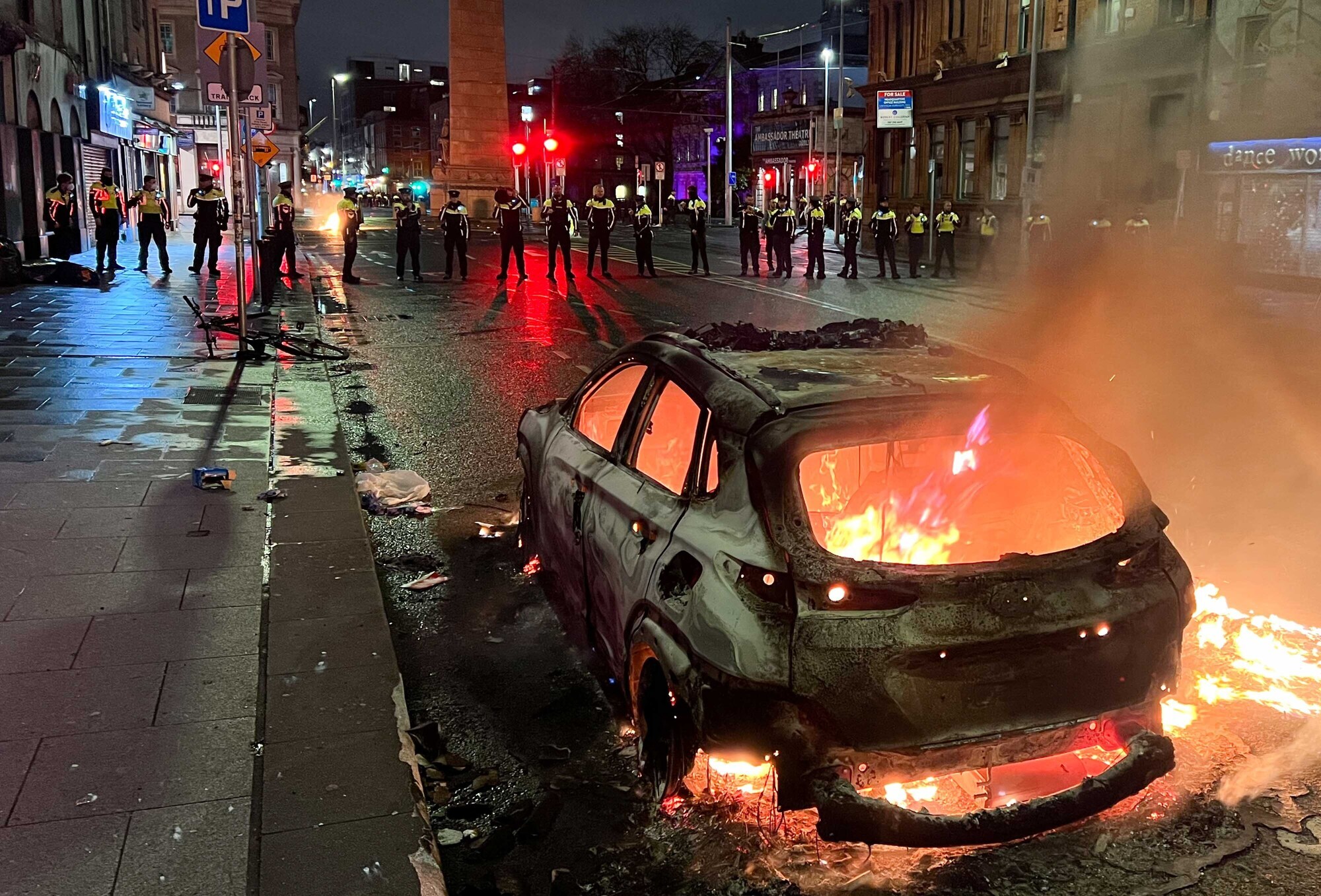
Children attacked at a school. Fascists running amok in our capital. This wasn’t supposed to happen here. Not in Ireland. Many Irish people believed in a kind of Irish exceptionalism, that meant we didn’t have to confront such scenes and grapple with the complex questions of how to push back.

This didn’t come from nowhere. Those of us that watch extremism professionally have been growing increasingly anxious for some time now. Even beyond the niche world of counter-terrorism and counter-extremism professionals, the signs that this has been building were obvious. Attacks online have morphed into attacks on migrant centres. Verbal assaults morphing into assaults on elected officials.

Where do we go from here? The first step is shedding the cloak of Irish exceptionalism once and for all. The harsh truth is that these incidents can happen here, they have happened here, and without decisive action, they will happen again. 

Confronting the threat of extremism is not just a task for the law enforcement authorities; it requires a whole-of-society approach, where each of us plays a vital role in safeguarding our democracy and vulnerable fellow citizens.

Individual empathy 

As we grapple with the growing shadows of extremism, our response must begin at the most fundamental level—in our homes. “Starting at home” isn’t just a phrase; it’s a call to action for every citizen. 

The battle against violent extremism of all forms often begins within the confines of our personal relationships. When loved ones fall prey to the labyrinth of conspiracy theories and radicalisation, our approach should not be one of confrontation, but rather of understanding and support. 

The journey back from the precipice of radicalization is fraught with challenges, yet it is one that must be undertaken with empathy and patience. Open, honest conversations, where questions are met with facts, and fears with reassurances, can be transformative.

Civil society engagement 

In the fight against radicalization, civil society organisations’ role cannot be understated. Too often radicalisation is viewed either as a hard problem for law enforcement and intelligence types to solve; gathering intelligence, kicking in doors, disrupting plots. Or it is overly personalised. “What did the family know?” 

However, there is a vast amount that can be done that is neither reliant on security services or direct family. In fact, in the space between the personal and the police is where the best violence prevention work is done.

Extremists weaponize vulnerability, identifying those with underlying issues and targeting them for recruitment. This is where civil society comes in. 

A double decker bus and a car are set alight on the edge of Dublin's O'Connell Bridge last month. This wasn’t supposed to happen here. Not in Ireland. Many Irish people believed in a kind of Irish exceptionalism, that meant we didn’t have to confront such scenes. Photo: Sam Boal/Rollingnews.ie

Suicide prevention charities, youth organisations, domestic violence groups, employment skills groups all have a role to play in safeguarding. 

Luckily, Ireland has world leaders in this field. Inspirational groups like Spunout run crisis text services like Text About It, which help young people in crises deal with a wide range of issues. Services similar to Text About It have been used in other countries to de-escalate those considering getting involved with extremist violence.

Involving civil society in extremism and terrorism prevention might not seem immediately obvious. I have often heard hard-headed security professionals push back against the idea, pointing out that terrorism and extremism is life and death. Suicide is life and death. Domestic violence is life and death. Drug abuse is life and death. We entrust well-trained, well-resourced civil society organisations to do work on life and death issues all the time.

There are risks, which is why civil society groups need to receive support, and be held to high standards. This is why last year my organisation published minimum practice standards for civil society intervention programs to respond to violent extremism. 

These include do no harm principles, risk management, data protection and respect for civil liberties. Ideally, all staff will have received training on bias recognition, familiarity with target audiences, potential vulnerabilities and protective factors. Digital security training is also vital, to protect staff and clients’ physical security, and the confidentiality of data collected during interventions.

De-securitizing violence prevention requires law enforcement to loosen their grip and accept help, and civil society to step forward. This can only be achieved with trust, funding and frameworks.

Government action 

Individual empathy and civil society engagement are important, but government action is indispensable. Ireland must move beyond isolated efforts and adopt a model of integrated, whole-of-government action. 

This approach involves synchronising efforts across all ministries, transcending the traditional remit of the Ministry of Justice. International best practices underscore the necessity of this broad-based approach, emphasising co-ordination and collaboration at every governmental level.

A national strategy, inspired by successful international models, can offer a robust framework. This should incorporate a multi-faceted strategy, encompassing education, social welfare, and digital literacy, alongside law enforcement. 

It should entail a pro-active stance on online spaces, where much radicalization now occurs. A key aspect of this strategy should be early intervention, focusing on identifying and engaging with individuals at risk of radicalisation. This can be achieved by training, and empowering civil society, building the connective tissues between online hate and offline services and equipping individuals to have the hard conversations needed.

Looking to international best practice will be vital. In this regard, Ireland is in a uniquely strong position to catch up, despite our late start. Some of the world's most respected terrorism and extremism experts are Irish; in fact many of the most innovative violence-reduction programmes from Boston to Bangladesh have been co-designed by Irish experts. The government needs to harness the energy and expertise of this network to ensure that we benefit from the expertise of Irish extremism scholars and activists.

Ireland’s EU membership means we are part of the EU Commission’s Radicalisation Awareness Network, where practitioners from all EU member states gather to exchange best practices and know-how. That network will be vital to Ireland in the coming months. 

The riots in Dublin last month. Where do we go from here? Photo: Sam Boal/Rollingnews.ie

Beyond the EU, Ireland has deep linguistic, cultural and familial ties with other English-speaking countries that have developed comprehensive strategies and innovative programmes to address violent extremism in a de-securitised way.

My own organisation is currently deploying programmes to prevent people joining extremist groups in New York State, Quebec, Ontario and many others. These have prevented attacks and saved lives. Although each of these places calls for a bespoke approach, there are transferable lessons. The importance of the digital space, the significance of trust between civil society and government, and the indispensable role of political leadership.

Political bravery 

The success of a "whole-of-society approach" to combat extremism hinges on the commitment and engagement of our political leaders. Of course Justice Minster Helen McEntee should be expected to be engaged on this, but that is not enough. There needs to be active political engagement by all ministers.

The time for firing off a nice sounding Tweet and then going back to business as usual is over. Effective interdepartmental working on highly complex issues needs to be driven forward and supported by engaged and well-informed politicians. 

The integrated whole-of-society approach to violence reduction has only ever been successful where that is present. Without it, strategies gather dust, fear of failure paralyses innovation, and trust diminishes.

Ireland’s leaders must lead.

  • Ross Frenett is the CEO of Moonshot. Originally established to understand and counter violent extremism, Moonshot works on a range of activities such as conspiracy theories, gender-based violence and human trafficking. 

More in this section

Revoiced

Newsletter

Sign up to the best reads of the week from irishexaminer.com selected just for you.

Cookie Policy Privacy Policy Brand Safety FAQ Help Contact Us Terms and Conditions

© Examiner Echo Group Limited