Protecting women human rights defenders first step to peace

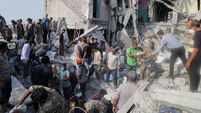
For years, women human rights defenders in Gaza have documented human rights violations by both Hamas and Israeli occupation forces. Picture: AP/Fatima Shbair
It takes courage to be a human rights defender. It takes even more courage to be a woman human rights defender. I have met many courageous women who have risked everything to defend the rights of others during conflicts.
One of the names that comes to mind is Bety Cariňo, from Oaxaca in Mexico, whose words have stayed with me: "Today we want to live a different history. We are rebelling and we are saying enough. The time is coming of us the peoples, the rebellious women and the people from below."
Two months later Bety was shot dead by paramilitaries.
It is hard to think of a greater threat to human rights and the dream of people like Bety than violent conflict. This year, we celebrate the 75th anniversary of the UN Declaration on Human Rights: it is also the year in which there are more ongoing conflicts than at any time in those 75 years.
Two billion people — 25% of the world’s population — live in places affected by conflict. According to data released by the Uppsala Conflict Data Program, 2022 saw more people killed in conflict than in any year since the Rwandan Genocide in 1994.
When war rages it is usually women who step into the breach to provide support to the victims. Yet doing this work, women human rights defenders face overlapping and gendered risks: general violence in a conflict situation, targeted attack because of their human rights work and misogynistic attacks because they are women.
When we add the issues of sexual orientation, indigenous rights and environmental protection, the level of risk increases exponentially.
Lawyers for Justice in Libya recently informed me that women human rights defenders have been forced out of public life due to online attacks, including threats, sexual assault, physical assault and murder, as well as gendered smear campaigns designed to ostracise them.
The same is happening in Afghanistan, where women are confronting the gender apartheid the Taliban has imposed.
For years, women human rights defenders in Gaza have documented human rights violations by both Hamas and Israeli occupation forces.
The situation has long been past boiling-point, but now that fully fledged conflict seems inevitable, these defenders need support more than ever.
If they had been listened to, along with those of other women human rights defenders in the region, things may not have gone this way. Yet their voices are being drowned out and allies are abandoning them. Human rights cannot be collateral damage and nor can women human rights defenders.
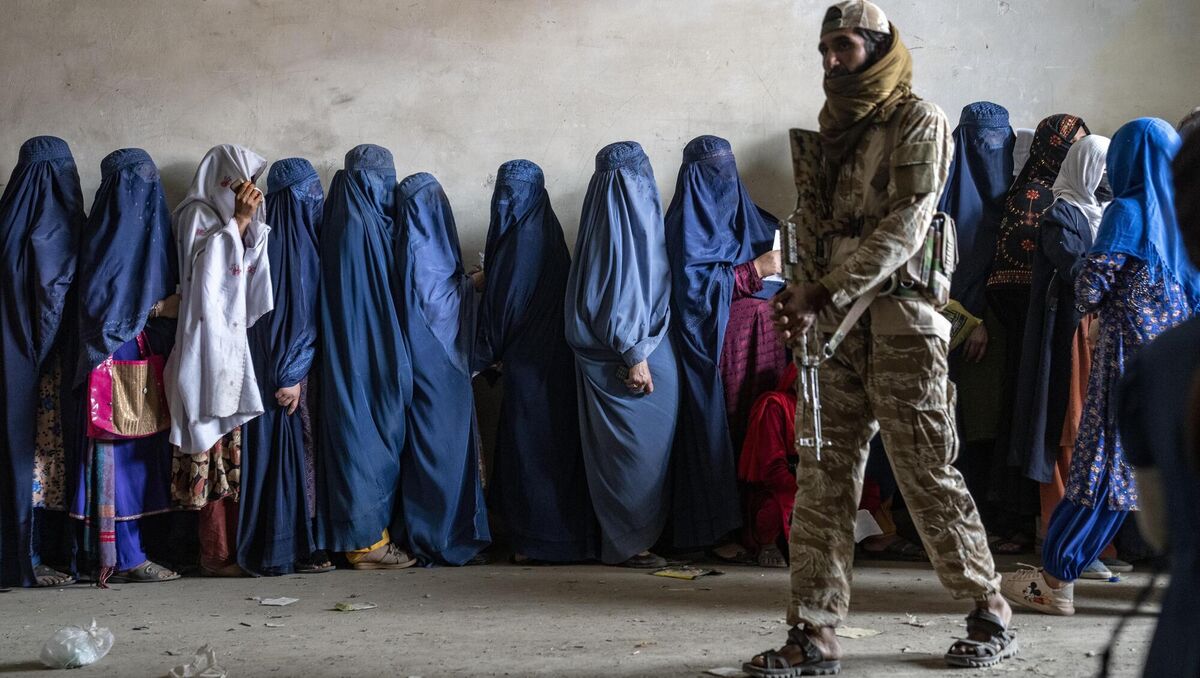
In preparing an upcoming report to the UN General Assembly, I spoke with dozens of women human rights defenders in conflict settings. In the report, I detail how women human rights defenders provide services to the most vulnerable.
Lyudmyla Yankina, a nurse, drove around Kyiv in the weeks following Russia’s invasion of Ukraine to deliver food and medical supplies to the disabled, the elderly and the terminally ill.
The Abductee Mothers Association in Yemen monitors the enforced disappearances of male relatives and has secured the release of dozens.
The fate of Razan Zaitouneh, who founded a centre to document human rights violations in Syria in 2011, is a reminder of the risks faced by women undertaking this work — Razan was kidnapped in December 2013 and remains missing.
Women subjected to sexual and gender-based violence, used as a weapon during conflict, are often left without adequate state support. The NGO, Sudanese Women Rights Action has been bridging this gap in Sudan since the outbreak of conflict there this year, providing medical and psychosocial support.
Women human rights defenders document human rights violations, which paves the way for a just peace post-conflict and accountability for crimes.
In Iraq, women human rights defenders collected evidence of crimes carried out by Isis against the Yazidi community and it was their advocacy that led to the passage of the Yazidi Female Survivors Law in Iraq in 2021. The law recognises Isis attacks against the Yazidi community as genocide and crimes against humanity, and provides for reparations and rehabilitation for survivors.
Instead, they are expected to retreat into the shadows, leaving decision-making to men. In this troubling context, it is vital to protect women human rights defenders in conflict and recognise their work to build sustainable peace.
This means, in the words of April Dyan Gumanao from the Alliance of Concerned Teachers in the Philippines, “food on tables, decent work opportunities and respect for human rights”. Studies show where women are meaningfully involved in peace negotiations, the probability of a peace agreement lasting at least two years increases by 20%, and by 35% the probability of a peace agreement lasting 15 years.
One women human rights defender from Syria told me that, where women were asked to participate, “it was mostly in the consultation phase, rather than directly in the negotiation phase”.
Another defender from Yemen noted that even when she was invited to peace talks, she was not able to obtain a visa to travel. Nearly every woman I spoke to highlighted the lack of protection they receive when they become more visible due to their peace-building work. Neither of the two women quoted above felt safe enough to have their quotes attributed to them.
In the 23 years since Women, Peace and Security became an agenda item on the UN Security Council, there has been some progress in addressing conflict-related sexual violence and improvements in the support and protection offered to potential or actual victims.
However, there must be more focus on the role of women human rights defenders as legitimate actors and the protection they require. Only when women are free to safely promote and protect human rights in conflict will we see peace overcome war.
Razan Zaitouneh, mentioned above, documented the brutality of the war in Syria and the grotesque violence inflicted by both government forces and armed opposition groups.
Her words are a constant reminder to me of the courage of women human rights defenders and a challenge to me to never give up: "Not even 100,000 deaths, a harsh siege or the betrayal of the international community can ever defeat the will of a people who has a dream and faith in the future.”
- Mary Lawlor is the United Nations Special Rapporteur on the situation of human rights defenders


CONNECT WITH US TODAY



Be the first to know the latest news and updates