Tadgh McNally: Poor turnout at Fine Gael think-in raises questions about Varadkar's support
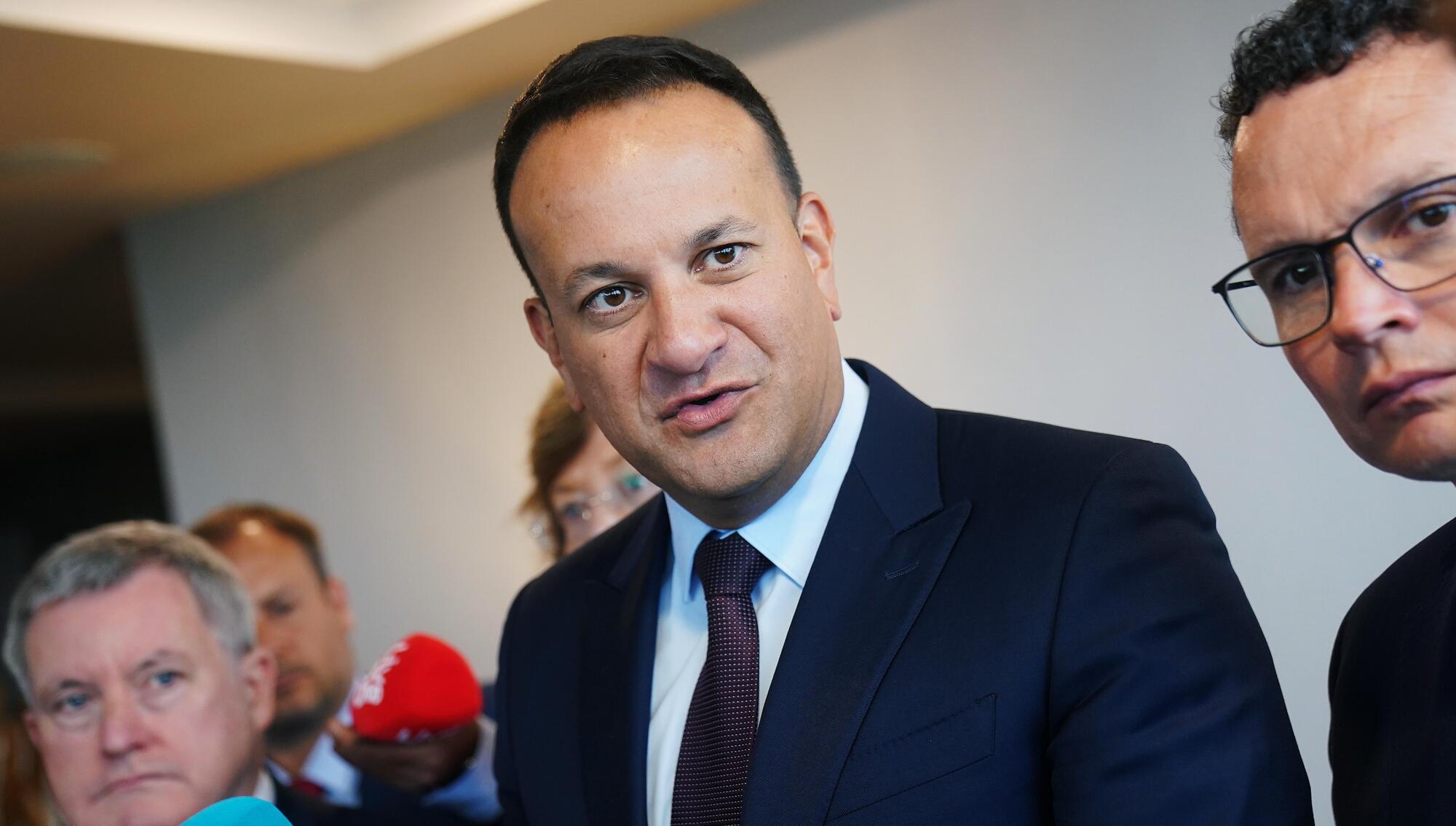
Taoiseach and Fine Gael leader Leo Varadkar during the party think-in at the Strand Hotel, Limerick. Mr Varadkar will need to be emphatic about what his party is all about. Picture: Brian Lawless/PA
Commentary has been plentiful that there is dissatisfaction in Fine Gael over Leo Varadkar's leadership, and the question is: has he lost the room?
A political think-in is the perfect time to rally the troops and knock heads together to strategise for not only the upcoming Dáil term, but an upcoming election. However, if you are Fine Gael, you may have some issues with attendance.
The party held its annual meeting in Limerick on Friday, taking to the Strand Hotel in the city centre to prepare itself for a busy Dáil term, where the early campaigning for next year’s expected general election will begin.
The turnout for the gathering has been commented on, in particular, with sources in Fine Gael raising concern about attendance.Â
The first session, which focused on cost-of-living and “protecting the squeezed middle”, was particularly poorly attended.
Several sources commented how there was “a poor showing” with one well-known senior TD calling the turnout “atrocious”.
One senior Government source said: “I thought I had walked into the wrong place, the room was so empty.”
Others said TDs and senators “drifted in and out” but it was “telling” that the poor turnout “spoke volumes” about the morale in Fine Gael.
With 55 members of the parliamentary party, including TDs, senators, and MEPs, just 37 showed up at the Strand Hotel.
While one TD said that this was potentially due to other commitments by Fine Gael backbenchers, it stood in stark contrast to the Fianna Fáil think-in in Co Tipperary, just five days prior, where the vast majority of its team was in place from the very first session.
While speculation may continue on whether Mr Varadkar has lost the room in his party, he committed to leading Fine Gael into the next general election.
With widespread expectations this will take place in November 2024, Mr Varadkar said that he was “looking forward to the challenge” of fighting the campaign.
While he admitted that Fine Gael had not done as well as it hoped in the 2020 general election, he was aiming to improve on the performance at the next election. However, after 12 years in power, it is hard to imagine how the party can keep going without a stint in opposition.
However, when this was put to him by journalists, Mr Varadkar said that it was a “load of rubbish”.
“This is a party that wants to be in government,” said Mr Varadkar, hitting out at Sinn Féin for half-heartedly trying to form a left-wing government before then trying to “bully” Fianna Fáil into coalition.
He said that while he understood the view of people wanting the party to go into opposition, he did not take that view. This is despite the Taoiseach previously committing, after the 2020 general election, to take his party into opposition.
The party did eventually move to form a Government, which Mr Varadkar on Friday described as stepping “into the breach”.
“We formed a coalition with Fianna Fáil, the Greens, that nobody predicted would happen and that's lasting, and it's working well,” said Mr Varadkar.
He said that there was a “romantic” idea of a party going into opposition and coming back into government after a few years, with which he disagreed.
He referred to the John Bruton government, in particular, after which Fine Gael went without power from 1997 until 2011. However, the party will have been in Government for at least 13 years by the time the next election rolls around, raising questions as to whether it needs a stint out of power to refresh itself.
With Fine Gael and Fianna Fáil likely to face difficulties distinguishing themselves from one another, Mr Varadkar will need to be emphatic about what his party is all about.