Children lost more than school hours during covid — and the disadvantaged lost the most
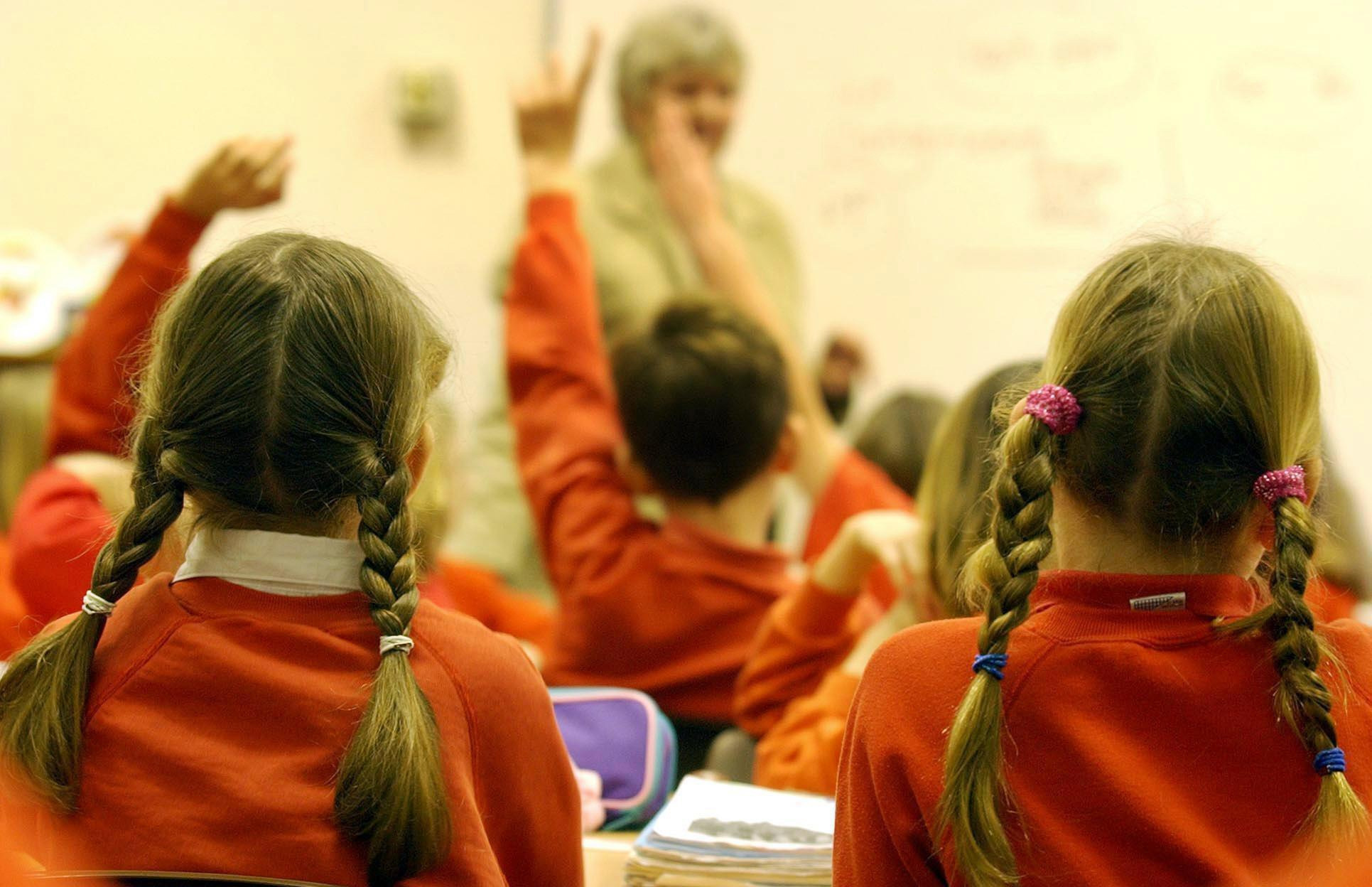
The pandemic brought with it shutdowns and absences due to illness, but there has also been a surge in unexplained absences. Disadvantaged children were hit particularly badly, with 57.6% of students in Deis Band 1 schools missing 20-plus days in 2021/22. Stock picture
As the current school year came to an end, data published by Tusla confirmed what many had suspected — the pandemic severely impacted school attendance.
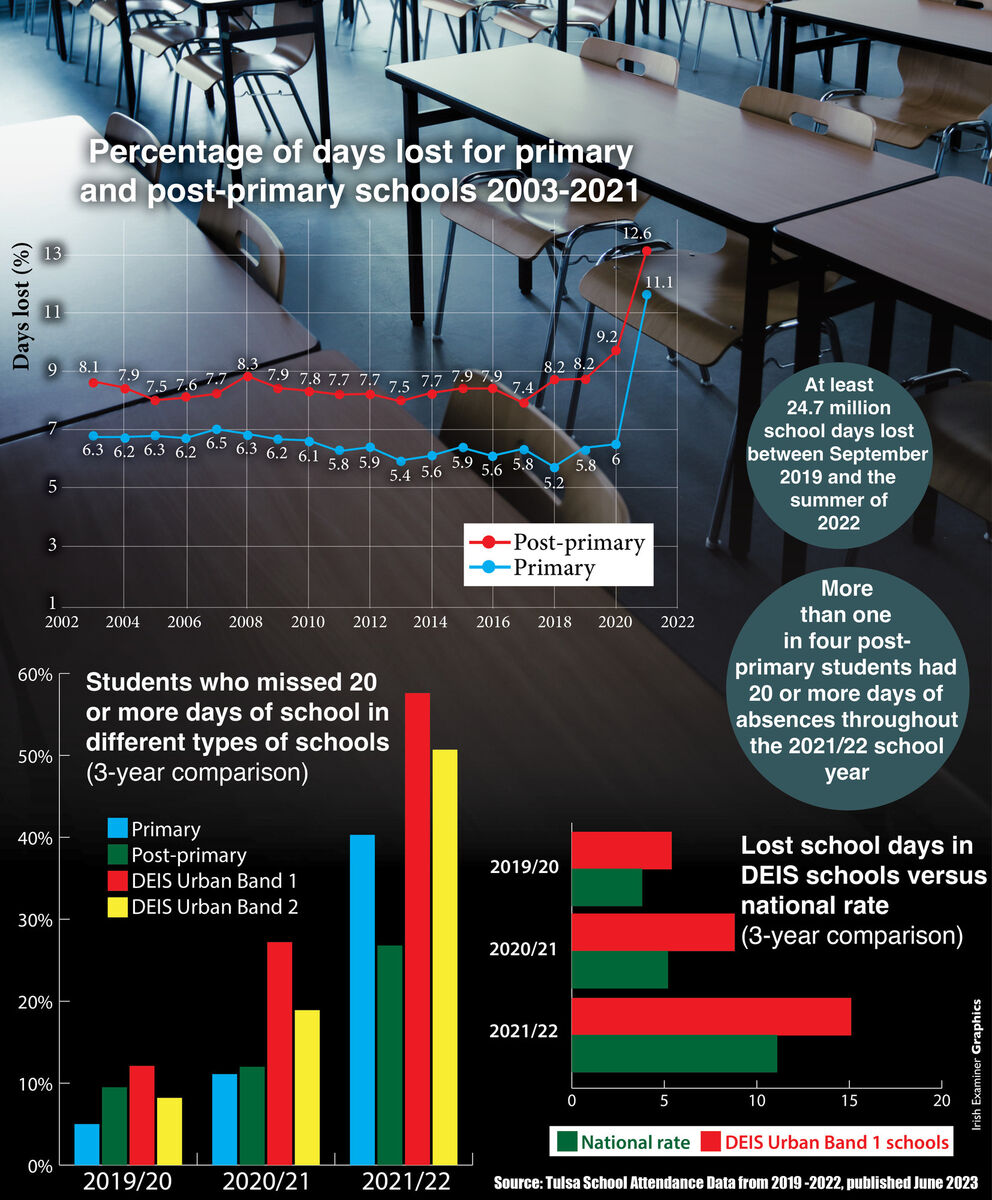
With poor attendance seen as one of the first red flags to indicate the potential for early school leaving, Tusla must be notified by law if a child misses 20 days or more in a school year. This metric skyrocketed between September 2019 and the summer of 2022, across the board, but particularly for children in Deis Band 1 primary schools.
While better-off families may have the necessary resources to make sure their children catch up on missed days, it’s not as easy for families who are already struggling.
![Amid the cost-of-living crisis, the effects on school attendance of covid may not be a parent's only priority, '[i]f you are worried about where your next meal is going to come from'. Stock picture: Danny Lawson/PA](/cms_media/module_img/7306/3653401_8_articleinline_2.48677718.jpg.jpg "Amid the cost-of-living crisis, the effects on school attendance of covid may not be a parent's only priority, '[i]f you are worried about where your next meal is going to come from'. Stock picture: Danny Lawson/PA")
“There is no substitute for being with your class, learning from your teacher, learning from your peers,” one deputy principal of a Deis primary school in Cork told the Irish Examiner.
“Discovering things in the classroom, or from being out and about. Take a geography lesson; where you are out learning in the environment that you are talking about in the books. Discovering things like different trees, leaves, growing, planting; all those opportunities for learning were stunted during the pandemic.
“How does a child who is in a high-rise building — up three storeys with no grass area around them — how do they discover that at home? They have to come to school, they have to be able to access these things in school.
"These are issues that are fundamental to us as educators but that have been stunted due to the pandemic. The blame falls to nobody but it’s an issue that needs to be addressed.”
The figures in the report line up with the experience in his school, and others.
“Anyone who has a home school liaison or is working with a school completion team, they are knocking on doors every single day.
"In certain situations, they are knocking after school, trying to find out what’s going on, giving up their own time to check if the children, first of all, are OK, and to try and find out how we can negate the problem; is there anything we can do?
However, it’s also been difficult to assess the full impact of the pandemic, the Deis deputy principal believes.
“We’ve come right out into another serious social issue,” he says.
“The cost of living has gone through the roof, so parents and children alike don’t know whether they are coming or going because they are coming out of a pandemic and then being hit with all these price hikes.
“We in schools then are piling pressure on, trying to get them into school because we feel it’s the safest environment for them.
"It’s an environment where they will be nurtured and cared for, and where they will get a good education.
The covid learning and support scheme (CLASS) was actually a “very positive move”, according to Sinn Féin education spokeswoman Sorca Clarke.
CONNECT WITH US TODAY



Be the first to know the latest news and updates