Catherine Conlon: Why nothing beats a swim in the sea
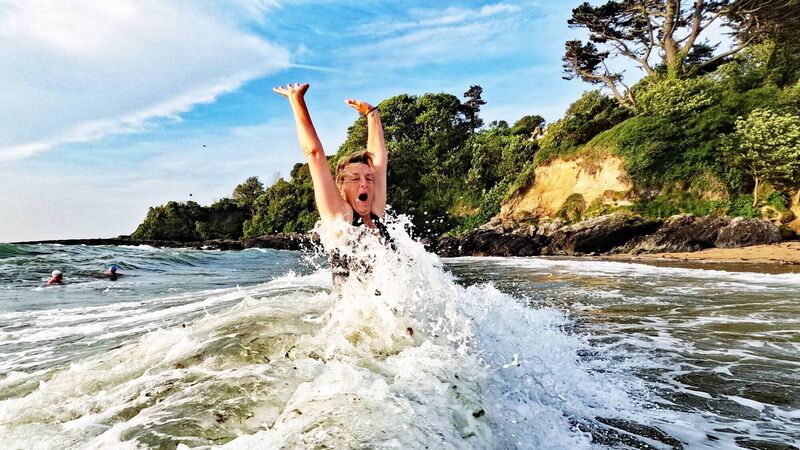
Good open-air swimming facilities on rivers across Ireland have the potential to be transformative for physical, mental health, and well-being, writes Catherine Conlon
Catherine Conlon: Why nothing beats a swim in the sea

MEP Grace O'Sullivan in Myrtleville Co Cork. Picture: Siobhan Russell


Green Party MEP Grace O'Sullivan has taken advantage of the recent hot weather to highlight the opportunity for towns and cities on rivers to create “simple and safe outdoor swimming areas”.

Paddleboarding on the River Lee recently, Ms O’Sullivan said: “Lockdown showed us… people taking to the seashores and the rivers around our island trying to find spots within their local areas that they could access.”

The MEP met Niall Kenny of the Cork Lido Project whose target is to create an open-air 50m pool in Cork, while actively engaging with the local community, Cork City Council, and Swim Ireland.

Ms O’Sullivan believes this is something we should look at across Ireland, to have the facilities for people to learn and swim.

“It’s so good for mental health, for the body, it’s good for people of all ages and people with disabilities. It doesn’t matter what your creed, race, colour or anything else is.”

Every summer off Glen Pier, in Ballinskelligs, I swim in water so cold it will make my bones ache and my teeth chatter. 

I lie on my back and look at the Skelligs in the distance, waves dancing in dappled sunlight. It feels better than almost anything else.

In Age Proof (2022), gerontologist Professor Rose Anne Kenny describes how cold water immersion provides a stimulus to our physiological systems which is related to the phenomenon of hormesis, where small amounts of harmful agents, such as cold exposure, noxious agents, and starvation prove to be beneficial rather than harmful.

“Why this is the case is not completely clear but what we do know is that exposure of cells to mild stress stimulates the synthesis of proteins which improve the function and survival of cells without interference in their ability to reproduce and divide," Prof Kenny says.

Cold water immersion is a physiological stress as it forces the body to recover to normal temperature after the cooling stimulus, resulting in indirect benefits to many systems and organs.

Immersion in the sea or a cold shower is so effective in delivering a large-scale stimulus to the body because the number of cold receptors on the skin is up to ten times more than warm receptors.

Exposure to cold water causes blood vessels to contract and raise blood pressure, and sensory messages to be sent to the brain leading to an increase in noradrenaline, critical to the fight or flight response, which quadruples on cold-water exposure.

This boosts performance in the brain and body, regulating heart rate, blood pressure, blood flow to muscles, power of contraction of skeletal muscles and energy release. It also improves control of emotions, memory, concentration and pain threshold.

Several studies have described a positive effect on the cardiovascular system and cardiovascular risk factors such as lipid profile. 

In a review in Environmental Research and Public Health (2020) various hormones such as catecholamines, insulin, thyroid stimulating hormone and cortisol all react to cold stress. Winter swimming — even if it is more strenuous to swim in cold water — can improve adaptation to stress.

An artist’s impression of Lido Cork, which could be an open-air 50m pool on the Lee.

The evidence suggests that cold water swimming causes a four-fold rise in endorphins with consequent enhancement of wellbeing and suppression of pain through stimulation of opioid receptors, adding to the ‘feel good’ factor. 

That’s the explanation for the well-being after tentatively dipping into the freezing Atlantic and emerging feeling on top of the world.

Swimming in ice-cold water has been shown to have a positive effect on mental health and can even be anti-depressive. 

A case report in the British Medical Journal (BMJ) described a 24-year-old woman with symptoms of severe depression and anxiety that had been unresponsive to conventional therapies for seven years.

After the birth of her daughter, she commenced a weekly programme involving cold-water swimming that resulted in an immediate improvement in mood after each swim and a sustained reduction in the symptoms of depression. 

A year later, she was symptom-free and medication-free.

There is mounting evidence that cold-water exposure improves immune responses. 

One study in PLoS One (2016) that compared four groups of people over three months supports this evidence.

The first group took hot-to-cold showers, the second did regular physical exercise, the third combined hot-to-cold showers with physical activity and the fourth did not change their behaviour.

Compared to the fourth group, taking hot-to-cold showers resulted in a 29% reduction in sick leave; physical activity resulted in a 35% reduction; and hot-to-cold showers and physical activity more than halved (54%) reduction in sick leave. 

The duration of the shower did not make a difference.

Improved quality of life

Furthermore, quality of life improved so much that almost all (91%) said they would continue with cold showers after the 90-day study period was over.

Prof Kenny suggests that one of the biggest impacts of cold-water swimming is its impact on how many calories we burn at rest.

The colder the water the harder the body works to convert fat into energy. 

The extreme change in temperature when we submerge in seawater or a cold shower leads to an increase in sympathetic nervous system activity and reduces blood flow to the peripheries, resulting in harder pumping of the blood around the body by the heart to body organs and the prioritising of the critical organs of heart, brain and muscle. Prof Kenny says:

As a result, circulation is improved and toxins are more readily flushed out of our system."

This flushing out of toxins is part of the reason for the clean skin and healthy glow of cold-water swimmers. 

Another benefit to the skin is the benefit of cold-water age-related pruritus or itchy skin. 

Hot water showers aggravate or even cause the itching and scaly patterns related to this condition whereas cold-water showers or swimming relieve the itching and do not cause dry skin to the same extent.

Extreme athlete Wim Hof.

Dutch motivational speaker and extreme athlete, Wim Hof, noted for his ability to withstand low temperatures, says of sea swimming: “When you go into the cold, you cannot think. You learn to be… to be the best version of yourself.”

On a more pragmatic note, Grace O’Sullivan says that “if you have good public facilities that are affordable and that people can have access to, it’s really a win-win for everyone”.

She added that the EU Regional Development Funding has a provision for revitalising areas for recreation and that this could be "an excellent source of revenue for towns and cities across Ireland to bring life to the riverbanks".

Added to that, good open-air swimming facilities on rivers across Ireland is an opportunity to engage in an exercise that has the potential to be transformative for physical and mental health and well-being across all age groups, income groups, and backgrounds.

Dr Catherine Conlon is a public health doctor in Cork and former director of human health and nutrition, Safefood

x

Your home for the latest news, views, sports and business reporting from Cork.

More in this section

Revoiced

Newsletter

Sign up to the best reads of the week from irishexaminer.com selected just for you.

Cookie Policy Privacy Policy Brand Safety FAQ Help Contact Us Terms and Conditions

© Examiner Echo Group Limited