Darach Ó Séaghdha: Unifying experience of Irish childhood is slipping away
There has been a change not just in the amount of Irish programmes but in the nature of kids’ TV itself 
Ireland is a very different country now to the one where Dempsey’s Den and Bosco ruled the afternoons.

Ireland is a very different country now to the one where Dempsey’s Den and Bosco ruled the afternoons.

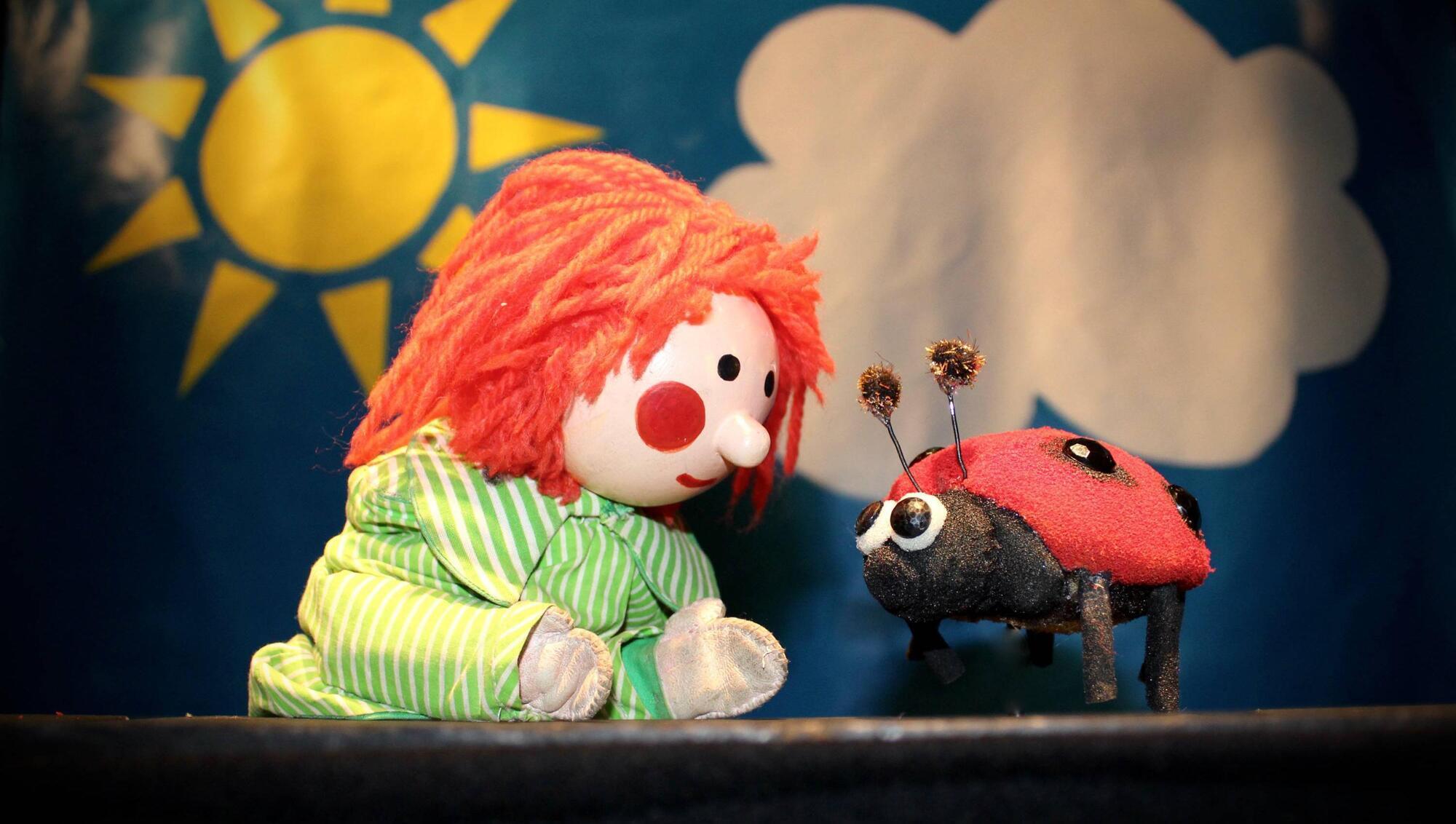
Some time ago on my Twitter account @theirishfor, I asked followers if they had a favourite Irish word. The responses included words that just sounded prettier than their English equivalent (púca, bláthanna) and words that had an amusing literal meaning (smugairle róin, staighre beo). But the most popular word, especially for millennials from the Republic of Ireland, was uafásach. How come? Apart from being so much fun to say, people associated it with their happy memory of Bosco. While the red-haired puppet’s show may not have had the resources or production values of BBC children’s shows from the same era it still connected with Irish children through its authenticity.

“Kids sound so American these days” is a remark I hear from many other parents at creche gates, at playgrounds and at birthday parties. And while it is very much the least of my worries, I can see what they mean — a twangy cadence here and there, a notion-riddled idiom (like trash for rubbish) there. Some parents have even complained about “Mom” being used instead of “Mam”, although arguably Mom is closer to the Irish pronunciation.

Where could such drastic language change be coming from? Television is the culprit as usual, and the amount of American programmes on TV for younger viewers. While such concerns are nothing new, there are a lot more channels tailored specifically for younger audiences now, and that’s before we even consider YouTube and streaming services. And it’s not just American accents that parents are worried about children picking up from TV: there was a moral panic recently that popular preschool show Masha and the Bear is full of subtle pro-Russian references.

While these global trends have been unfolding, there has been a change not just in the amount of Irish programmes but in the nature of Irish kids’ TV itself  — specifically a move away from the hosted omnibus model with live content in between local and international scripted shows. And there have been moves to outsource RTÉ’s kids’ TV production entirely. I think this would be a mistake.

 Ian Dempsey with Zig and Zag on Dempsey’s Den in 1998.
 Ian Dempsey with Zig and Zag on Dempsey’s Den in 1998.

Children’s programming, far from being an afterthought or an obligation, has surely been the battleground of RTÉ’s greatest triumphs. The Late Late Toy Show remains the biggest television night of the year. Children's TV shows have been the big break for some of Ireland’s best-loved broadcasters like Dara Ó Briain, Ryan Tubridy and Ray D’Arcy. And as well as Bosco, there was The Den.

Podge and Rodge enjoyed so much success that they at one stage had better ratings than The Late Late Show.

In particular, The Den (originally Dempsey’s Den) was a behemoth in Irish pop culture. While the initial format bore some similarities with BBC’s The Broom Cupboard which started the prior year, The Den’s impact and influence were far greater. To give you an idea of the scale of its influence: Mary Robinson gave her first major interview as President-Elect on The Den. 

Screen and singing legend, Dustin the Turkey.

One of the show’s creations, Dustin the Turkey, has had more Irish number-one singles than every RTÉ music talent show winner combined (Dustin has had five Irish number-ones off his own steam and appeared on two others, winners of You’re A Star and Popstars have a combined total of five). Another pair of characters from its cast, Podge and Rodge, had a spin-off show which briefly overtook The Late Late Show in ratings. This last fact is especially significant because with that mischievous pair of brothers, The Den's “cinematic universe” managed to grow up with its audience from the happy chaos of childhood to the mischief of adolescence and beyond: many of the adults who listen to Ian Dempsey on their commute recognise the roots of his straight-man routine with the cast of Gift Grub from their childhoods watching him try to make Zig and Zag behave.

But perhaps more important than that scale and those outlier achievements was this: even though The Den had top international cartoons and broadcast them a few weeks before UK stations, this is not what its audience remembers about it. They remember the unscripted mayhem of the puppets. They remember Don Conroy showing them how to draw an owl. And they remember seeing their name on the birthday reel or having a letter read out.

Why did it have this impact? Credibility. Children watching The Den knew that while elements of it could be educational, that was not the primary purpose. It was playtime, and the children were active participants. Is there anywhere now where an Irish child could have a letter read out on television to other children? There was even a feature where viewers could seek a pen pal through the show. It was public service broadcasting and it offered a service to children; not just entertainment but a shared and unifying experience. It is this unifying experience of Irish childhood that is slipping away.

Ireland is a very different country now to the one where Dempsey’s Den and Bosco ruled the afternoons, and a cynic might say that the impact of these shows is linked to a lack of competition in the 1980s and 1990s. Yes, there are more choices now across a range of platforms but does that mean that public service broadcasting for children has to grind to a halt?

Consider publishing for children for comparison. We understand that childhood is the critical moment when a lifelong love of reading is formed. We see that the book business heavily promotes writers whom parents have heard of from TV shows for adults, who do kids’ books as a side gig over promoting work by writers who just want to write books for children. We know this isn’t a satisfactory situation so we have Children’s Books Ireland and Laureate na nÓg to support writers creating worthwhile work in this area. It doesn’t need to be specifically educational for it to be recognised as having value.

Likewise, consider the Irish animation sector. In the years since The Den was axed, two Irish animation companies in particular — Brown Bag Films and Cartoon Saloon — have gone from strength to strength with globally successful and critically acclaimed work. If you’ve ever wondered why Irish animated films get nominated for Oscars but Irish singers can’t qualify for the Eurovision, I have a theory: we have an animation sector located in Ireland while we have Irish singers working in British and American music sectors. 

A scene from Wolfwalkers.

A combination of factors has allowed these animation companies to stay based in Ireland while other Irish filmmakers had to leave to pursue their careers — not just tax breaks but also strong relationships with the wider film sector and third-level institutions running animation courses. This has allowed work with a genuine Irish sensibility, like Wolfwalkers and Puffin Rock to continue to be produced. Again, these productions are not asked to justify their existence by being deliberately educational, just that they be world-class.

These kinds of perspectives don’t come into play when it comes to an overall vision for Irish children’s television, but if they did it could have a wonderful outcome. We may not be able to replace the cultural moment of The Den but we could offer a space with that same authenticity and credibility to children in Ireland who looked for it, something they might remember when they’re older — the way we still remember uafásach and what’s behind the magic door.

Darach Ó Séaghdha is the author of Motherfoclóir: Dispatches From A Not-So Dead Language , and Craic Baby: Dispatches From A Rising Language.

x

BOOKS & MORE

Check out our Books Hub where you will find the latest news, reviews, features, opinions and analysis on all things books from the Irish Examiner's team of specialist writers, columnists and contributors.

More in this section

Revoiced

Newsletter

Had a busy week? Sign up for some of the best reads from the week gone by. Selected just for you.

Cookie Policy Privacy Policy Brand Safety FAQ Help Contact Us Terms and Conditions

© Examiner Echo Group Limited