Northern Ireland must continue to walk the road of compromise and courage
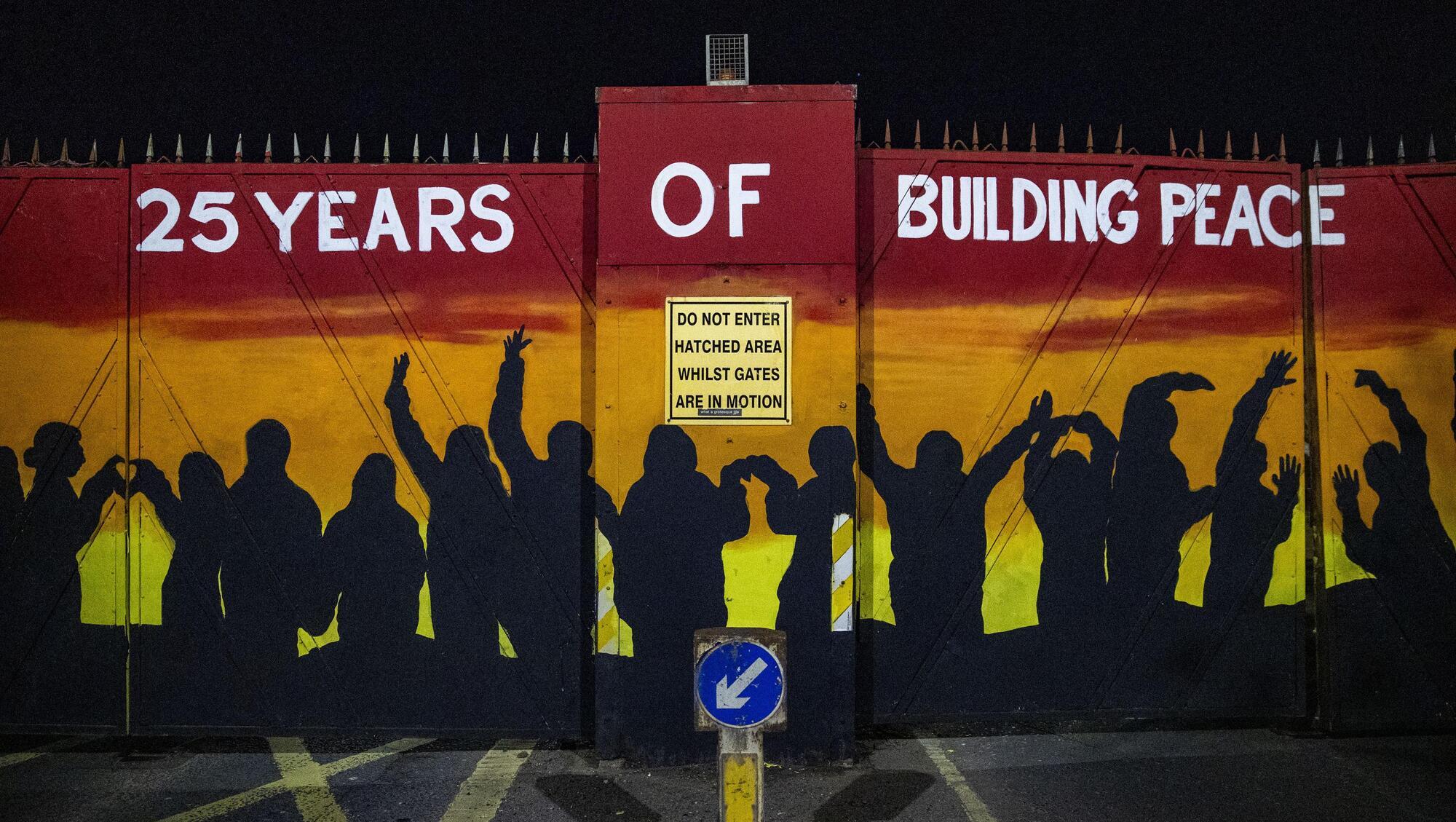
Lanark Way interface gates which allow traffic to move between the republican and loyalist areas of Belfast during limited times of the day was painted ahead of the 25th anniversary of the Good Friday Agreement. Picture: Liam McBurney/PA Wire
The signing of the Good Friday Agreement 25 years ago today was met with hope and optimism in Northern Ireland which bore the deep physical and psychological scars of decades of conflict.
Although that sense of hope and optimism may have dimmed over the years, we should always remain attentive to why the agreement was needed.
We should also take lessons from 1998, and not underestimate how difficult and challenging political and constitutional change can be.
Lest we forget, the Troubles claimed more than 3,700 lives in Northern Ireland. Many thousands more were maimed, injured, and suffered psychological trauma.
Everyday life during that period was curtailed by an ominous and lingering atmosphere of fear and insecurity. Many chose to leave — unable and unwilling to live their lives under the shadow of paramilitary violence and political dysfunction.
The economy suffered too. Paramilitary violence destroyed infrastructure, property, businesses, and homes.
The absence of stability meant that Northern Ireland was economically stagnant for decades, and socio-economically disadvantaged communities bore the brunt of the economic failure.
The violence and its myriad effects divided communities. Division and segregation became hallmarks of Northern Ireland society.
Children were educated separately. Families lived in housing estates that were split along religious lines.
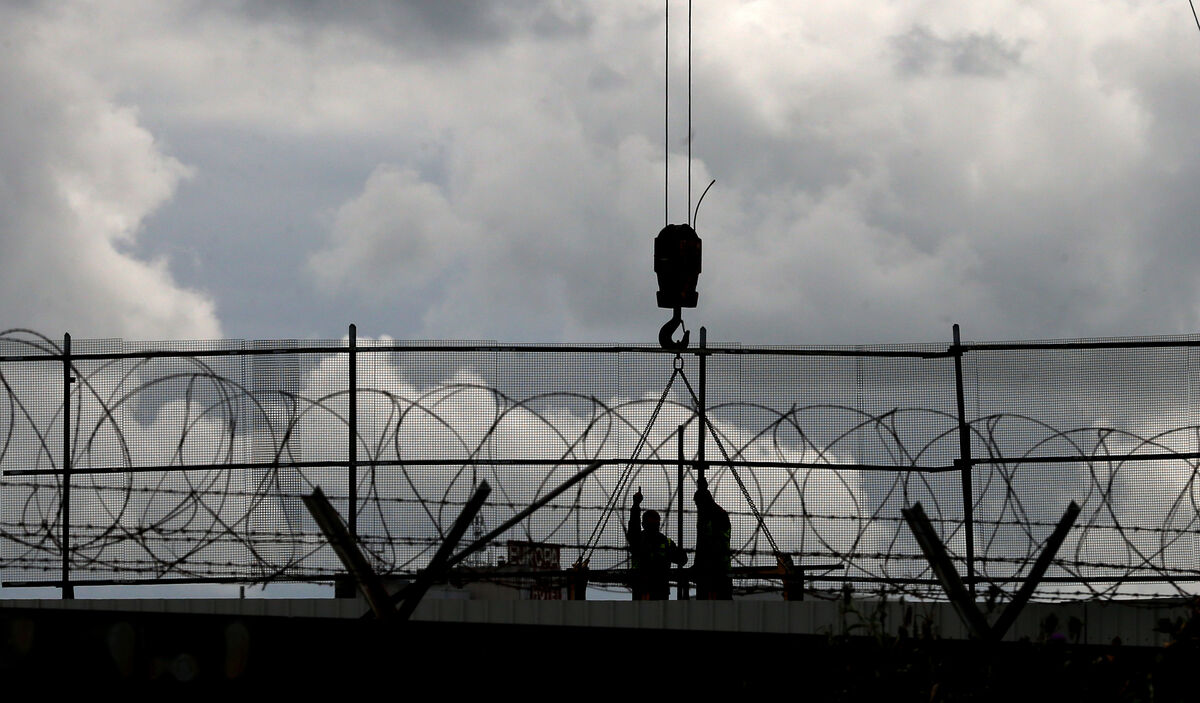
And so-called peace walls — physical markers of division — pockmarked Northern Ireland’s urban landscapes.
The Good Friday Agreement confronted this troubled history of death, destruction, and despair. It was a brave and earnest effort on the part of all sides to address historical differences and to fashion new political arrangements acceptable to all.
It is by no means a perfect document, but the agreement offered a better way forward based on a historic compromise between competing unionist and nationalist identities.
Its provisions were grounded in the principle of consent.
It respected and accommodated opposing political aspirations and created power-sharing institutions in Northern Ireland and introduced new political mechanisms to ensure cross-community consensus.
It formalised links between North and South through the establishment of the North-South Ministerial Council. It created the British-Irish Council, which recognised the important bonds across these islands.
These new and novel institutions gave equal voice and representation to all political traditions in Northern Ireland. In addition to its institutional innovations, the agreement contained important policy proposals.
These propositions were arguably the most difficult aspect for the people of Northern Ireland to contend with and contemplate.
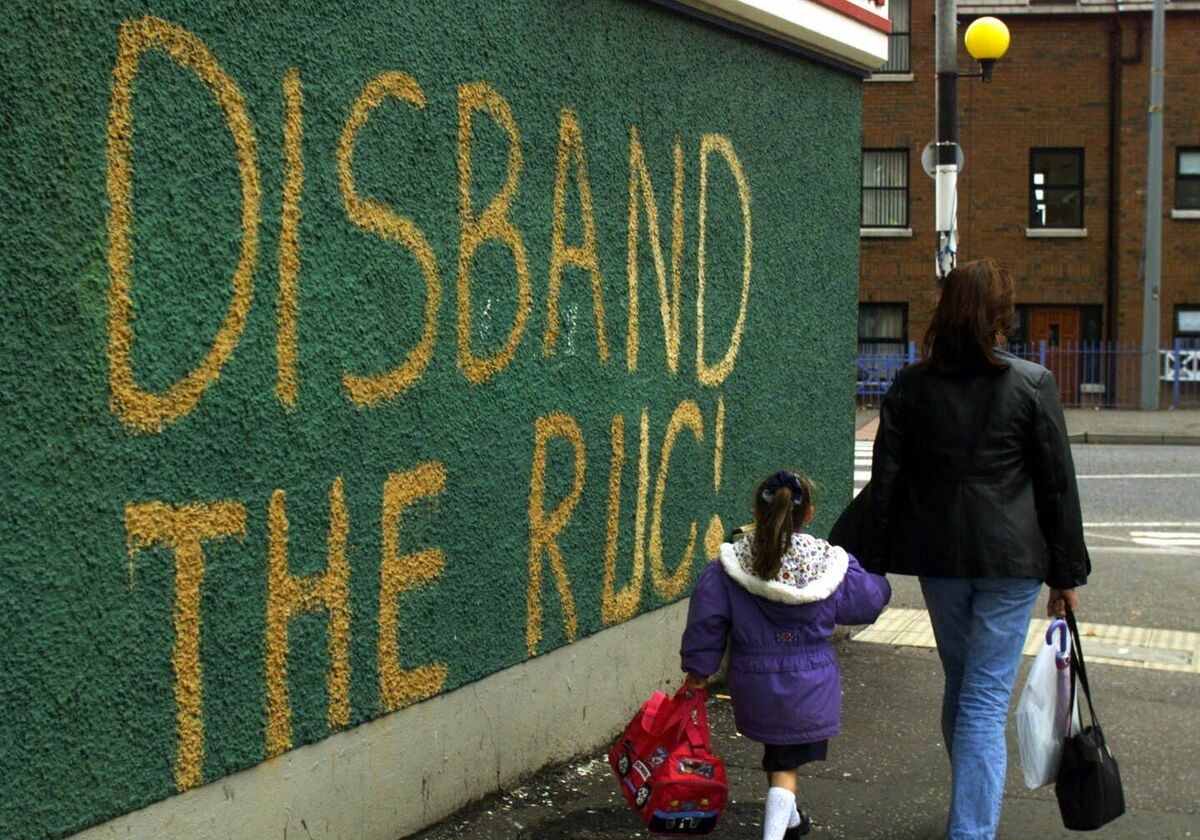
The agreement included plans to reform Northern Ireland’s predominantly Protestant police force, the Royal Ulster Constabulary (RUC).
Catholics and nationalists favoured reform (if not disbandment). They were deeply hostile to a police service they viewed as discredited and discriminatory. In contrast, Protestants and unionists saw the RUC as a guardian and protector.
Many from within that community had families and loved ones who had served, and in some cases given their lives in the course of their duties. Supporting and sanctioning reform of policing represented a highly emotive and difficult decision.
The agreement also contained the early-release scheme for some prisoners.
This provision allowed many paramilitary prisoners to walk free just two years after the agreement was signed. Men and women who had committed the worst atrocities during the Troubles had their sentences cut short and their freedom restored.
For all communities in Northern Ireland, this was the bitterest of pills to swallow.
The decision to vote for the Good Friday Agreement meant parking profound personal loss in the hope that such a sacrifice would deliver peace and stability.
On a remarkable turnout of 81%, the people of Northern Ireland voted 71% in favour of adopting the agreement.
But make no mistake about it, for those who chose to support it, the Good Friday Agreement involved the hardest and sometimes most heartbreaking of choices and compromises.
That decision by the electorate to vote ‘yes’ in 1998 has, for the most part, delivered peace in Northern Ireland.
The awful and unrelenting violence of yesteryear is no more. Northern Ireland is a safer place, a better place, a more prosperous place.
Families and communities have been spared the tragedies which earlier generations had to endure. Lives have been saved.
But we should not be blind to the fact that the Good Friday Agreement has not delivered on all that it promised.
The institutions it created are vulnerable to crises, and have been suspended or collapsed for about one-third of the period since their creation.
It has been all too easy for one party or a single community to pull the plug and plunge Northern Ireland into stalemate and instability.
The configuration of Northern Ireland’s political party system is also different today from what it was in 1998.
Unionism no longer dominates. Nationalist representation has increased. The proportion of those who support neither nationalist nor unionist political parties is larger than it ever was. No single group or community commands an outright majority.
The institutions and mechanisms of the agreement do not fully accommodate this changing voter landscape.
The ultimate ambition of any peace process is the achievement of reconciliation between opposing communities. It is a hugely challenging and difficult aspiration. It involves confronting and overcoming generations of suspicion, mistrust, and even hatred.
In Northern Ireland, the agreement has not delivered true reconciliation.
The power-sharing political institutions are not currently operating.
Education and public housing remain heavily segregated. The peace walls — which so divide communities — still number over 100. Political disagreements on Brexit, the Protocol, and the Windsor Framework have been paralysing.
Efforts to achieve a more peaceful and stable future for Northern Ireland started with the signing of the Good Friday Agreement on April 10, 1998.
However, over a period of 25 years, the process of implementing and operationalising the words and spirit of the document has been exceptionally challenging.
Political and constitutional change is difficult and demanding. It means leaving behind a past with which many were comfortable.
It asks that we reconsider some of our long-held attachments to aspects of our State and society. It prompts us to think deeply about our identities and how to accommodate difference. It necessarily requires immense compromise, sacrifice, and courage.
Northern Ireland shows us how vitally important it is to make that journey, but also how hard it can be to walk that road.

Dr Mary C. Murphy is a senior lecturer in politics at University College Cork and an expert on Northern Ireland politics. Her most recent book, co-authored with Jonathan Evershed, is 'A Troubled Constitutional Future: Northern Ireland after Brexit' (Agenda 2022).

CONNECT WITH US TODAY



Be the first to know the latest news and updates