Vacant posts a major concern as teachers prepare for union conferences
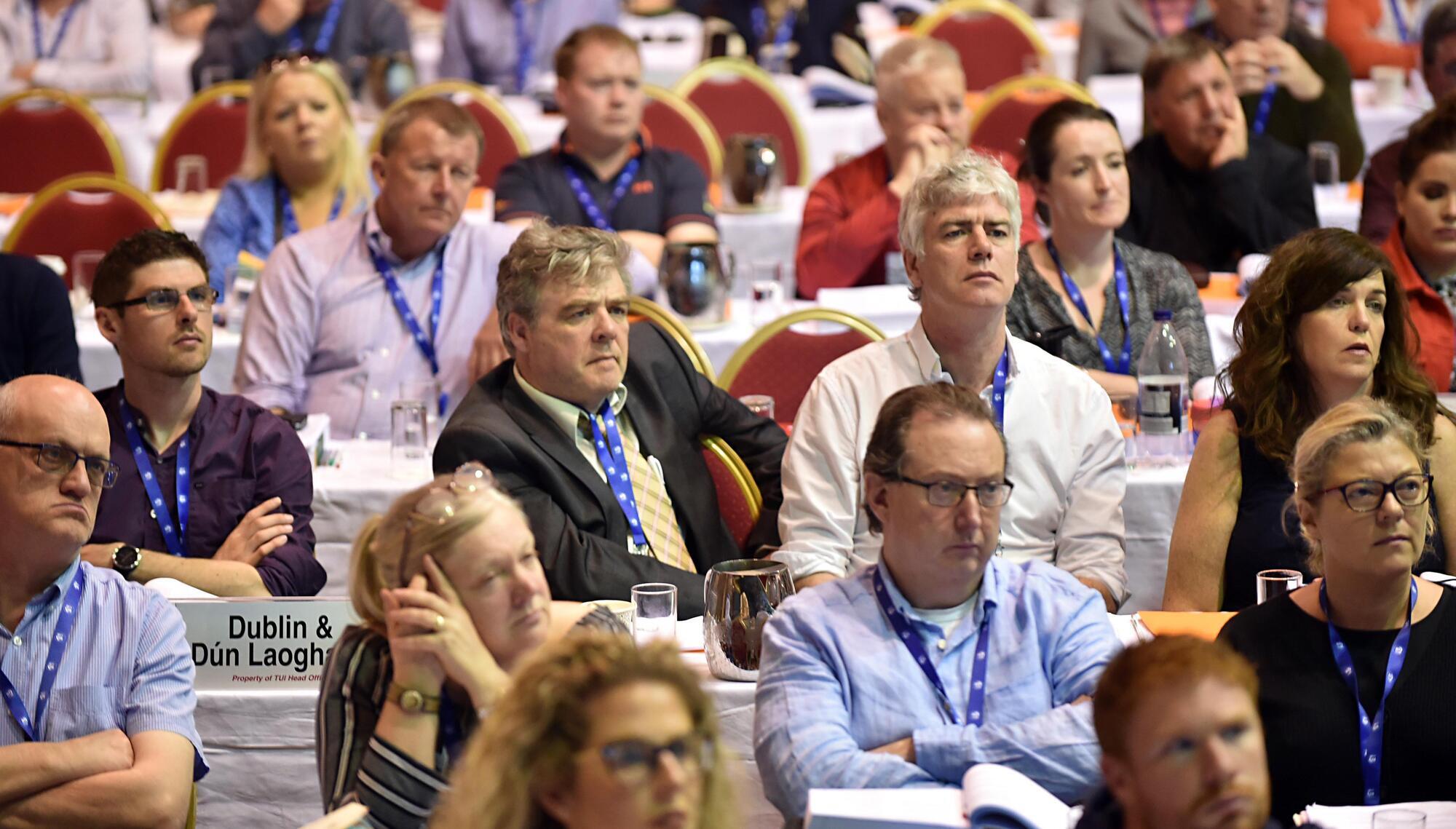
Delegates at the 2019 TUI conference in Killarney. The TUI also represents teaching staff in further education and training colleges and centres and technological universities and institutes of technology. Picture: Don MacMonagle
"Curriculum overload", investment in special education, as well as pay and conditions are all set to be discussed this week as thousands of teachers meet for their annual union conferences.
The Irish National Teachers’ Organisation (INTO), the Teachers’ Union of Ireland (TUI), and the Association of Secondary Teachers Ireland (ASTI) are holding their annual Easter congresses, with Fórsa’s education division also set to meet on Thursday and Friday.
In previous years, the pandemic and dealing with its fallout dominated the agendas, but the more things change, the more they stay the same.
This year, vacant teaching posts and the ongoing struggle to recruit substitutes are expected to once again feature prominently.
An issue that has been years in the making, the problem of teacher shortages is now being exacerbated by the twin crises of cost of living and housing availability.
There is also a feeling after the pandemic that teachers are “voting with their feet”, and that many recent graduates are emigrating to the Middle East for work soon after they finish college.
In December, the TUI found that six out of 10 post-primary schools had open vacancies for teachers.
A further seven out of 10 schools said they had previously advertised jobs that not a single person had applied for.
The union pointed to the cost of accommodation, particularly in cases where a school could not offer full hours to a new recruit.
Not much seems to have improved since December. More recent research published by the ASTI last week found vacancies in almost half of all secondary schools across the country.
These vacancies are further compounded by shortages in the amount of substitute teachers available. A further nine out of 10 schools reported situations where no substitute cover was available to fill teacher absences due to sick leave and other short-term absences.
While staff shortages have resulted in bigger workloads for teachers, they also directly impact students — 80% of principals reported employing at least one unqualified teacher to meet the needs of students.
Vacancies also mean that special education teachers are often reassigned to mainstream classes.
Both the ASTI and the TUI have argued that full contracts should be provided to teachers from their initial appointment, and both of the unions have also called for better pay and conditions.
Delegates attending the INTO conference in Killarney are also expected to debate a motion demanding full substitute cover for all approved teacher absences.
Not many would have expected the scale of the education sector’s response to the Ukrainian crisis. More than 15,200 students have now been enrolled in Irish schools since the onset of war last year.
Two speakers from the Trade Union of Education and Science Workers of Ukraine — the country’s major organisation of education workers and students — are expected to address the INTO on Tuesday.
Class sizes are also set to crop up in conversations and debates across the week.
While subsequent budgets have seen a focus on reducing the overall average class size at primary level, which exceeds the EU average, unions will now call for that same attention for post-primary and third level.
The ASTI is to hear calls for it to enter negotiations with the Department of Education to reduce class sizes to 24 in all subjects across the board, with the current limit of 20 for home economics to remain in place.
Meanwhile, the TUI, which also represents teaching staff in further education and training colleges and centres and technological universities and institutes of technology, argues that the failure to address a funding crisis at third level continues to have a significant negative impact.
This results in larger class sizes and less access to laboratories, equipment, materials, libraries, and tutorials.
While there has been work to reduce class sizes at primary level, Ireland still remains on the larger side, at almost 23 to the EU average of 20.
The INTO is expected to call for a further reduction, as well as a maximum of 15 junior students to one teacher, and 18:1 in senior classes, in the most disadvantaged schools.
Senior-cycle reform is also expected to be discussed this week.
The ASTI will debate what it sees as a lack of consultation with teachers’ unions prior to announcements and proposed changes to exam arrangements.
The union has a longstanding policy that the State exams should be externally assessed, while the proposed reforms include plans to introduce some form of teacher-based assessment.
The ASTI is also expected to debate a motion calling for the Easter and mid-term breaks and weekends to not be used for the sitting of State Examinations.
Fórsa’s education division will hold its annual conference Thursday and Friday.
The union represents 18,000 education workers, including special needs assistants (SNAs), school secretaries, caretakers, school completion officers, and admin staff in Education and Training Boards.
Topics to be debated include a motion on assault leave for SNAs, as well as calls for clarity on how children with additional needs can access SNA support.
The conference is also expected to hear calls for an end to “chaotic” policymaking by Government, as well as a panel discussion on establishing better progression for students with additional needs.

CONNECT WITH US TODAY



Be the first to know the latest news and updates