Daniel McConnell: Varadkar speaks of progress but Fine Gael is not a party of change
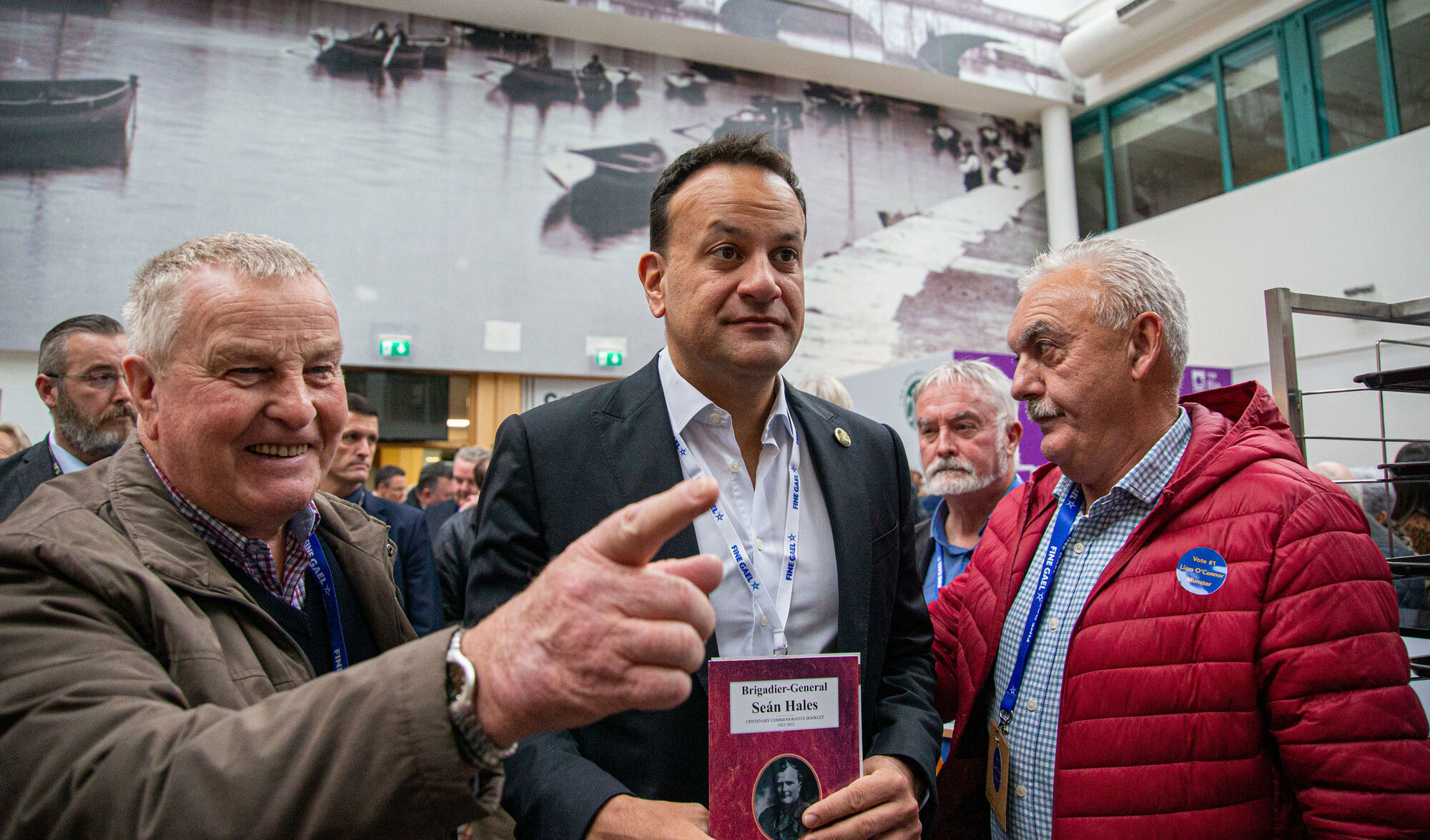
Fine Gael leader and Tánaiste Leo Varadkar meets attendees at the Technological University of the Shannon in Athlone, Co Westmeath, for the Fine Gael ard fheis on Saturday. Picture: Damien Storan/PA Wire
In coalitions past, there was an unwritten rule that if one party was having a party conference on a particular weekend, their Government partners would go dark and leave the pitch clear.
So it was with some surprise and raised eyebrows that on the weekend of the Fine Gael ard fheis, there was Fianna Fáil leader and Taoiseach Micheál Martin making himself available for the media on Saturday morning.
Now, you could possibly argue that the holding of a conference for party councillors was a solid enough basis to merit his public appearance, but the chances of this clash happening by accident are between slim and zero.
Martin and his handlers were out deliberately and quite happy to impinge on Fine Gael’s big day.
In Athlone, more than 2,000 of the party’s faithful gathered for the first time in three years as leader Leo Varadkar prepares to retake the Taoiseach’s office on December 17.
Early in the day, the stand was doing brisk business, with Varadkar, Paschal Donohoe, Helen McEntee, Simon Harris, and Heather Humphreys presenting for interview.
During his chat, Varadkar hinted that his keynote speech later that night would be heavy on law and order.
And so it proved.
Fine Gael has long presented itself as the law and order party but some noticeable incidents in Dublin and the ongoing Hutch trial has placed an unwanted focus on the party’s performance to date.
Their case was not helped recently by comments from Drew Harris, the Garda commissioner, who made it plain that the size of the force is not large enough to combat the elements of crime they are facing.
Varadkar’s promise that the Government will “take the fight head on” to the criminal underworld may sound impressive but if it is to be credible, then a much better effort will be needed.
He conceded that we live in a country where far too many people do not feel safe in their own homes or on the streets.
But he insisted the Government has already responded and is responding by providing funding for 1,000 new Garda recruits.
He said the party is determined to change the law to ensure criminals are apprehended and punished.
This includes the doubling, from five years to 10, of the maximum sentence for assault causing harm.
“We'll increase the maximum sentence for conspiracy to murder from 10 years to life to take on those who direct gangland violence; allow judges impose minimum tariffs for life sentences for the most serious crimes; and we'll continue to fight back against gender-based and sexual violence of all forms,” said Varadkar.
Such comments will without question play well with Fine Gael’s conservative base and are likely to be a main angle of attack as we near election season in 2024.
Despite Martin’s intrusion onto the pitch, Varadkar paid a warm tribute to the man he will replace in the Taoiseach’s office, who he said has done a “good job” in trying circumstances.
For so long it has been Varadkar who has provoked his Coalition partners but for once he was cast in the role of the stoic Government man and Martin the cheeky insurgent.
It is a testament that after two-and-a-half years, the dynamic between the two men is remarkably stable and talk of going the full term is credible, as things stand.
In recognition of the cost-of-living crisis, Varadkar also spoke of his goal to “tame inflation” over the next two years once he takes back the top office.
Rejecting what he called opposition “sneering” that Ireland is somewhat of a failed State, Varadkar gave out a long list of the progress made since Fine Gael took office in 2011.
He spoke of full employment, better pensions, more affordable childcare, marriage equality, better opportunities for women and girls, and 150,000 new homes built as some of the major advancements on their watch.
Their problem is that it is not enough.
And for all of that progress, for far too long this year, Fine Gael and the Government have been responding to Sinn Féin criticisms on the cost of living, as opposed to owning the agenda.
The budget was the first time all year where Sinn Féin had no meaningful answers to the Government messaging.
Varadkar’s speech on Saturday evening was an attempt to cement that message but after 11 years in office, Fine Gael simply cannot present themselves as agents of change.
No matter what progress, that factor and that factor alone could determine the party’s fate.

CONNECT WITH US TODAY



Be the first to know the latest news and updates