Her attacker is serving 34½ years in jail, but Ruth Maxwell had to fight for support. Why?
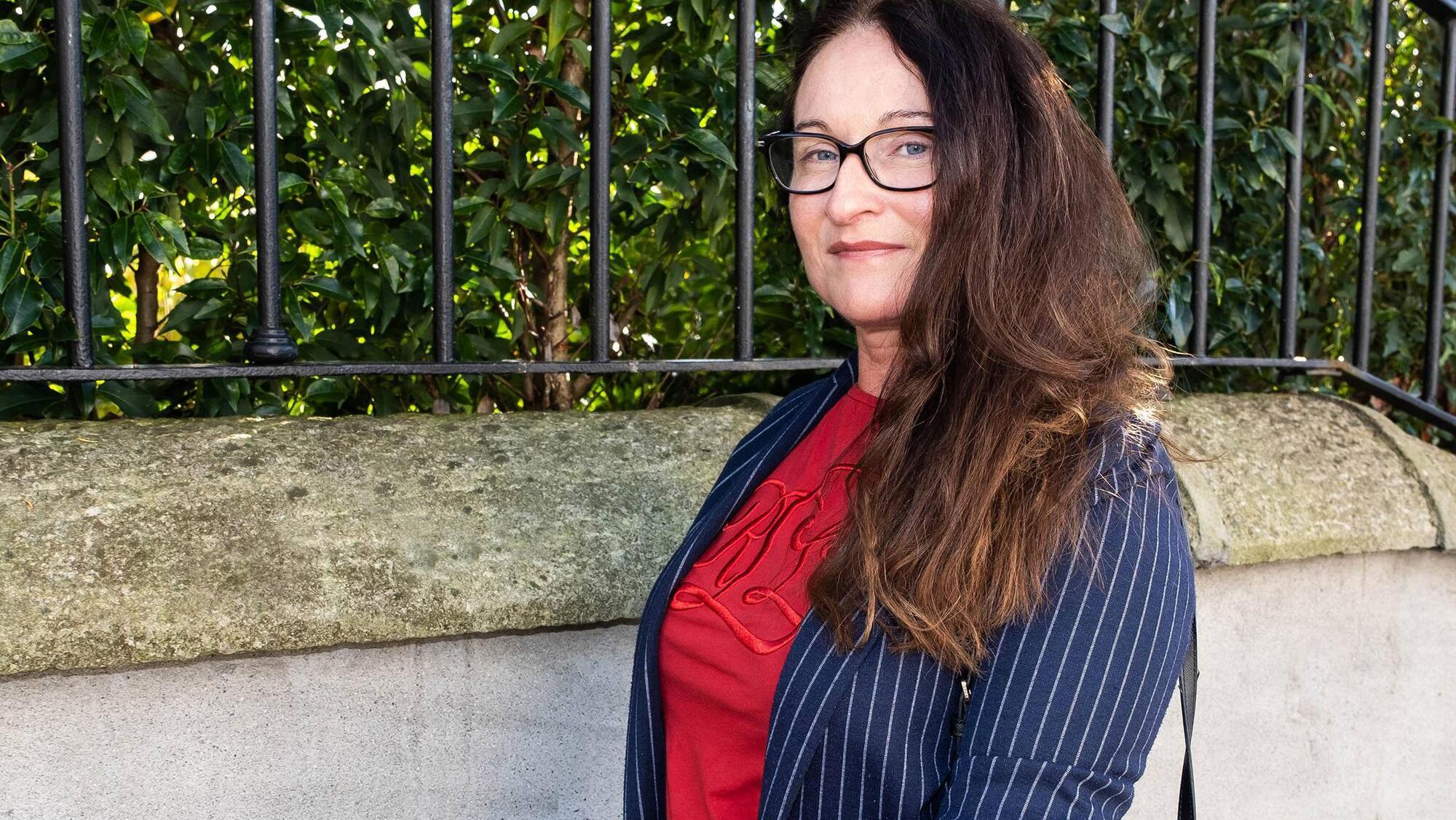
'He had cable ties, duct tape, the knife — I was not meant to survive that,' Ruth Maxwell says of her horror attack in 2016. Picture: Bob Morrison
She knew the Hot House Flowers performer and, more especially, his bandmate and singer, Liam Ó Maonlaí.
She had been in Liam’s company at the Fleadh in Dalkey just two days before the attack — random, violent, overwhelming — which changed her life.
After she says she would ask, in her messages to Late Date: “Can music really fix me?”
What might have broken her was that moment when she was walking to the Luas to go to work in May 2016 and found herself subjected to an attack by roofer Slawomir Gierlowski.
He put a hunting knife to her throat and tried to drag her to his van. Ruth grabbed the blade.
It severed the tendons in three fingers.
That action is credited with helping to bring Gierlowski — a Polish father of two who first moved to Ireland in 2008 — to justice.
His DNA and fingerprints were taken as part of the investigation, and matched the samples recovered from a flex and cigarette box following a routine search of the forensic database.
Ultimately it led to a string of convictions — Gierlowski was serving 28 and a half years for attacks on women when, this week, he had his time in prison extended for attempting to strangle a young woman while she was out walking in 2011.
Those random attacks on five women between 2010 and 2016 mean he will now serve a total of 34 and a half years in prison. Ruth says:
“In my eyes, he would have been escalating up to a serial killer.”
The cumulative length of the sentences has been welcomed, particularly for crimes where the typical observation is that sentences are too light.
For Ruth, a youthful grandmother originally from Dublin, the fact that Gierlowski will spend decades in jail is “fantastic” but, when broken down, each individual sentence is still not appropriate for the terror he wrought.
And the manner in which the various trials were dealt with, unspooling over a period of years, full of stops and starts, points to what Ruth and others believe is a dysfunctional system, one in which the survivor is fighting all the time for everything, in particular when it comes to the Criminal Injuries Compensation Tribunal.
She recalls mounting medical bills and supports not being forthcoming, one thing forever waiting on something else.
“I am alone, I am all alone in my fight, and because random acts of violence, they don’t take the same position in the eyes of experts that other forms of gender-based violence [do]... I have always come up against [from others]: ‘Yes, but yours is a random attack, domestic violence is more serious, statistically, that’s 88% of attacks’ and it’s like, please, don’t say this to me, you’re making me feel like mine means nothing.”
Her voice cracks, adding: “So it’s been a tough road.”
Listening to Ruth outline the various difficulties of someone awaiting justice and seeking help while trials grind on and on, seemingly interminably, brings nods of agreement from Vivienne Carson, therapy services manager with the Dublin Rape Crisis Centre.
“I went through the wringer for four solid years with them and it was the most horrific experience I have ever had, ever,” she says.
“I would take 100 attacks rather than ever, ever have to deal with that again. The one place you think you would be looked after in a timely manner, and it was nothing like that. It was absolutely degrading.”
Counselling was refused after my attack by HSE as it wasn't 'financially viable'. I appealed, got 7 sessions late 2016. Nothing since, pre or post trial. It's unacceptable to not have multidisciplinary supports & services in place for all victims. @HMcEntee @SAFEIreland @NWCI https://t.co/Ee9W1L14Mi
— Ruth Maxwell (@RuthbMax) October 13, 2022
• If you are affected by any of the issues raised in this article, please click here for a list of support services.

CONNECT WITH US TODAY



Be the first to know the latest news and updates