Testing times: Why have the experts been ignored on movement of Leaving Cert Irish and English?
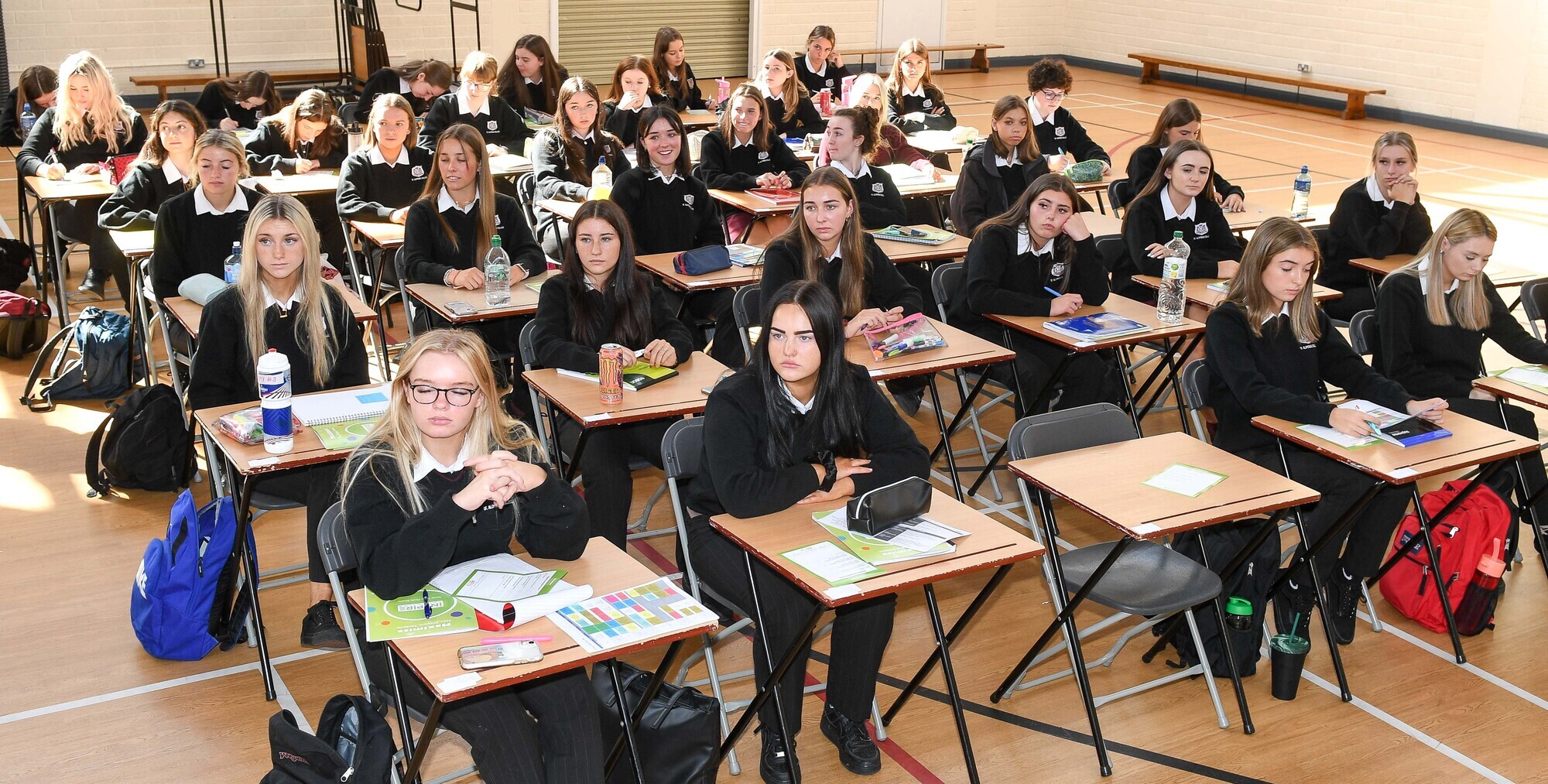
In March 2022, Education Minister Norma Foley announced a “reimagined senior cycle” in response to repeated calls for reform of the Leaving Cert.
The stated tenets of the proposed reform, as set out in the document entitled 'Equity and Excellence for All: Where the Student is at the Centre of Their Senior Cycle Experience' are:
- to empower students to meet the challenges of the 21st century;
- to enrich the student experience and build on what’s strong in our current system;
- to embed wellbeing and reduce student stress levels.
The minister’s proposals include the introduction of some new subjects and the reform of existing subjects, which will initially be introduced in network schools and will be rolled out to all schools later.

New and revised Leaving Certificate subjects will have 60% of the total marks awarded for the written examination paper, with the balance awarded to another assessment component.
And from September 2023, candidates will take Paper 1 in Leaving Certificate Irish and English at the end of 5th Year instead of at the end of 6th year.
These proposals came as a surprise to the education stakeholders as they had not been included in an extensive advisory report on senior-cycle reform submitted to the minister in May 2021 by the National Council for Curriculum and Assessment following extensive public consultation.
Major concerns were voiced immediately by teachers of English and Irish about the proposal to schedule Paper 1 in English and Irish at the end of fifth year.
They stated that moving the examination to the end of fifth year indicates a fundamental lack of understanding of the English and Irish curriculum, and stated that the proposal to assess some of the skills at the end of fifth year is at variance with good practice relating to integration in language teaching.
They also sought clarification on the 40% of marks for an assessment component other than a final examination, with Irish teachers pointing out that 40% of marks in Irish are already allocated for an oral examination.
Departmental documents released to Conradh na Gaeilge by the Department of Education following a Freedom of Information request show that these concerns had been raised by the State Examinations Commission (SEC) and discussed in the department before the minister made her decision.
Early assessment of Paper 1 of the three subjects — English, Irish, and maths — was initially mooted in August 2021 by the chief inspector, but it was decided not to change the timing of Paper 1 in maths due to the integrated nature of that subject.
When asked at the time by the department for their views, the SEC expressed grave concerns about changing the timing of Paper 1 in English and Irish, noting that any change in the timing of these examinations beyond a few weeks would require a review of the syllabus.
They pointed out that holding Paper 1 any earlier would significantly disadvantage boys, given their relative level of maturity.
However, in spite of these concerns, the decision was taken to move the timing of Paper 1 in both English and Irish to the end of Year 5.
It is not clear from the documentation released under FoI why the advice of the SEC was not taken, or who decided that Paper 1 would be taken at the end of Year 5.
While it is clear is that “an early win” was being sought for the minister, where this proposal was initiated is not clear.
It might have been expected that when the SEC pointed out that a review of the syllabi for Irish and English would be required if one of the Leaving Cert exam papers were to be moved to an earlier date, some comment might have been forthcoming from the National Council for Curriculum and Assessment (NCCA). There is however, no evidence of this in the documentation received.
The English Teachers Association, INOTE, and the Irish Teachers Association, An Gréasán, have requested the minister to review her decision and take account of advice from her own senior officials and the SEC, as well as from teachers.
While one of the aims of the proposed reforms is to reduce student stress, it is arguable that ongoing assessment and especially assessment in fifth year could exacerbate their stress rather than alleviate it.
Conradh na Gaeilge agrees with these groups and is also calling on the minister to start the development of an Irish language policy for the education system from pre-school to third level, without further delay. That was promised by Fianna Fáil in the general election in 2020 and is referred to in the programme for government.
There has never been a holistic and comprehensive policy for the language in the educational system since the foundation of the State.

CONNECT WITH US TODAY



Be the first to know the latest news and updates