Getting some 'fresh air' might be harder than you think

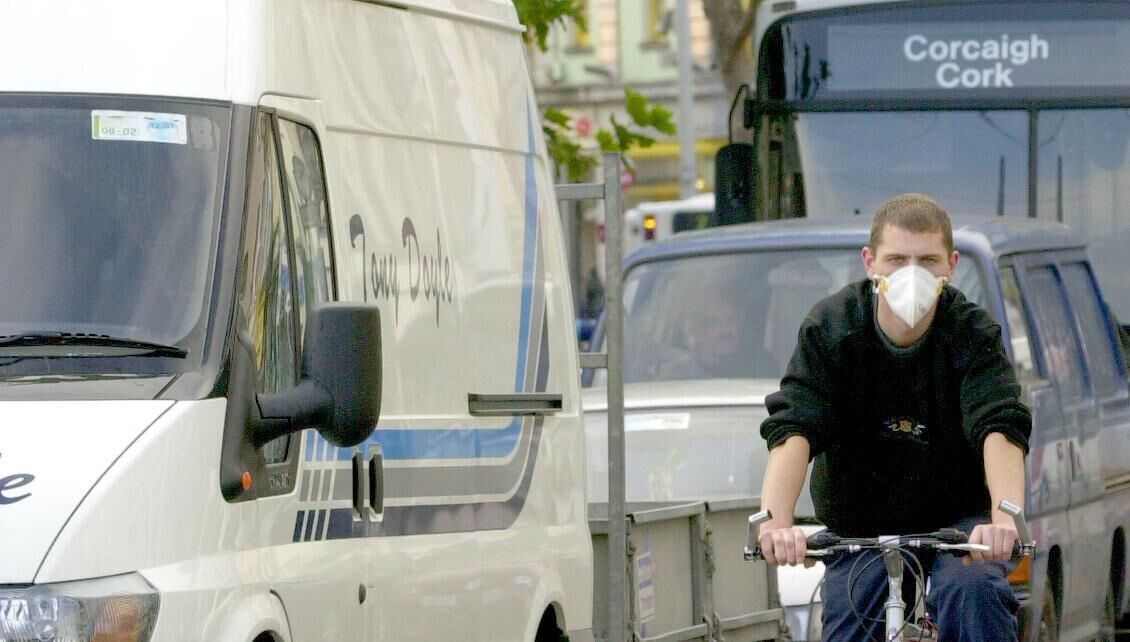
An ominous smog-like haze hangs over Cork City centre and suburbs last January. Fuel burning at home is the predominant cause, according to experts.
The term 'Fumifugium' may not be well known, but it is in the vocabulary of every atmospheric chemist.
It literally means 'The escape of smoke' and is the title of a pamphlet written by diarist John Evelyn in 1661, which discusses 'The inconveniencie of Aer' caused by 'Smoak' as he termed it.
In other words, air pollution.
Poor air quality was recognised as a bad health risk even back then. And chemicals such as sulphur, lead, and mercury were suggested as culprits.
What became clearer, much later during the 20th century, was that 'smoak' did not just consist of soot. It also contained small amounts of choking gases like ozone and nitrogen oxides (NOx).
Nitrogen dioxide is one of many chemical assassins that float in the air we breathe. Others are ferried around by small solid particles with sizes much smaller than the width of a human hair. The mode of transport does not matter though, and the pollutants can still end up in every cell of our bodies.
Much of the understanding we have now about 'smoak' and its risks to both humans and our ecosystems has only been made possible by monitoring and measuring air pollutants in the real world.
And with a scheme being launched on August 22 called Clean Air Together run by the EPA and An Taisce, the public can now help.
Any household in Cork City is eligible to sign up and be loaned some free, easy-to-use scientific kit with which you can measure the amounts of nitrogen dioxide in the air outside your home during October.

The combined results will give a pollution map that can be used in the future to identify toxic hot spots, and then to eliminate them. One way to achieve this aim is to ban all cars, buses, and trucks that are not EVs from at-risk city streets.
So expect to see, over the next five years, more traffic-limiting road zones: clean air, pedestrian and low emissions (LEZ).
Why monitor nitrogen dioxide? One motivation for this citizen science study is that it’s easy to do. But the fundamental reason is to determine the relationship between nitrogen dioxide emissions, the formation of smogs, and adverse health outcomes such as asthma, lung cancer, and heart attacks.
Clearly, this is important work.
Smog is basically an urban-rural divide term first used in 1905 by a physician living in London. He thought, correctly, that misty fogs can exist anywhere from coastal regions to farms. But in urban surroundings, although fogs can be observed, there is often a much more sinister weather condition present that involves sooty smoke.
And so, smog is basically one of those annoying couples-generated names made up by smoke co-habiting with fog. (Think 'Bennifer').
In fact, there are two main types of smog.
One, is the classic “peasouper” first experienced in London during the 19th century. The problem culminated in the 1952 Great Smog that led to the UK Clean Air Act of 1956.
Essentially, these killer smogs were due to burning smoky coal, which produced a yellowish, sulfurous, smelly haze and soot.
Smoky coal is now, fortunately and finally, on its way out from our 21st-century domestic fireplace mix. (Even in Ireland, from Halloween 2022).
The second type of smog requires sunlight for activation.
In 1943, Los Angeles residents believed the Japanese were attacking them by chemical warfare. A thick “fog” descended that made people’s eyes sting and their noses to run.
It turned out not to be an act of war at all. Instead, it was found to be due to the rapidly increasing car market related to wartime immigration in LA, lots of sunlight, and the local topography.
You can imagine that car manufacturers such as General Motors (never a friend of the environment) and 'Big Oil' (ditto) did not like this scientific analysis one bit. Especially as they were known to have successfully gotten rid of a clean mode of public transport in Los Angeles available in the early 1900s.
Initially, the city had a network of electric streetcars known as The Los Angeles Railway, but it was gradually eliminated by being sold off to companies such as GM with interests in other modes of transport: meaning petrol-burning engines.
The consequence was the dominance of automobiles and hydrocarbon combustion for mass transportation in the 1930s.
Over the next 20 years, scientists such as Arie Jan Haagen-Smit established exactly how road transport based on diesel and petrol fuels leads to the health-damaging production of chemicals including carbon particles, hydrocarbons, ozone, and nitrogen oxides.
Los Angeles sits at the bottom of a 'basin' and is surrounded by mountains on three sides and an incoming Pacific Ocean breeze on the fourth. When there are low wind speeds, pollutants from road transport emissions become trapped in the basin just as if it was a saucepan with a lid on top.
The LA saucepan is, of course, see-through, and therefore sunlight can cause many chemical bonds to be broken over long periods of time. And all those newly-formed chemicals are captured too.
One of the most important car pollutants destroyed by sunlight is nitrogen dioxide. The highest emissions come from biodiesel fuel, followed by diesel and then petrol.
When it does break down in the air, it makes ozone, which can cause serious respiratory damage.
Cork City sits in a basin too. So, when there are extended periods of bright sunshine we also get mini-smogs that can lead to health consequences, such as many more asthma attacks than normal.
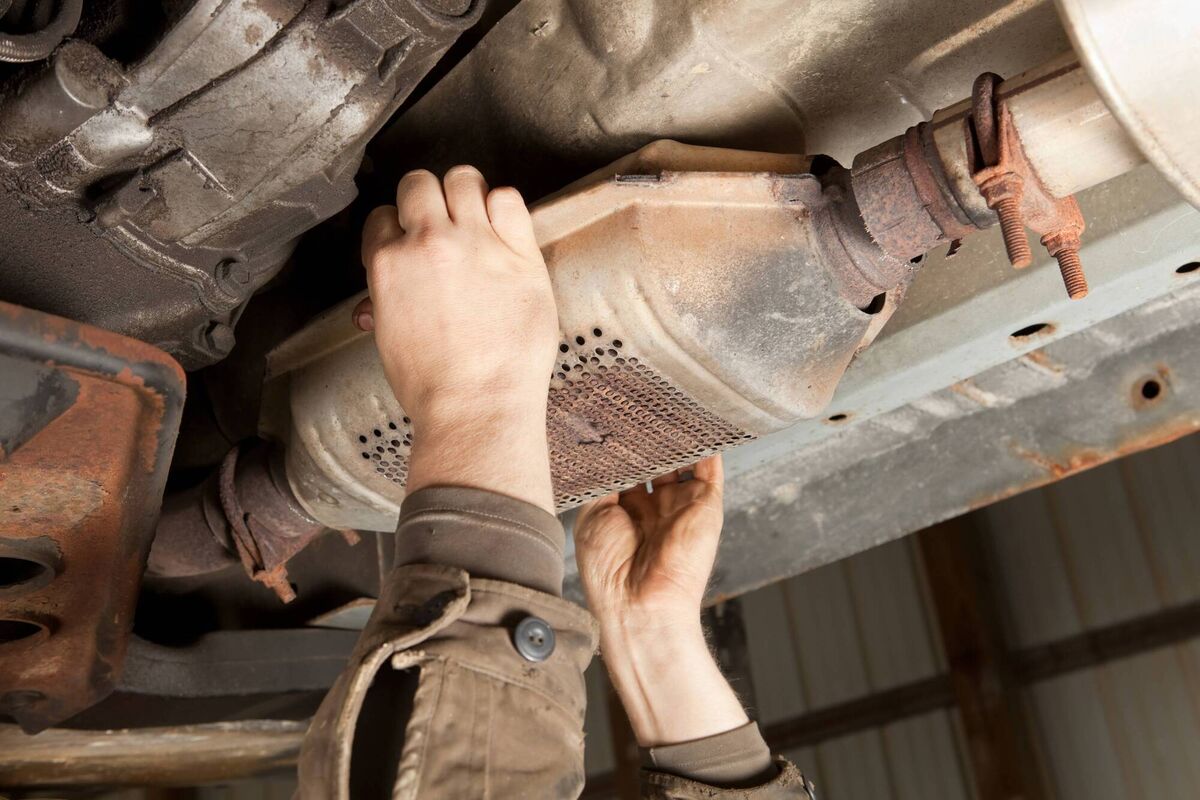
Nitrogen dioxide is a poisonous gas in its own right. The question is: why do car manufacturers not eliminate the NOx at source completely while engines are running? Well, they do try to. Although it took a much longer time to install clean-up technology than it should have.
When fuel burns, the temperatures are sufficient to break up the two main components of air — oxygen and nitrogen. The result is the mixed compounds we call NOx, which are unstable when they land on precious metals such as platinum. These chemicals are the heart of the clean-up devices we call catalytic converters and were discovered in the 1930s.
But it took 40 years for them to begin to be installed regularly in cars. Why?
There is a price for installing catalytic converters that vehicle manufacturers never liked to pay. That is, they rapidly degrade in the presence of lead.
And tetraethyl lead (TEL) was then an important additive to gasoline and made companies such as General Motors and DuPont lots of money.
It took much lobbying by environmentally concerned politicians in the US to clean up the auto companies’ activities. But in 1970 a Clean Air Act became law and since then car manufacturers have been put firmly in their place.
All appeared well and good on that score until the infamous Volkswagen Dieselgate scandal erupted in 2015. Simply put, from 2007 onwards VW 'gamed' their car software and by so doing tried to fool the authorities into believing their cars did not exceed legal limits for NOx.
Fortunately, they were eventually found out. Prison sentences for two corporate executives and massive worldwide fines of the order of €32bn (and rising) resulted. I shed no tears.
Those who sign up for the Cork Clean Air Together NOx campaign in October will become part of a massive citizen science project for Ireland.
It will not only inform people about their local levels of nitrogen dioxide, but may also encourage others to find out more about all the many other forms of air pollution that influence our everyday lives.
Expelliarmus fumifugium!
- John Sodeau is Emeritus Professor of Chemistry at UCC

CONNECT WITH US TODAY



Be the first to know the latest news and updates