Dr Catherine Conlon: Bikes essential to arrest cycle of climate failure
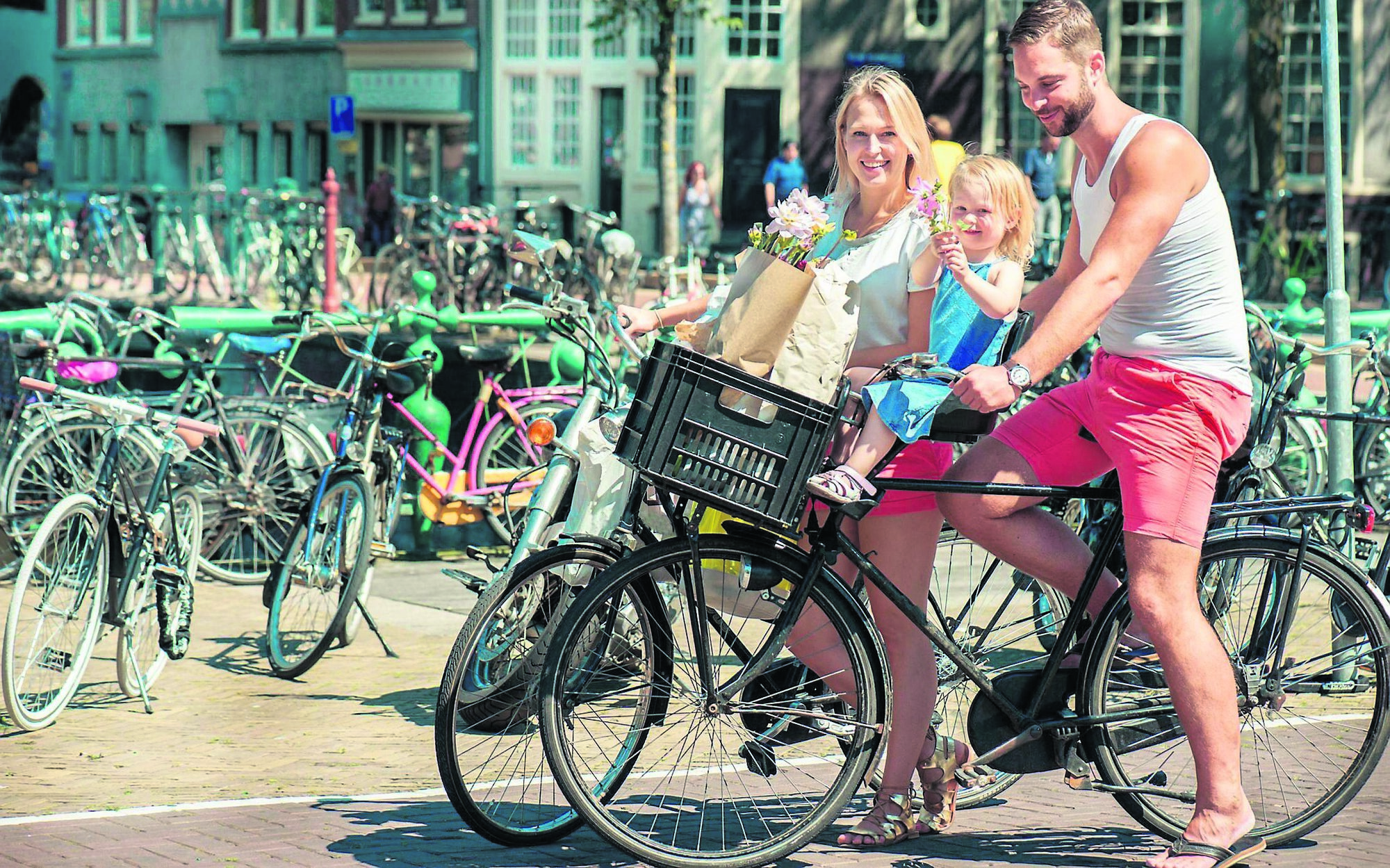
In Amsterdam and other Dutch cities, cyclists rule the roost, taking priority over all other forms of transport, from pedestrians to motorbikes, cars, and buses.
Ireland’s efforts at cutting greenhouse gas emissions are nowhere near target with the latest data expected to show an annual increase in emissions of 6%. This figure is the provisional calculation for 2021 when the target was a 4.8% reduction.
Serious doubt now hangs over the Government’s ability to cut emissions by 51% by 2030, which is now a legally binding objective enshrined in the Climate Act.
Sectoral emissions ceilings are currently being discussed within government departments and are envisaged to be signed off before the Dáil summer recess, now fast approaching in mid-July.
Ireland has the fourth-highest level of transport emissions per capita in Europe and the transport sector is responsible for around 20% of our overall carbon dioxide emissions, with private cars being the largest contributor to transport emissions.
The Joint Committee on Environment and Climate Action launched its Report on Reducing Emissions in the Transport Sector by 51% by 2030 at the beginning of June.
A key part of this strategy is to get people – adults and children alike – out of cars and using public transport, combined with walking or cycling for short journeys within towns and cities. But some cities, most notably Amsterdam have gone much further and allowed the city to be owned by cyclists.
Key to Amsterdam’s success is that cyclists rule and everyone else who joins the traffic – that includes pedestrians, motorcycles, cars, and buses – come second.
The city is equipped with an elaborate number of cycle paths and lanes, so safe and comfortable that even toddlers and elderly people use bikes as the easiest mode of transport. This is true in many Dutch cities.
This was not always the case. During the 1950s and 60s, cyclists were threatened by the growing number of cars in Dutch cities, so much so that the share of trips by bicycles plunged from to 80% to 20% between the 1950s and 70s.
During the post-war era, as the Dutch economy accelerated, more and more people were able to afford cars and urban policymakers began to reflect this in the way neighbourhoods were designed to make way for motorised traffic, so that the use of bikes began to decrease by 6% every year.
At the same time, the number of traffic casualties increased, peaking at 3,300 deaths in 1971 with 400 children killed in traffic accidents that year.
The 1970s were a time of activism and civil disobedience in Holland. Protests against the high number of traffic fatalities grew rapidly. One group, Stop de Kindermoord (stop the child murder) was subsidised by the Dutch government and went on to develop ideas for safer urban planning – which eventually resulted in woonerf – a new kind of people-friendly street with speed bumps and bends to force cars to drive very slowly.
The 1973 oil crisis, which caused the price of oil to quadruple, prompted the prime minister to urge citizens to adopt a new lifestyle and get serious about saving energy. Gradually Dutch politicians became aware of the many advantages of cycling.
The city of Delft constructed a whole network of cycle paths, setting the example for other cities to follow suit. Today, the Netherlands boasts 22,000 miles of cycle paths. More than one quarter of all trips are made by bicycle.
Forty years of urban planning and policy work led to the Amsterdam we know today. The demand from residents and active leadership of the Dutch government led to a civic and government collaboration that turned a car-loving city into a world-leading example in bike infrastructure for other cities to follow.
Key to success was prioritising rider safety. In a densely populated urban area, like most cities, cars take complete ownership of space, making vulnerable pedestrians and cyclists inherently less safe.
Frans Jan van Rossem, a specialist in cycling policy in Utrecht says "a line on the road is not enough. Motorists will ignore it". He suggests that the main reason people do not bike is that they don’t feel safe. What is needed from the start is separate bike paths from traffic lanes.
The Netherlands accomplished this with the creation of protected and separated bike lanes with white posts, curbs, or trees along bike lanes to physically separate bike lanes from car lanes.
A 13-year study of 12 cities found separated and protected bike lanes drastically decreased fatalities for all users on the road by 44%. Safer bike infrastructure encourages more people to cycle.
Lucas Harms, who leads the Dutch Cycling Embassy, says cities often take fast action creating bike lanes "without thinking it through very well", meaning cities build small pieces of bike lanes "starting from nothing to nowhere".
This is exemplified in the cycling infrastructure currently all over Cork and other major cities across the country. This lack of connected infrastructure forces cyclists to ride in undesignated bike lanes, take longer routes to connect to a bike lane, or not to ride at all.
Making paths feed into one another needs to be prioritised to keep riders safe. In Amsterdam, the bike network is 100% connected to the city’s transit system as bike garages are located right next to train stations with minimal charges.
A speed limit of 32kph prioritises safety of pedestrians and cyclists, where traffic converges.
Finally, bike accessibility for all users is prioritised. Since bike culture is a normal way of life in Holland, negative perceptions related to race, ethnicity, gender, and abilities are uncommon.
For a city to be owned by cyclists, cities need to consult, include, and prioritise low-income groups.
The Cork Metropolitan Area Transport Strategy (CMATS) 2040 includes the development of a transformed bus system, an enhanced commuter rail system, a new east-west light rail line and a comprehensive cycling network providing safe cycling and pedestrian facilities across the region.
The plan is to invest in high-quality cycling facilities segregated from bus lanes and general traffic lanes "as far as is practicable" and to "remove many of the conflicts between general traffic, buses and cyclists".
The degree of independence of cycle lanes from other traffic will be crucial in the ambition to shift adults and children alike to travel across the city by bike. While there is much to be positive about in CMATS 2040, the vision of Cork city being "owned" by cyclists does not seem to be part of the plan.
This begs the question, is it ambitious enough? Ireland is at a crucial stage in the move away from cars predominating in cities and towns as the country faces dual challenges of fuel and climate crises looming ever closer.
A move towards more sustainable modes of transport would benefit from studying the Dutch experience gained over 40 years in allowing cyclists of all ages, income groups, ethnicity, and gender to own the roads, to transform physical and mental well-being as we embrace the challenge of achieving climate targets by moving transport away from a reliance on fossil fuels.
- Dr Catherine Conlon is Senior Medical Officer in the Department of Public Health, St Finbarr’s Hospital Cork and former Director of Human Health and Nutrition, safefood.
CLIMATE & SUSTAINABILITY HUB
CONNECT WITH US TODAY



Be the first to know the latest news and updates