Rory Hearne: How can Generation Rent be struggling while 166,000 homes lie vacant?
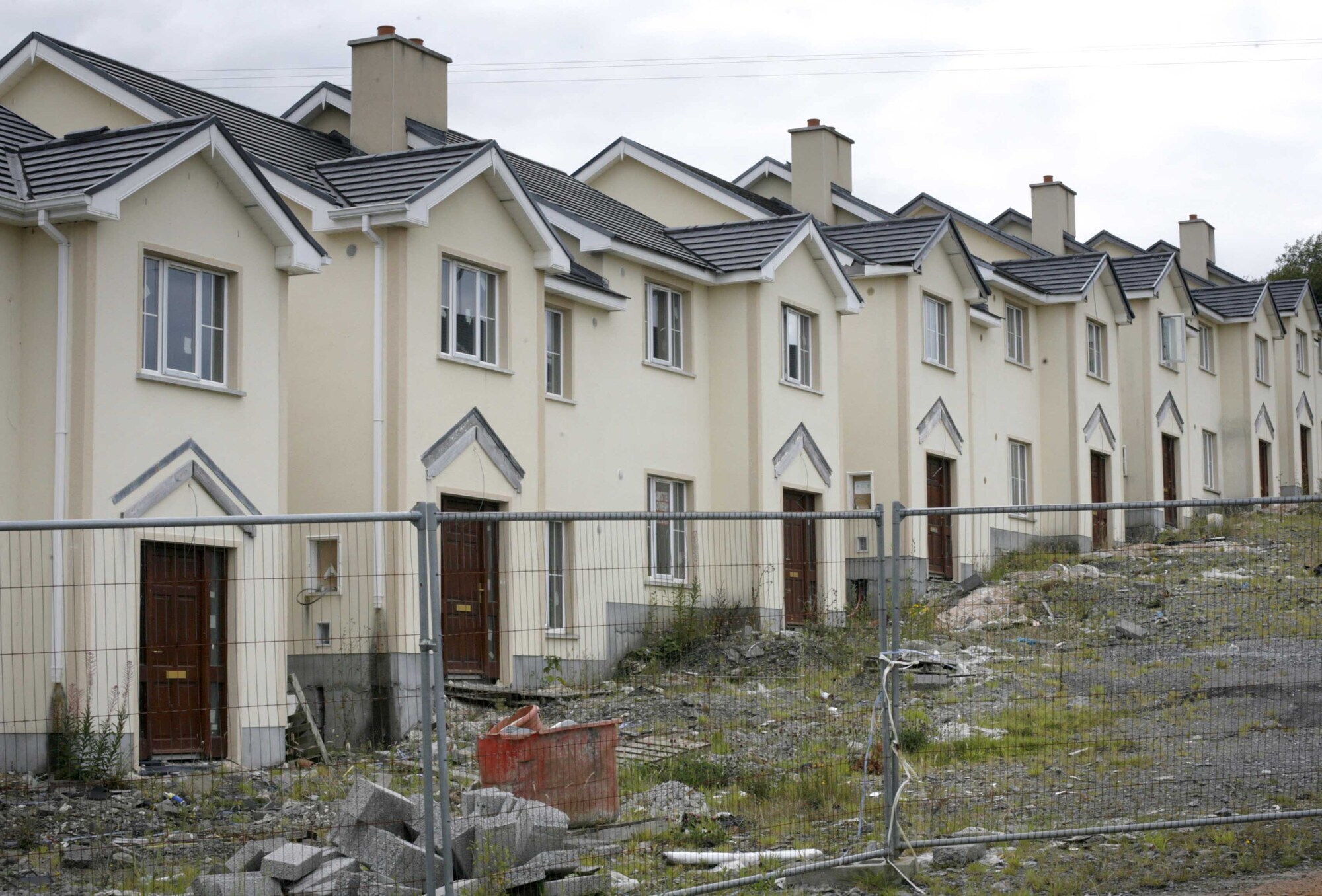
Census 2022 shows the scandalous situation whereby 166,000 homes are vacant. Picture: Mark Stedman/RollingNews.ie
The housing crisis is a social catastrophe, impacting the lives of hundreds of thousands of Generation Rent, on their mental health, their sense of security and hope.
I wrote that sentence here last July. Unfortunately, almost a year on, the housing catastrophe not only continues, it worsens by the day.
Rents are more unaffordable, there is the highest number of evictions of tenants since the State’s foundation, and homelessness is back to pre-pandemic levels.
Yet Census 2022 shows the scandalous situation whereby
166,000 homes are vacant.
The housing disaster is a societal fissure that is tearing apart a generation, leading to unprecedented inequality.
Threshold's ’We are Generation Rent’ report shows Generation Rent cannot make a home in the insecure private rental sector. They feel trapped.
The research contradicts the ‘millennials want to rent’ narrative, showing only 14% of renters are renting out of choice, 64% want to buy a home, and 20% are waiting for social housing.
As Threshold highlights, Generation Rent are getting older, and many are families with children.
Living in fear of having to leave your home, uprooting your children from their school, friends, and community, is massively stressful for families.
More than 90% of renters said it is difficult or extremely difficult to find a new tenancy.
Renters have been experiencing a cost of living crisis before the inflation crisis. But now they are being pushed to breaking point.
Threshold found a third of renters struggling to pay bills and buy groceries after paying the rent.
CSO figures show 30% of renters who do not get state support are in poverty after they pay their rent while 13% of children are at risk of poverty before their family pays their housing costs.
That rate jumps to 24% — almost a quarter of all children — in poverty after housing costs. That’s an additional 120,000 children in poverty.
The ESRI commentary shows lower income deciles (many younger households and renters) “are disproportionately affected” by price inflation.
A major cost facing families is childcare. Average costs for two children in creche and afterschool is €1,600 a month.
The average salary, of €45,000 per year, or €2,887 net monthly, is insufficient to cover the average rent (€1,415) and average childcare (€1,600).
How can families afford to live? How can Generation Rent afford to have children or have a secure home to do so?
Rents and housing costs are also impacting the economy in recruitment and retention of workers — from hospitality to childcare, nurses, doctors, and many others.
The average childcare/early years educator salary is €24,000 a year.
Housing costs are considered unaffordable if you pay more than 30% of your net income on rent or a mortgage, yet there is not a city in Ireland where the rent is affordable to a childcare worker.
Their entire monthly pay is insufficient to cover the average monthly rent in Dublin of €1,972.
In Cork, 78% of a childcare worker’s salary is needed to pay the average rent of €1,392, in Galway, it is 72%, and in Waterford it is 62%.

We don’t have to wonder why there are vacancies, and why Generation Rent are emigrating. Generation rent needs a wage hike, a massive reduction in rents, childcare, and the prospect of a home of their own, in order to afford to live and see a future in this country.
Given this social disaster facing Generation Rent, the Census 2022 results showing a continued high level of vacant homes makes difficult reading.
There are 166,752 vacant homes, not including holiday homes (an additional 66,000). Vacant dwellings are “habitable but unoccupied” meaning they can be lived in. They are not derelict housing (which Geo directory estimates at 20,000).
The idea that a 9% fall in vacancy since 2016 is somehow positive news is missing the unacceptable level of vacancy that still exists; some of the reduction is due to previously counted vacant homes becoming derelict.
Almost a third (48,387) of the vacant dwellings are long term vacant, being unused since 2016, and half of those, 23,483, are vacant for over a decade.
Cork had almost 5,000 dwellings vacant since 2016, the highest in any county; Dublin had 4,223 long term vacant units; Galway, 3,816; Mayo, 3,900, and Kerry, 3,200.
The minister for finance claimed a vacant homes tax would not impact supply, as there is a low level of vacancy, particularly in cities. The CSO figures shows this is incorrect.
The national vacancy rate of 7.8% hides higher local levels. Large parts of Dublin City, particularly in the inner city, have vacancy rates of up to 20%.
The Mansion House local area has a 19.6% vacancy level; South Dock, 12.3%, and parts of Rathmines and Ranelagh, 18%.
Similarly Cork city has areas with high vacancy rates; Patricks Ward has a 15% vacancy level — many are vacant rentals.
Cork city has 1,182 vacant rentals compared to 62 rental properties advertised on daft; Dublin City has 17,468 vacant dwellings, 5,198 of which are rentals.
Almost a decade of housing supply lies vacant — 24,000 new homes will be built this year but multiples of that are vacant.
You could house most households in housing need in Ireland in our vacant dwellings and still have 95,000 vacant homes remaining for Generation Rent.
This scale of vacancy is a form of social and economic vandalism and a pernicious, destructive, inequality; these properties should be brought into use immediately.
The vacant homes tax should be introduced, and sufficient to be a 'use it or lose it', tax.
The failure to tackle vacancy is a form of criminal negligence by policy makers.
Bringing vacant properties into use is complex, expensive, and requires tackling multiple property owners, who are an influential group in society.
It requires investment the Government has failed to allocate.

CONNECT WITH US TODAY



Be the first to know the latest news and updates