Karen Smith: Ireland has an obligation to protect those fleeing war or persecution
Karen Smith highlights the importance of a rights-based approach to accommodating and supporting refugees
Karen Smith: Ireland has an obligation to protect those fleeing war or persecution

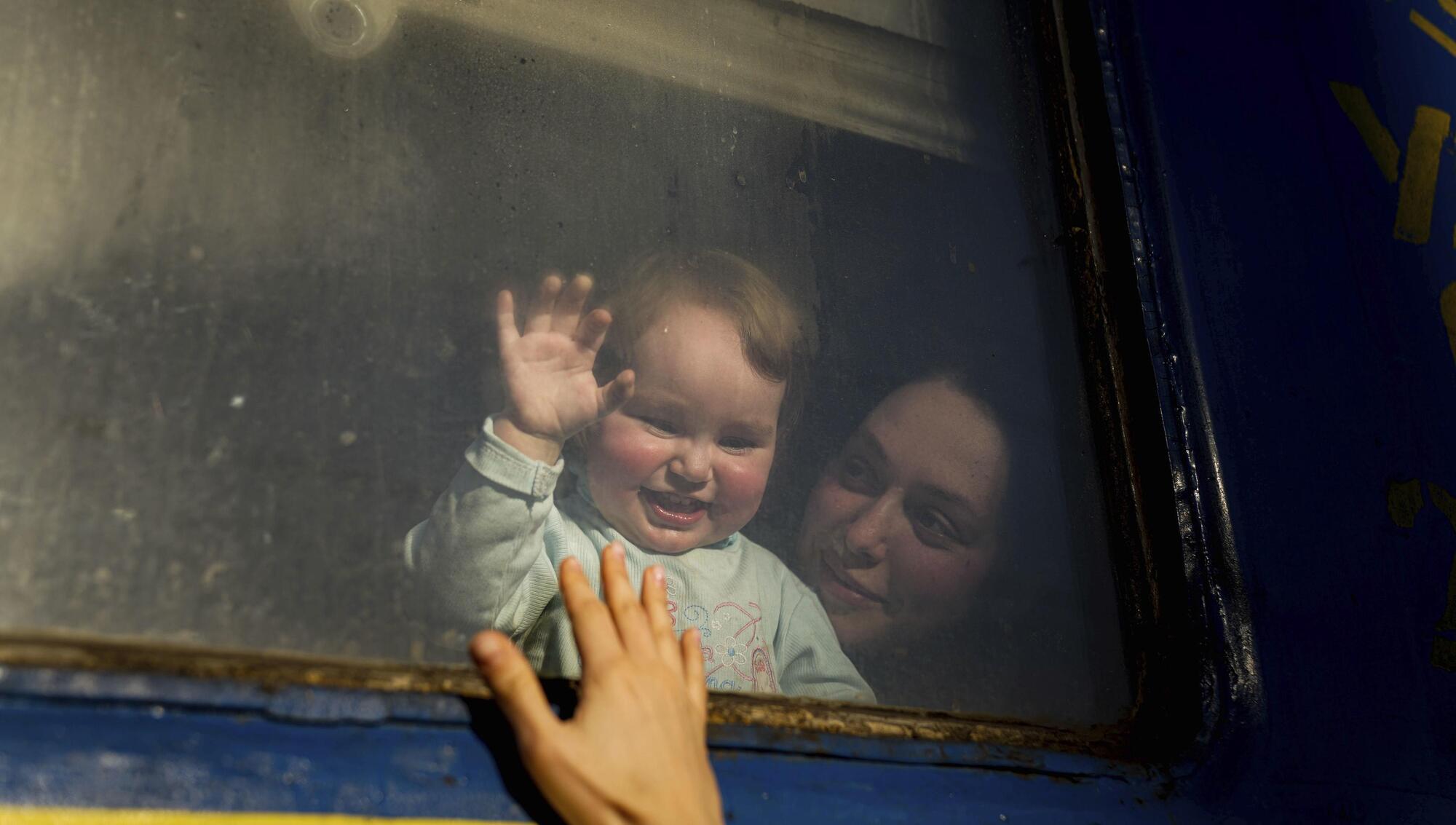
A woman and child from Mariupol say goodbye to their friend before their train leaves Zaporizhia station in Ukraine on Monday. It is essential that those arriving from Ukraine are fully informed of their rights and that there are effective, transparent, and user-friendly mechanisms in place for monitoring provision, making complaints and resolving disputes. Photo: AP/Evgeniy Maloletka

THE abusive treatment reported in this paper at the weekend experienced by a Ukrainian woman and her daughter at the hands of the family in whose home they were staying highlights the dangers of informal hosting arrangements.

I would argue that it also underlines the importance of a rights-based approach to accommodating and supporting refugee persons. The mother in this case has shared her experience of being exploited as an unpaid cleaner and threatened with deportation as a warning to others and her call to obtain accommodation only through official channels is worth emphasising. 

This paper has already reported concerns about trafficking and criminal exploitation of those fleeing Ukraine.

At the same time, it is important to be conscious that even with the most careful registration and vetting procedures in place, the unequal power dynamics involved in hosting in private homes mean that risks of exploitative or other inappropriate behaviour, are unlikely to be entirely eradicated and that further safeguards are required.

A girl holds her toy at the central train station in Warsaw, Poland, on Monday. Persons in need of international protection have broadly equivalent rights and entitlements to Irish citizens. Photo: AP/Czarek Sokolowski

Various research projects I and my colleagues in UCD have conducted in recent years on refugee resettlement, family reunification, and community sponsorship highlight the challenges in the post-arrival period and the risk that even the most well-intentioned people providing support — whether in institutional or community settings — can be paternalistic or controlling in their interactions with persons in need of protection. 

There can be a sense that those receiving support should be ‘grateful’ for whatever is provided, regardless of whether it meets their needs or not. The importance of a rights-based approach to the provision of accommodation and supports for persons in need of international protection therefore cannot be over-emphasised. 

It is essential that those arriving from Ukraine — and all those coming to Ireland seeking protection — are fully informed of their rights and that there are effective, transparent, and user-friendly mechanisms in place for monitoring provision, making complaints and resolving disputes.

Equally, all those providing support in a professional or voluntary capacity should have access to necessary training, resources, and assistance. The response of people in Ireland to the appeal for accommodation for those fleeing Ukraine has been swift and generous.

It seems that the larger proportion of accommodation pledged to date involves sharing a home with hosts. It is important to recognise that those opening their homes are not simply providing accommodation but are likely to be a very significant source of social and emotional support.

Research on refugee resettlement points to risks of vicarious trauma and burnout for professionals and volunteers in support roles — it is therefore essential that individuals and families hosting people in need of protection are provided with ongoing assistance and guidance, but also that professional settlement support is available to all those arriving from Ukraine.

Persons in need of international protection have broadly equivalent rights and entitlements to Irish citizens — they should not be regarded as recipients of charity. While solidarity and voluntary activity is necessary and important, State obligations should not be shifted onto ordinary members of the public.

There are significant deficits in social provision affecting wide sections of Irish society which need to be addressed, not least in relation to housing. Ultimately individuals and families fleeing conflict or persecution require accommodation that allows them to live in dignity, privacy, and safety; being hosted in spare rooms in the homes of others can be, at best, only be a very temporary solution.

Ireland’s response to the Ukrainian crisis is once again highlighting policy failures in relation to housing which were already having a particularly heavy impact on migrants, including those in need of international protection. For instance, housing shortages have been leading to much longer than expected stays in reception centres for at least some of those admitted under resettlement programmes as well as creating challenges in moving on from direct provision following successful asylum claims.

A girl waves from a bus after fleeing the war in Ukraine at the border crossing in Medyka, southeastern Poland, on Sunday. Photo: AP/Sergei Grits

Research I and my colleague, Dr Muireann Ní Raghallaigh, carried out for the Cork-based migrant organisation Nasc found a particularly high risk of homelessness for persons admitted under refugee family reunification due to the inadequate support provided. 

Under the Community Sponsorship programme, launched nationally with much fanfare in 2020, volunteer groups undertake to provide housing and support to newly admitted refugee families for a period of two years — this programme has been hampered by the housing crisis since its inception.

Addressing the particular vulnerabilities of migrants created by deficits in housing policy and provision is essential as part of intensified efforts to address the ongoing housing crisis. 

This — combined with careful attention to rights to information, interpretation and language support, settlement support and monitoring, and complaints mechanisms — are all necessary in order to meet Ireland’s international obligations in respect of protection for those fleeing conflict or persecution.

  • Dr Karen Smith is a lecturer in Equality Studies in the School of Social Policy, Social Work and Social Justice, University College Dublin

More in this section

Revoiced

Newsletter

Sign up to the best reads of the week from irishexaminer.com selected just for you.

Cookie Policy Privacy Policy Brand Safety FAQ Help Contact Us Terms and Conditions

© Examiner Echo Group Limited