Q&A: How do I offer a home to a Ukrainian refugee?
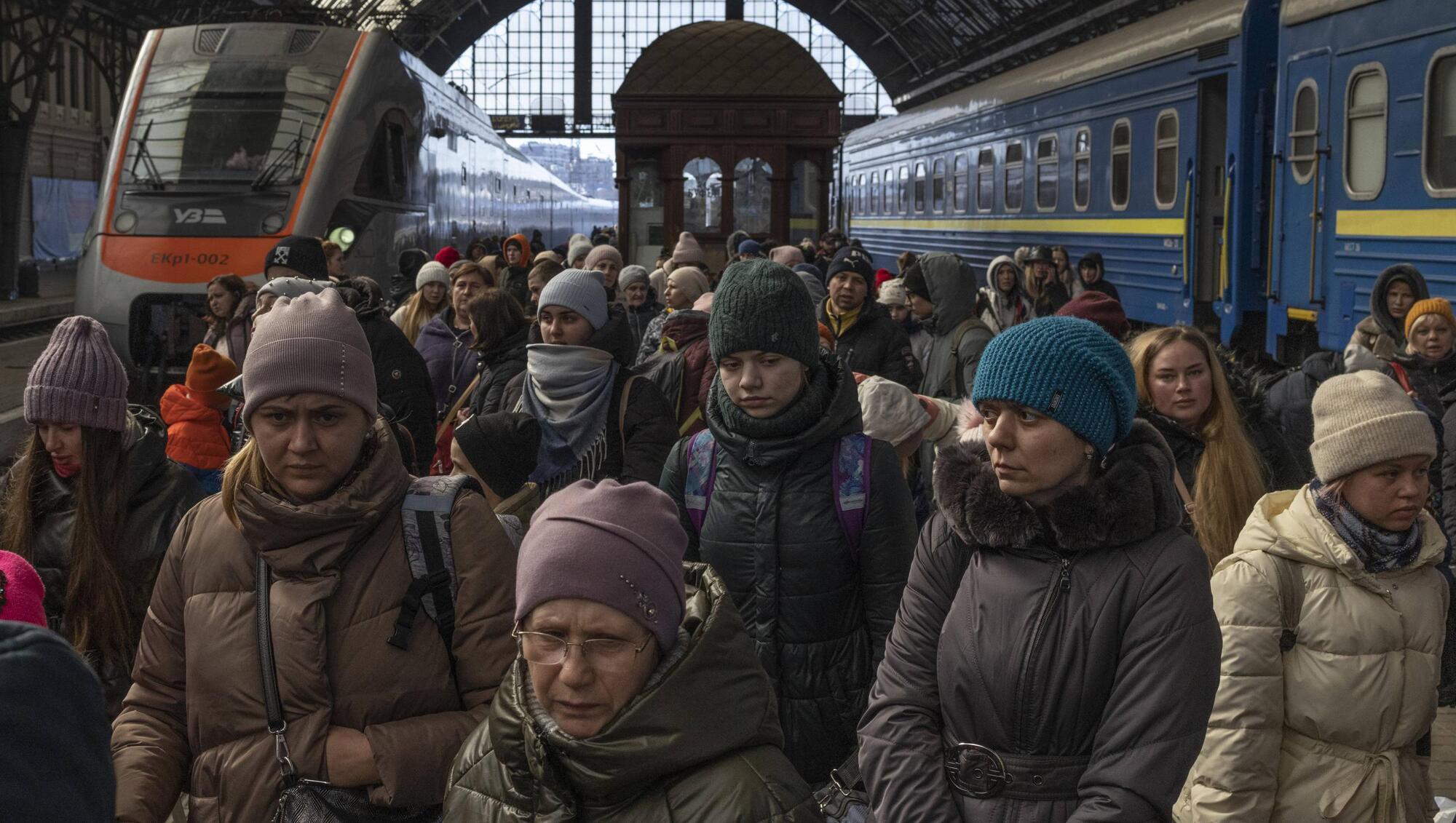
Passengers depart the railway station in Lviv, Ukraine. People in Ireland can offer accommodation to incoming refugees through the Red Cross portal. Picture: Dan Kitwood/Getty
Ireland’s Red Cross portal for people looking to offer accommodation to incoming refugees from Ukraine is now 11 days old.
Just 180 offers were received on the first day but that number has now risen to over 23,000 when offers to alternative charities are accounted for.
Here’s all you need to know should you wish to register your own accommodation as part of the ongoing humanitarian effort:
The online portal is registerofpledges.redcross.ie. Once registered, you can indicate if you wish to share your property, or if you wish to pledge a vacant property. If you want to discuss the process, the Red Cross has a helpline on 01 6424600, or by email at migrationcrisis@redcross.ie.
Your initial application is filtered by volunteers in order to ease the pressure on the Red Cross as the vetting process begins. Those volunteers thank the pledger and let them know their application is being reviewed, while taking care of some initial housekeeping, such as where the property is located and who is currently living in it.
There are requirements. Access to public transport is one of them. “Location is important,” a spokesperson for the charity said. Likewise, living space, room to breathe in other words, matters.
“We need to be happy that the refugee/refugee family and host family are not crowding each other out so there needs to be some sense of privacy for both parties in the accommodation.”
No. When people fleeing the invasion arrive in Ireland they go to immigration control, where they are given short-term accommodation and PPS numbers, thus making them eligible to claim benefits and work. An actual match with the accommodation portal is expected to take anything from two to three weeks.
It’s a three-step process. First, there is an initial call from the Irish Red Cross (IRC) contact centre. There is then a check of the property by a member of the IRC. Then, close to a match being made, a special case officer from the IRC will visit the property for a second time. No Garda vetting will apply to these placements.
Between six and 12 months.
“These people are here to stay so the accommodation provided is a chance for the refugee to relax and acclimatise, and get a sense of what they might like to do next, whether that might be education or work,” the Red Cross says, adding however that the indications from the Ukrainians engaging with the portal thus far are that they will wish to return home when it is safe to do so.
No, the pledge is voluntary.
“It is a gift they are giving by taking a refugee in,” says the Red Cross. “Refugees have social welfare so they can contribute if asked to do so and if they are agreeable as a condition of the accommodation.”
Yes, says the Red Cross: “When a refugee or refugee family are in situ a case officer will be visiting during the early stages and will offer support if and when needed.”
Yes, the first placements happened last weekend.
CONNECT WITH US TODAY



Be the first to know the latest news and updates