Brian O'Flynn: We can’t trust the Government to handle our future
An Oireachtas committee heard last week that new measures would be required to tackle the soaring cost of living, including rising energy costs related to the Russian attack on Ukraine.
Around the same time, Finance Minister Paschal Donohoe reassured us economic growth would continue across Europe despite the conflict.
In the background, the talk is of how low-wage workers are the next target for tax increases.
In other words, it’s just business as usual for neoliberal Ireland.
Wages will continue to stagnate, with little support from Government, while corporate profits multiply.
Low-wage workers will be asked to pay more than their fair share while corporations conceal profits through accountancy tricks. The cost of living will continue to soar, likely exacerbated by conflict and climate crises, and the Government will maintain its ongoing neoliberal project to minimise the State and assist multinationals to extract profit.
It’s a bleakly depressing prospect.
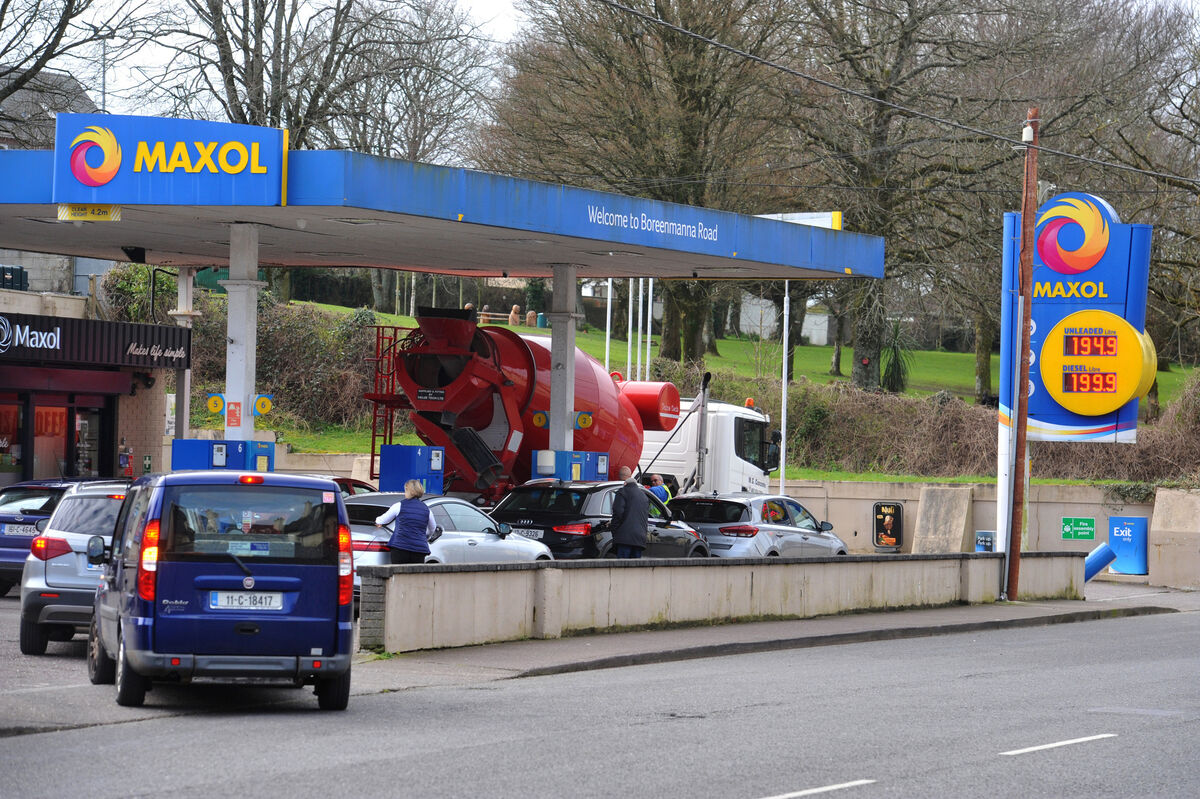
Fuel prices soar, which the Government frames as an external problem beyond their control and beyond energy companies’ control. Despite this, energy companies’ profits skyrocket.
The Government refuses to implement price controls, but instead spends more taxpayer money on subsidising energy costs, thereby funnelling State funds directly into these companies’ coffers.
Meanwhile, the average person’s purchasing power declines further, pushing more and more people into poverty, and rendering them reliant on more Government subsidies, such as housing assistance payments and the fuel allowance.
For the now-multiple generations caught in the rent trap, there is no hope that Ireland’s economic model will save us.
We have heard people repeating the annoying refrain that we are facing “unprecedented times” — a rent crisis, a pandemic, and now the breakdown of the rules-based international order.
Every expert in climate science, epidemiology, and conflict studies is telling us that as the climate crisis intensifies, we are set to face more war, more pandemics, and an increasingly hostile global economic environment.
In order to weather any of this, we will need a strong state, one which is committed to wealth redistribution, to equality of outcome, and to its own citizens over international capital owners.
In case we ever needed a reminder that international capital owners come first to the Government parties, just look at their stonewalling on Russian oligarchs funnelling money through the IFSC.
Just look at the fact the Government is planning to pay €1.2m per month to just one Travelodge hotel to house incoming Ukrainian refugees.
They have been implored to invest in State-owned, own-door accommodation for asylum seekers for years, and their failure to do so means that these Ukrainians will now be housed in inappropriate temporary hotel accommodation, while taxpayer money is converted directly into the profits of the private equity fund which ultimately owns the hotel group.
It’s not just a young generation facing into the future which should be angry. Even my parents, who are now in their 60s, are being affected.
We are often told that our generation is facing a unique crisis, but the working class of all age groups are facing the consequences of these economic policies.
Just look at pensions. My father has spent his entire life working as a manual labourer in warehouses and should have retired on his 65th birthday last May.
It makes me emotional to think of him still dragging his tired body out to work on early winter mornings when he should be enjoying a minimal level of comfort and peace after a lifetime of often debilitating labour.
In recent weeks, we’ve seen a back-and-forth about pensions, between the Government, officialdom, and other sectors of society.
Officials said the State pension age should increase once again, to 67, but an Oireachtas committee and trade unions have responded that it absolutely shouldn’t.
Of course it shouldn’t. Ireland has the youngest population in the EU, and we’re relatively wealthy, even accounting for our distorted GDP.
We’re already one of the more regressive states in Europe following our increase of the State pension age from 65 to 66; if we contemplated an increase to 67, we would be the most regressive state in Europe, considering our wealth and population.
The Government’s officials justify their threats of pension retrenchment with the argument that the Social Insurance Fund can’t sustain our gradually ageing population, and are now suggesting that low-wage workers should be the ones to supplement a tax shortfall.
This is not only sinister but deeply dishonest about how Ireland’s economic model works.
Our reliance on foreign direct investment has meant that wages in FDI sectors in Ireland (eg pharma, tech, finance) have soared, while they have stagnated or even declined in real terms for almost everyone else.
A recent Department of Finance report acknowledged that the only reason we survived the pandemic so well was because the tax burden was largely on high-salaried professionals, who had better job security, high wages, could work from home and could afford to pay.
These high-salary professionals will never be affected by the delay of their State pension — but people like my father, and all other working-class people, will be.
Despite this, the Government is now seeking to shift the tax burden, not to the companies making billions, but to the workers who are barely getting by.
Rather than a utopian world where the working class are paid properly for their contribution to a shared society and granted the dignity they deserve, we see a dystopian reality where, in the midst of crises, the working class are being pushed further and further to the margins.
Is this the sort of battle we want to face going forward, as the world becomes a hotter, more unstable, and more hostile place to live?
We need a fundamental shift in politics and economics if we ever want to secure a stable future — something the status quo simply cannot offer us.
CONNECT WITH US TODAY



Be the first to know the latest news and updates