Mick Clifford: Back to the future for construction as schools case reaches High Court 
The Department of Education is suing Western Building System in the High Court in 34 separate actions over 40 schools that are alleged to be faulty and dangerously constructed, writes Mick Clifford.
Mick Clifford: Back to the future for construction as schools case reaches High Court 

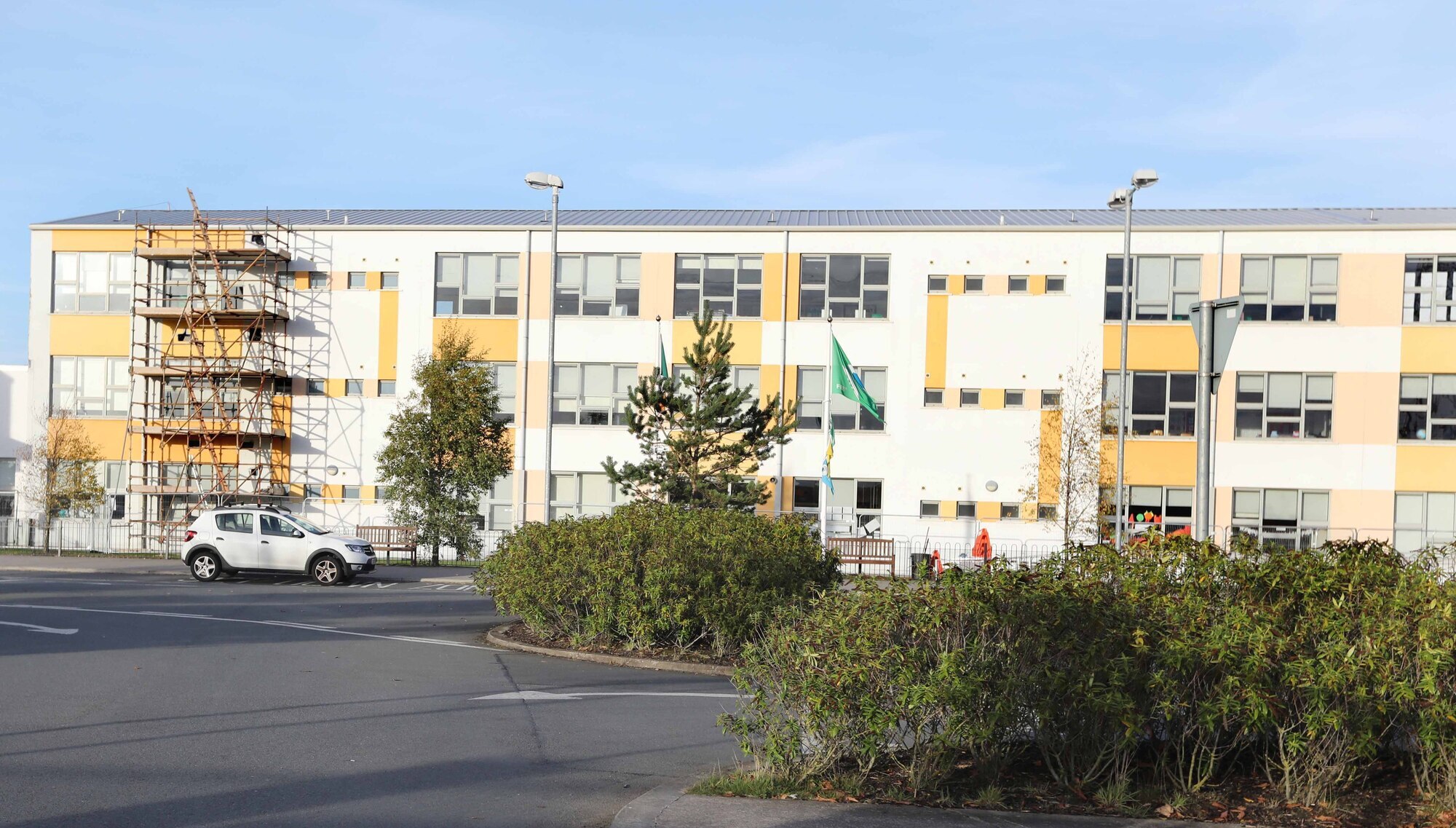
Tyrellstown Educate Together, built by Tyrone-based company Western Building Systems (WBS). Picture: Eamonn Farrell / Rollingnews.ie

Next Monday, the High Court is due to begin hearing a case that will bring construction in this country back to the future.

The Department of Education is suing Western Building Systems (WBS) over alleged faulty and dangerous construction of schools. This will be the first of what is expected to be 34 separate actions regarding 40 schools built around the State between 2003 and 2018.

Among the schools in which structural or fire safety defects have been documented are five in the Cork area and 18 in Dublin.

The cost of remediation — including conducting an extensive scope of all the buildings — now exceeds the value of the original contract, which was €160m.

The work is not yet complete but, by the time all of the schools’ remedial work is signed off on, it is expected that it will have cost far more to repair the schools than to build them in the first place.

The High Court will have to decide where culpability lies.

Issues with the schools first arose in 2014. An architect was called into Rush and Lusk Educate Together school in north Co Dublin over concerns about the quality of some of the work. The architect found that, should a fire occur, it was possible that the building would collapse in 20 minutes. Dublin Fire Brigade was called in and it demanded immediate action. The remedial work cost €800,000.

None of that was made public at the time. The school was one of 50 constructed through modular design by Tyrone-based WBS, yet no alarm bells went off. Nobody in the department thought it might be a good idea to check other schools in the same contract to see whether similar issues arose.

A year after the architect’s assessment, the Irish Examiner broke the story of what had occurred. This prompted management at five other schools to conduct fire safety surveys, but the results of those were not released for another 12 months.

As such, there was a drip-feed into the public domain of both structural and fire safety defects being discovered over the course of three years.

Some of the schools had to be temporarily vacated on the basis of being potentially unsafe.

A series of meetings took place between the department and WBS, but little came of it. The Irish Examiner understands that there have been attempts at mediation between the parties, which also have failed to produce a result.

On a superficial level, the cases may appear to be straight out of the playbook of light-touch regulation from the Celtic Tiger years. An estimated 90,000 units, mainly apartments, built during the first decade of this century are reported to have structural and fire safety defects.

The problems with the schools first surfaced when the extent of the defects in apartments began tumbling into the public domain. At first, it looked like more of the same, apart from the fear that any shortcomings in construction might impact on the safety of children.

However, since the first revelations in 2015, a different picture began to emerge. For instance, some of the schools that are now the subject of the legal actions were built after a new regulatory regime, which we were told would ensure proper standards were adhered to.

Following the debacle of Priory Hall in 2001, the Government introduced a regime known as BCAR, which, it was claimed, would be rigorous and ensure that there would be no cutting of corners. Yet some of the schools at issue in the forthcoming legal actions were completed as late as 2018, four years after BCAR was introduced.

In October 2020, department officials confirmed at the Oireachtas Public Accounts Committee that a clerk of works had been on site on behalf of the department in “recent years”. Therefore, questions arise as to how defects in construction could go undetected in the regime that currently exists.

There is also an issue over the regulation of the building process as it was effectively managed by consultants hired by the Department of Education, rather than local authorities.

WBS is adamant that the schools it was contracted to build were signed off on by the department, effectively certifying that they were built according to design.

The court may also have to examine how remediation costs have ballooned. Is all of that down to shortcomings in the original construction? If so, it would suggest that WBS did an appalling job. That would be at odds with its general record over the last 40 years, during which it acquired a solid reputation.

In August 2019, WBS called for an independent investigation of its work as more and more schools were declaring there were problems. WBS queried “how schools previously certified for completion as being free from defects by the department, and described less than 12 months ago by the then minister as being built to the highest standards, are now being deemed to require remedial work.”

The forthcoming legal action will see the department claim that the work for which it paid was not done properly and WBS, along with subcontractors, have to make good their failures.

WBS is claiming that it did everything correctly and problems that have arisen are due to revisions of the original design and the management of the fallout since defects were discovered.

Should it actually proceed to a hearing, it will give a fascinating insight into how such a major school building project was managed and executed.

x

More in this section

Revoiced

Newsletter

Sign up to the best reads of the week from irishexaminer.com selected just for you.

Cookie Policy Privacy Policy Brand Safety FAQ Help Contact Us Terms and Conditions

© Examiner Echo Group Limited