Time to repatriate the remains of patriot Anna Parnell
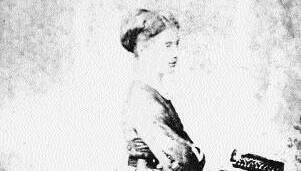
Anna Parnell, founder of the Ladies’ Land League. Andrew Kettle, Land League co-founder, described her as having ‘a better knowledge of the social and political forces of Ireland than any person, man or woman, I ever met.’
In a graveyard in beautiful north Devon lies the remains of one of Ireland’s greatest nationalist leaders whose activism with the hugely influential Ladies’ Land League was legendary. Yet her legacy was ignored in our history while her brother’s has been generously celebrated.
Anna Parnell’s life was cut short when, at the age of 59, she drowned while taking her daily swim off the coast of Ilframcombe in 1911 — and that tragedy has been compounded by the fact that she remains buried there today, far from the resting place she deserves. That resting place should be in Glasnevin Cemetery alongside the other revolutionaries who changed the course of our history. It is time to repatriate the remains of Anna Parnell and recognise her work, and that of the Ladies’ Land League (LLL).
Anna was born in 1852 and spent her life struggling at a personal and a political level for justice and equality. Feminist historian Margaret Ward has written extensively about Anna, and the other extraordinary women who were active in Ireland’s history. Many of the contributions of these women to our history have lain dormant for years.
Ms Ward said “when the male leadership of the Land League realised that imprisonment was imminent, they agreed to what was called ‘a most dangerous experiment’ and allowed Michael Davitt to invite Anna to set up the Ladies’ Land League in Ireland.” It was intended the women would do no more than organise a “holding operation”, basically dispensing charity to evicted tenants until the men were released. However, Anna wanted to achieve the policies the men had formulated but failed to implement.
Anna and her colleagues began to accomplish the goals of LLL and by 1882 there were 500 branches of the organisation throughout the country, with 100-200 members in each. Anna travelled throughout the country in a successful drive to build the membership further. The LLL’s activities displeased the clergy, and they were condemned, which paradoxically led to even greater numbers joining.
Determined to achieve their aims the LLL compiled an inventory of land holdings around the country, with details on their size, landlord names, their tenants, and the amount paid in rent. This inventory was known colloquially as the ‘Book of Kells’. The women regularly visited families being evicted to defend them. If they were not successful, they built Land League huts to house homeless families.
Additionally, the LLL provided food for the men who were in prison. The men when imprisoned had political status and food was provided by the LLL at substantial cost. However, when women from the LLL were imprisoned, they were left to eat prison food and had no political status.
I first heard Anna’s story at the Parnell Summer School in 2011 when it was dedicated to her memory. It had a deep effect on me as I couldn’t believe that I, or my children, had come through the educational system in Ireland without hearing either of Anna Parnell or the Ladies’ Land League.

My husband and I decided to travel to Ilfracombe in 2013 where we eventually found her grave. It had deteriorated greatly. We renovated it as best we could, secured the headstone, cleared the weeds, covered it with gravel, and placed some plants on it.
We then visited the grave on an annual basis and constantly tried to get recognition for her in Ireland, successfully persuading the Irish Government to renovate the grave, which they did, in 2017. On September 20, 2018, on the anniversary of her death, the Irish ambassador to the UK, Adrian O’Neill, laid a wreath at an official ceremony as part of a wider event involving a special commemoration at the place where Anna drowned.
While this ceremony and recognition of a forgotten leader in Irish history were very moving, it appeared that Anna was better known and cared for in Ilfracombe than in Ireland. While she did so much for the people of Ireland she was airbrushed from history and the women’s contribution excluded from the curriculum.
Andrew Kettle, one of the founders of the Land League, had described her as having “a better knowledge of the social and political forces of Ireland than any person, man or woman, I have ever met. She would have worked the Land League revolution to a much better conclusion than her great brother”.
After many attempts to get proper recognition for her Ireland, a blue plaque commemorating Anna Parnell was placed on the wall of the Allied Irish Bank at the top of O’Connell Street, near Parnell Square in September 2021, 110 years after her death. This historic building had been the office of the executive of the Ladies’ Land League and while this is a milestone in the campaign to have Anna’s role in Irish history recognised, the next step is to bring her home.
Both my husband and I, with the help of friends we made in Ilfracombe, have been tending to her grave since 2013. Covid-19 restrictions have prevented recent visits and we worry that the grave will have deteriorated again. In her 2018 Anna Parnell lecture in Ilfracombe, Margaret Ward suggested that Anna’s body be repatriated to allow access for those in Ireland who would like to attend her grave and learn of her part in our history.
This reiterated a call made as far back as September 27, 1911 in a letter to the Irish Independent written by a former member of the Children’s Land League, JP Dunne.
“Why should alien earth rest on her coffin lid? The green grass of Glasnevin, like the green banners she loved so well alone should enshroud her”.
He called on the “patriot ladies of Ireland” to see that Anna Parnell was “rewarded with an Irish grave. More than that should have been her due. Less than that would be base ingratitude”. I would argue that her contribution to the Irish land war was as great, if not greater, than that of her brother.
Henry George, the influential radical theorist of 19th-century America, was at the time in Ireland, as ‘special correspondent’ for the Irish World. He wrote to Patrick Ford, his editor, that, in his opinion, the women had ‘done a great deal better than the men would have done’.
Her work and the work of the Ladies’ Land League deserve much better recognition by the Irish state. They were, after all, the first organised female activists that we know of in the state and pre-date the Cuman na mBan women.
Anna Parnell had expressed the hope that “perhaps when we are dead and gone and another generation grown up… they will point to us as having set a noble example to all the women of Ireland”.
The best way we can do this now is to have Anna Parnell brought home to Ireland, and for the contribution of Anna and Fanny Parnell and the other valiant women of the Ladies’ Land League to be given full recognition in our history books and school curriculum.
- Anna Parnell’s account of these times, , has been republished by UCD Press, 2020.
- For further details of the Ladies’ Land League see , Margaret Ward, Arlen House, 2021.