Maeve Higgins: Biggest Covid battle in US may well be vaccine hesitancy
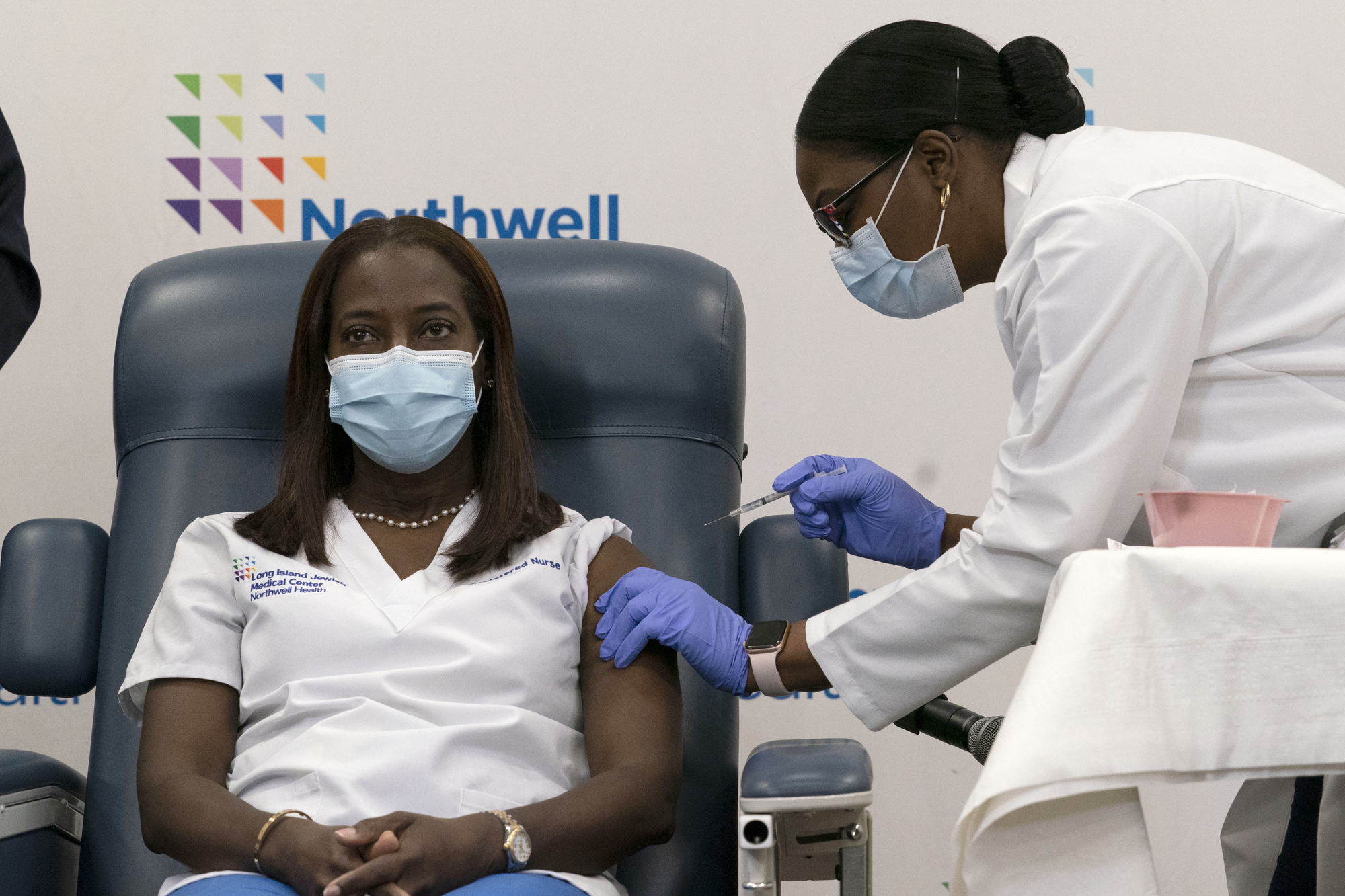
Sandra Lindsay, left, a nurse at Long Island Jewish Medical Center, was the first recipient of the coronavirus vaccine outside of a clinical trial last year. Picture: Mark Lennihan/AP

During a frightening and dark time, that moment was like a light coming on.
The recipient was Sandra Lindsay, a nurse and director of patient services in the Long Island Jewish Medical Center’s intensive care unit.
After getting the shot, Ms Lindsay was interviewed by CNN and was adamant about her reasons for volunteering to go first, and for doing so publicly.
“I trust science,” Ms Lindsay said. “What I don’t trust is getting Covid-19 because I don’t know how it will affect me and the people around me.”
As a nurse working in intensive care, with patients suffering and dying from Covid, she knew how vital the vaccine was.
“I have seen the alternative and do not want it for you,” she said. “I feel like healing is coming.”
So, one year on, did that moment mark the beginning of the end of this painful time?
According to Johns Hopkins University, more than 776,000 people have died from Covid in the US, and there have been more than 48.2m confirmed cases.
As variants come roaring into view and more people here died of Covid this year than last year, I wanted to understand just where we are with vaccines. Here is what I learned.
Since the vaccine’s distribution began in the US with Ms Lindsay’s shot on December 14, more than 454m doses have been administered, fully vaccinating more than 196m people or 59.1% of the US population.
Those statistics come from National Public Radio’s tracker using data from the Center for Disease Control and Prevention.
Vaccines build immunity to the virus and massively reduce our chances of hospitalisation and death.
At almost 90% effective, they are the best technology to survive, and perhaps even destroy, this plague.
Sometimes I need to remind myself of that simple truth because there is so much noise around it.
Vaccine hesitancy is a huge problem here. Speaking on CBS news last weekend, as we learned there was a new variant circulating in many parts of the world, Dr Anthony Fauci, chief medical adviser to US president Biden, said:
The latest variant, Omicron, has been called “a variant of concern” by the World Health Organization (WHO), and Dr Fauci urged all Americans to get fully vaccinated as soon as possible to avoid an increase in cases.
“If we now do what I’m talking about in an intense way, we may be able to blunt that,” he said.
“If we don’t do it successfully, it is certainly conceivable and maybe likely that we will see another bit of a surge. How bad it gets is dependent upon us and how we mitigate.”
With complete and unrestricted access to a selection of Covid vaccines in the US, there is this frustrating question that bubbles up in me more and more often for unvaccinated people: Don’t you know how lucky you are?
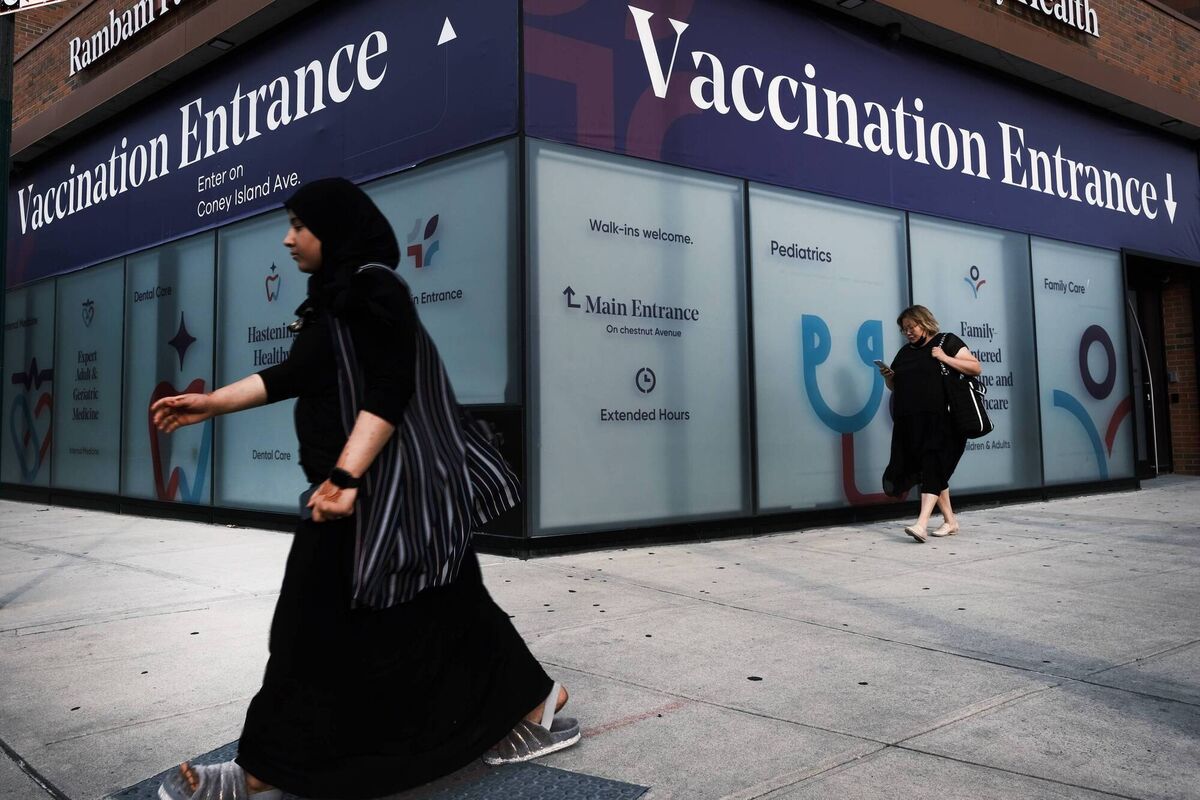
Supply is plentiful and, unlike most other countries, the majority of people are eligible for vaccines — eligibility was opened to everyone aged 16 and up in mid-April, to those 12 and older in mid-May, and to children as young as five early last month.
There are vaccine centres all over the place. Just walking down the street in my Brooklyn neighbourhood, I pass a number of them.
You can get a vaccine in any number of pharmacies, in the local Target store, and mobile vaccine vans are parked on city streets.
Even the Natural History Museum has a vaccine centre in its great hall of sea life.
Seeing my friends’ children smiling with their lollipops and stickers saying, “I got vaccinated under the whale”, is lovely.
At the same time, I feel a pang for my nieces and nephews in Ireland, who do not have the same opportunity for protection against this horrible virus.
Since November 19, all adults in the US have been eligible for booster shots; however, as we get these third doses, my mind goes to the billions of people worldwide waiting on their first jab.
Professor Arthur Caplan is a renowned medical ethicist at New York University’s Grossman School of Medicine.
I spoke to him about vaccines this week and, in light of the latest variant, he sees vaccine hesitancy as a huge obstacle, not just here but around the world.
In South Africa, where just 36% of the adult population were vaccinated, and plenty of shots were available, vaccination rates had slowed right down.
There are increasingly frantic calls throughout the media to ‘vaccinate the world’.
A righteous call, obviously — anybody who understands how viruses mutate and spread agrees with it, but how realistic is it?
Prof Caplan points out that vaccine hesitancy has to be faced and dealt with and, since much of the dangerous misinformation and scepticism is born and bred here in the US, we need to fix that.
“You need to monitor your social media and kick out the obvious distortions and lies floating around,” Prof Caplan says.
“You need to start to chase them down; you’re not going to get rid of them, but it would be helpful to stop listening to everybody’s grandmother’s cure for Covid.”
Prof Caplan thinks employers need to hang tough with vaccine mandates for workers, pointing out that, if you don’t want a vaccine, you don’t have to stay in that job, and for many workers it’s the push they need to get over their scepticism.
When it comes to vaccinating the world, a strategic plan is essential, he says.
“Pick a part of the world to start global vaccination and commit the resources to do it,” he explains.
“Don’t leave it up to the WHO to say, well, actually, we will vaccinate everywhere — which is not the way you start a global eradication campaign.
“You’ve got to target places, and you might target the ones that seem to have outbreaks, like Peru, over the places that don’t have outbreaks.”
That last part is crucial. Even with the scientific advances and the hard work of people worldwide that poured into developing these life-saving vaccines, not to mention the billions of tax dollars invested in them, they are just one step on a long journey towards freedom from this virus.
That needs to be our focus. Other actions are only playing around the edges of the problem.
Banning people from flying to the US from South Africa is hardly that helpful when hundreds of thousands of people in the state of Idaho alone are not yet fully vaccinated.
In the US, we need to take that crucial step of vaccinating ourselves and pulling others along with us.
If healing is coming, as nurse Sandra Lindsay hoped it would when she got that first shot one year ago, we need to step up to meet it.


CONNECT WITH US TODAY



Be the first to know the latest news and updates