Ireland's Empty Towns – Q&A: How can the Derelict Sites Register be made fit for purpose?

Kevin Smyth: 'Most derelict properties are single dwelling units. These are the simplest to acquire, easiest to move on and most accessible to do up. They are obviously the ones that will contribute the most immediately to solving the housing crisis.' File picture: Billy MacGill
Its key function is to identify and then enable the local authority to impose an annual fine on the owner of a derelict property until the dereliction is removed.
In order for a property to be placed on the register, it needs to be derelict, and not simply ‘vacant’. There are no particular legislative powers to force owners to act on vacant premises (as distinct from vacant sites).
Next, the local authority engages with the owner to determine what the issues may be, and whether any steps are being taken to remove the dereliction. While some cases of dereliction may simply be a result of land hoarding, in many instances there are more complex family or personal reasons. These may take considerable steps to work through and resolve.
To engage with the owner, you need to first find them. This process should be straightforward, in that the national Land Registry should record all properties owned; however, there is a very high proportion of urban properties which have not yet been registered. This problem could be addressed by legislation requiring everyone owning a property to stake their claim initially. These ownership records can be held provisionally and be publicly available in order to assist local authorities, rates and revenue.
The next stage – eventually – involves placing the property on the Derelict Sites Register, if engagement with owners has not worked.
The register is not an immediate solution. The legislation is designed so registration of a property is a last resort, the point being to bring the properties out of dereliction, not to charge levies on them.
A property on the register is charged 7% of the value of the property, which can be problematic. Some local authorities have a panel of professional valuers who invariably tend to be conservative so that a) the levies are not too high or b) the owner might be so appalled at the low value that they do something about the site.
The levies are designed as a further incentive to shift the property on, not for making money. In my view, if owners are not paying the levies then the council should move to compulsorily acquire the property – within two years.
Whenever a council acquires a property, it must pay full market value for it, less the levies owed. Then the property should be sold on immediately. As part of the conditions of sale, some local authorities have a ‘claw back’ clause which allows them to repossess the property if it has not been renovated within a certain period. This is a critical follow through on the ‘use it or lose it’ policy.
Obviously, the process set out above is not happening. Properties have been on various registers for years. Using compulsory acquisition after two years is the ultimate deterrent.
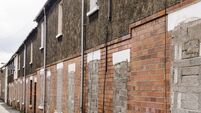
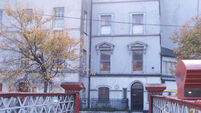
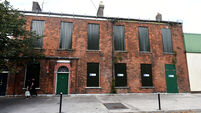
Most derelict properties are single dwelling units. These are the simplest to acquire, easiest to move on and most accessible to do up. They are obviously the ones that will contribute the most immediately to solving the housing crisis.
Addressing individual house dereliction shores up and reinforces the existing communities in which the home is located, with the addition of a new family. The effect is exponentially positive. Rather than a derelict structure attracting anti-social behaviour, you have people present who underpin the future of town centre communities.
One of the problems with valuing these properties for the purpose of imposing levies is that technically when it comes to the register, they are practically worthless, often valued as just sites. The true value should be set at the cost of restoring the property to its original condition. Usually, this is more expensive than the value of the building itself, and should act as more of a deterrent to owner neglect.
There are a number of potential changes which could make this system work.
- A national policy based on existing legislation with new guidelines for local authorities, resourced to create consistency nationally. This could be done by shifting a national derelict sites register onto something like the Building Control Management system.
- No property should remain on the register for more than two years, particularly dwellings, without being summarily and compulsorily acquired. A formal process for this (as exists in legislation but spelt out in new guidelines for local authorities) should be established to enable the minimum of disruption (or overruling) at An Bord Pleanála – the final body who adjudicates on CPOs.
- In the absence of applicable legislation for dealing with vacant sites or properties, rates should be used as levies. For example, rates on commercial properties with empty floors are typically charged at 50%. This should be 200%. Empty apartment buildings – there are a few – should be charged punitive local property tax.
- Derelict sites levies should be based on the cost of returning the property from dereliction as opposed to the value of the building/site. These are calculated in line with the construction costs index.
- Prioritise CPO single dwellings with a view to getting them back on the market. Political concern that the homes should be retained for social housing is unfounded, as the resources required within local authorities to renovate a single dwelling are disproportionate.
‘Stake your claim’. Register all properties immediately – or forfeit them.
CONNECT WITH US TODAY



Be the first to know the latest news and updates